
What Is a Guppy, and How Should You Plan the Group?
Poecilia reticulata
The guppy is Poecilia reticulata, a livebearing freshwater fish whose adult males and females differ strongly in body size and fins. Sex ratio and repeated broods can change the aquarium's population, feeding pressure, and waste load within weeks.
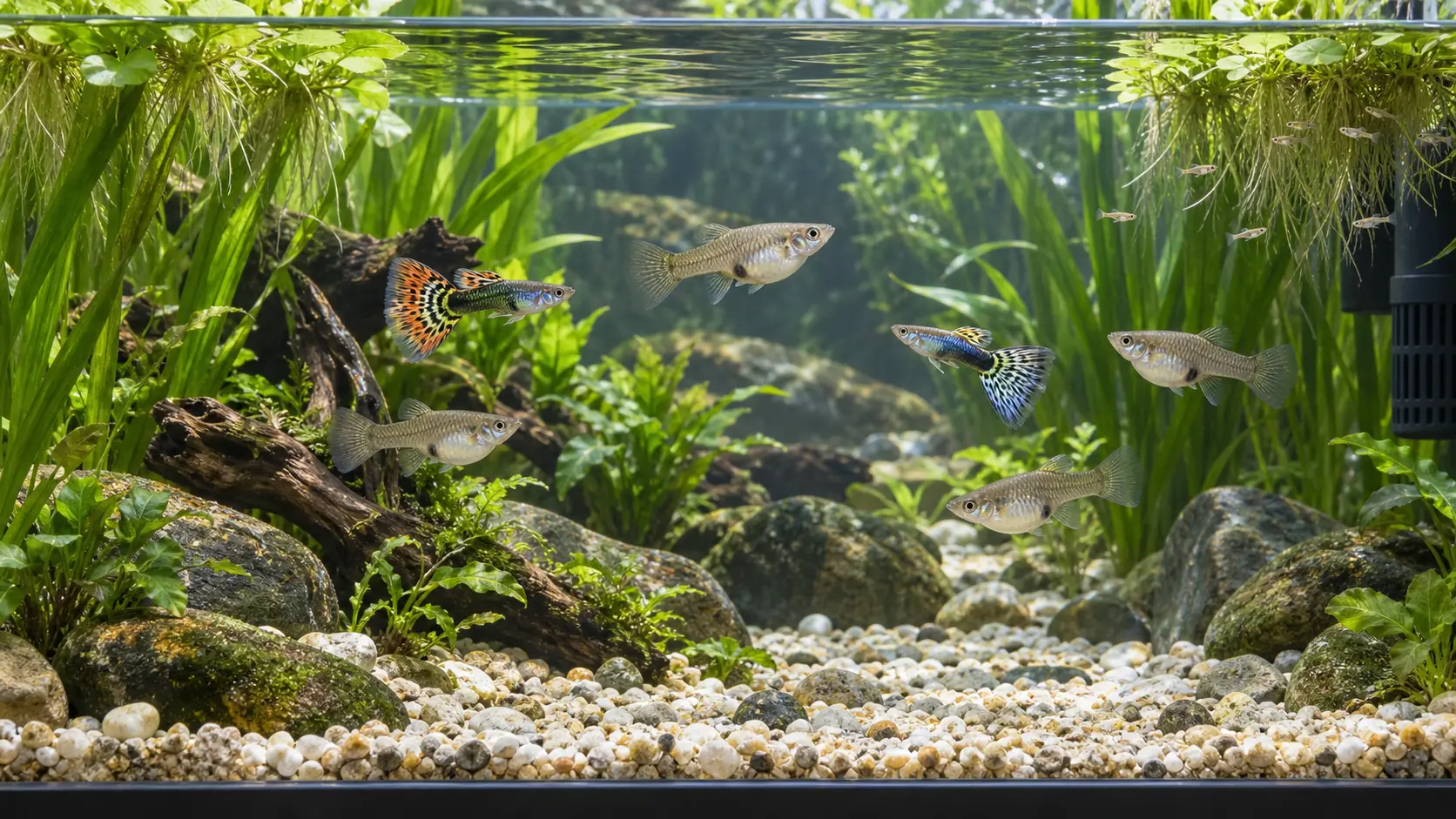
At a glance

- Adult size
- 6 cm
- Minimum footprint
- At least 75 × 30 cm for a mixed adult group, with planted retreats, an open feeding lane, and a fry plan
- Social structure
- Loose social livebearer group whose sex ratio and reproduction change welfare and capacity decisions.
- Minimum group
- 6
- Sex ratio
- Single-sex groups avoid unplanned broods; mixed groups require several females per male, multiple retreat routes, and a firm fry plan.
- Diet
- Omnivore
- Feeding
- Use a complete small staple with measured plant and invertebrate variety; spread food so females and juveniles can feed away from persistent males.
- Waste load
- moderate and capable of rising rapidly when fry survive
- Family
- Poeciliidae
- Native range
- Northern South America and nearby Caribbean islands, with introduced populations in many countries
- Conservation status
- Least Concern, assessed 18 May 2020 Source
Footprint follows adult group movement, cover displacement, feeding access, and maintenance capacity; it is not a pet-store survival minimum.
What is a guppy?
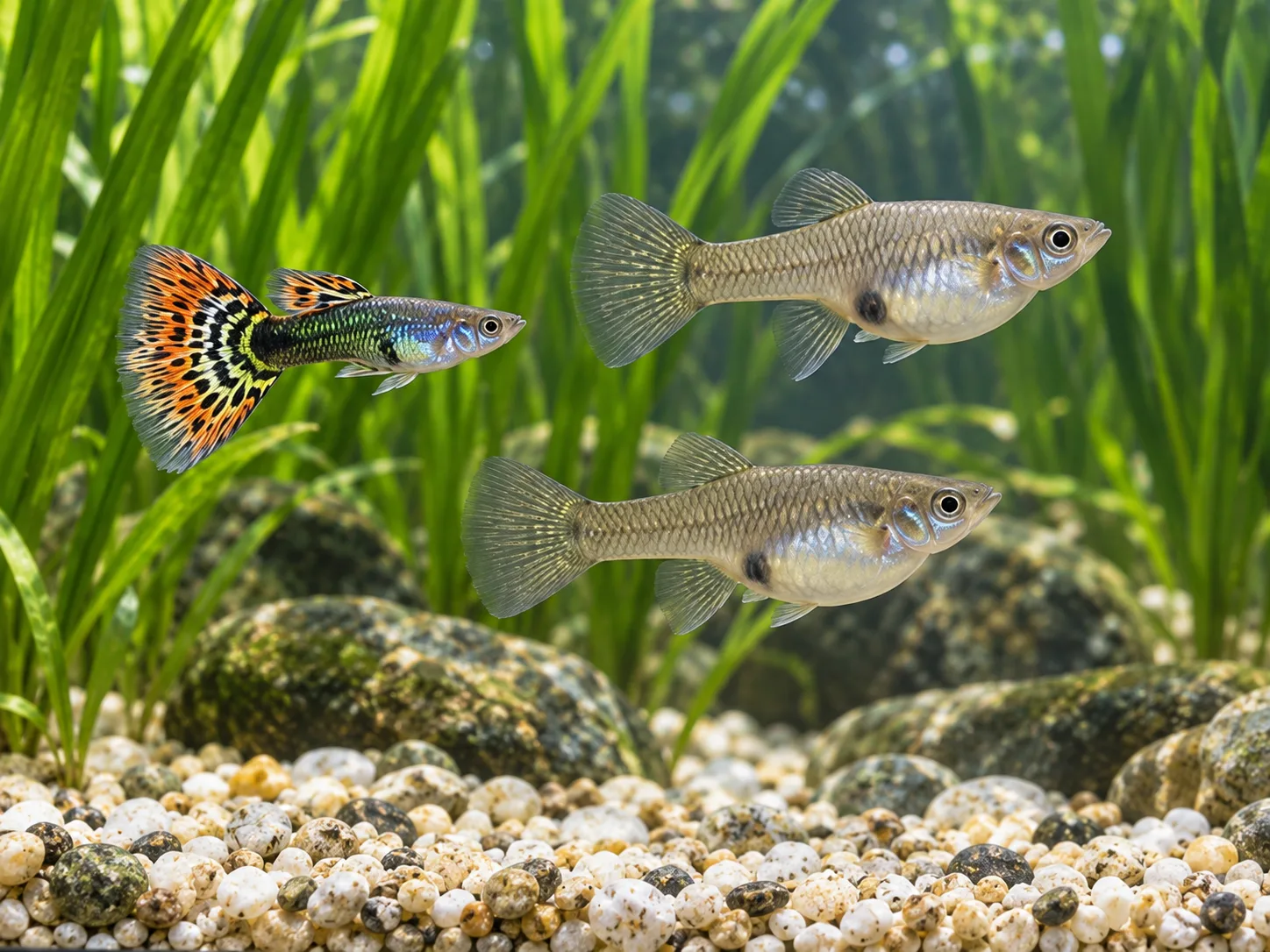
The guppy is Poecilia reticulata, a livebearing freshwater fish with strong differences between adult males and females. The decision that most changes its care is reproductive structure: mixed sexes can produce repeated broods, while persistent male courtship can restrict where females feed and rest.
FishBase records males up to 5 cm standard length and females up to 6 cm, although males are commonly much smaller. GBIF accepts P. reticulata in Poeciliidae and records introduced populations across many countries, reflecting how widely the aquarium fish has been moved beyond its native range.
- Accepted identity
- Poecilia reticulata Peters, 1859
- Family
- Poeciliidae
- Adult size
- Up to 5 cm SL for males and 6 cm SL for females in FishBase
- Reproduction
- Internal fertilization and live birth
- Social decision
- Keep a single-sex group or plan mixed sexes around female escape space and population growth
- Starting footprint
- 75 × 30 cm for a managed adult group; enlarge before retaining repeated broods
- Habitat evidence
- Warm springs, small streams, vegetated lakes, ditches, and canals across a broad environmental range
- Recorded diet
- Zooplankton, small insects, and detritus
- Conservation
- Least Concern, assessed 18 May 2020
Fancy, feeder, and Endler-type labels do not all describe the same animal or genetic background. Keep the exact seller label, source, sex, purchase date, and any strain claim because a shop name cannot prove that a fish is pure P. reticulata, a hybrid, or free from inherited defects.
Why does sex ratio change guppy care?
Adult male guppies spend substantial time courting and pursuing females. A controlled study of wild guppies found that sexual harassment disrupted female social associations and social recognition, while another experiment showed that females changed habitat use when males were present.
This evidence explains why a mixed group needs more than a popular ratio copied from a guppy care sheet. Females need several routes into planting, visual breaks, reliable feeding access, and enough space to leave persistent males without becoming trapped against glass.
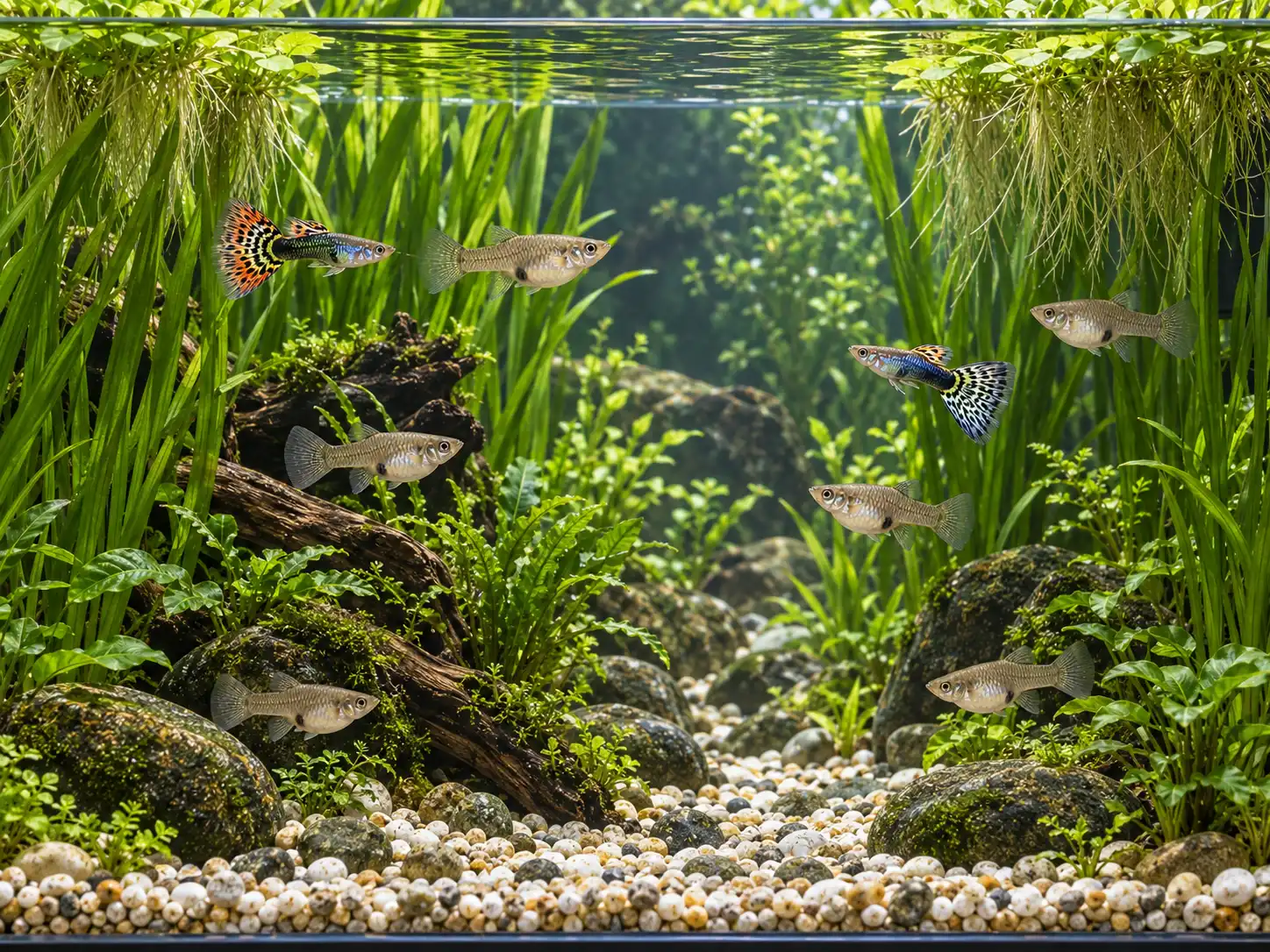
A starting ratio of one male to at least two or three females can reduce the attention falling on one female, but no ratio guarantees safety. If a female hides continuously, loses weight, develops damaged fins, or cannot feed, add space or separation instead of adding more fish to an already crowded aquarium.
A sex ratio is useful only when every female can leave the males. Count routes, cover, body condition, and feeding access alongside the numbers.
How quickly can a mixed guppy group grow?
FishBase records internal fertilization, female sperm storage, gestation of roughly four to six weeks, and broods of 20 to 40 live young in its compiled biology. Adults provide no parental care and may eat fry, yet dense floating roots can allow enough juveniles to survive that the aquarium's waste load changes within weeks.
Population pressure can therefore increase without another purchase. A filter sized for six adults may be asked to process the food and waste of adults, growing juveniles, and a second brood before the first group has been rehomed.
- Choose whether fry are wanted Decide before mixing sexes because a purchased female may already store sperm.
- Set a population ceiling Base it on adult footprint, filtration, oxygen, and the number of fish you can responsibly keep.
- Prepare a separate option Have a cycled grow-out tank, divider, or confirmed rehoming route before a brood arrives.
- Count juveniles weekly Record approximate numbers and size classes instead of treating fry as invisible bioload.
- Recheck feeding access Confirm adults and small juveniles receive suitable food without persistent deposits.
- Act before the next brood Separate sexes or move planned juveniles while the original aquarium still has a safety margin.
Do not release surplus guppies or use uncertain outdoor ponds as disposal. Rehome through responsible aquarium channels and tell the new keeper the sex, approximate age, health history, and possibility that females are already fertilized.
What tank plan handles adults and fry?
A 75 × 30 cm footprint is a practical starting point for a managed adult group because it offers more escape distance and water stability than a short small tank. FishBase compiles 60 cm as an aquarium length, but a mixed group with retained fry or another species needs more space before births begin.
You should keep open surface and midwater for feeding, planted margins for retreat, and a filter intake that cannot trap newborn fry. Floating plants can break sight lines and provide nursery cover, but they should not seal the surface or hide declining gas exchange.
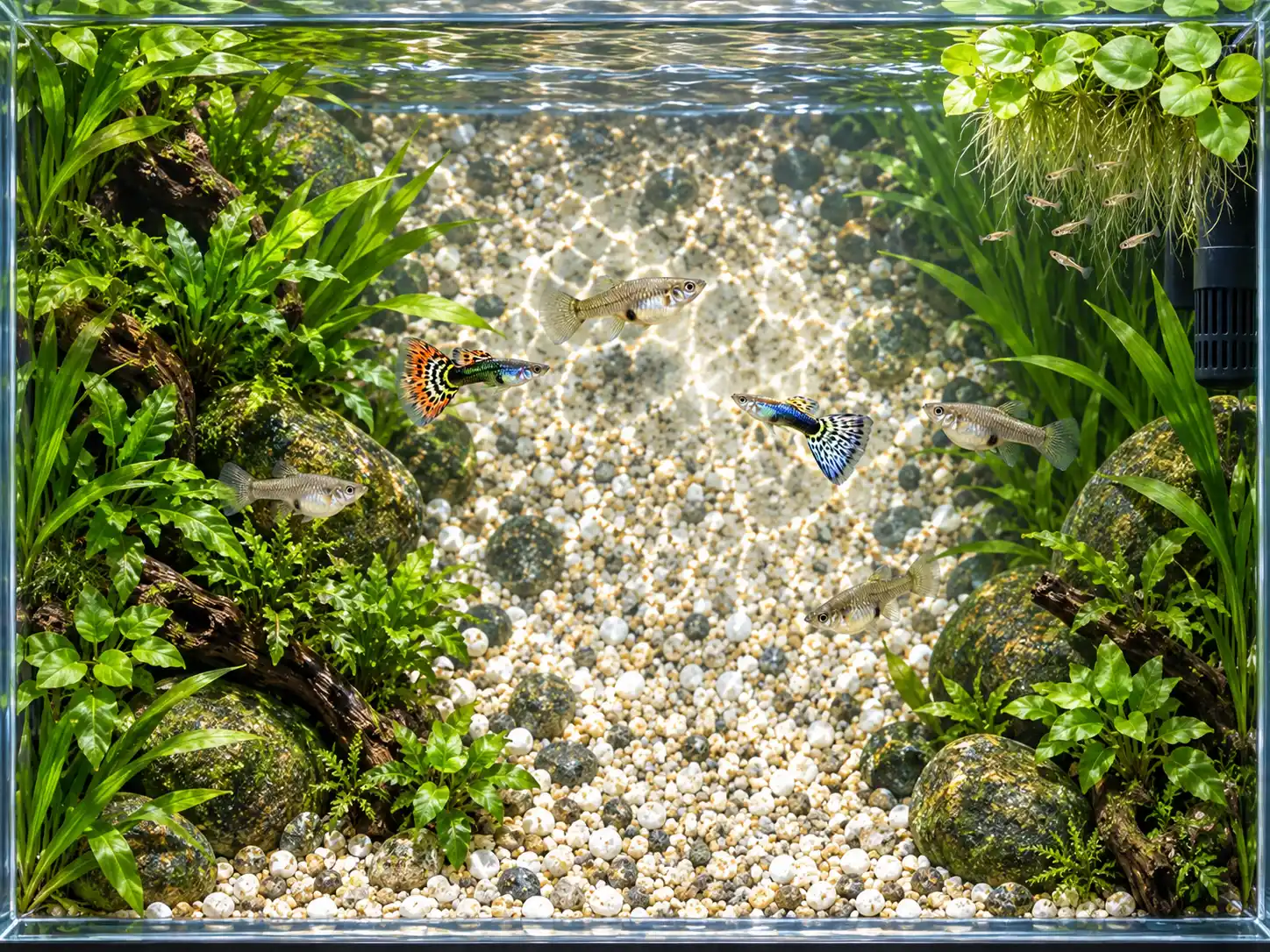
- Reserve horizontal space for the largest adult females, not the smallest males.
- Give each planted retreat at least two exits so a pursuing fish cannot guard one opening.
- Keep part of the surface open for gas exchange and observation.
- Protect filter intakes before fry appear rather than after losses begin.
- Provide two feeding areas when shy females or juveniles miss food.
- Choose a population ceiling and a dated rehoming or separation trigger.
- Keep a fitted lid around cable and filter gaps.
Tall décor can look full while leaving very little usable swimming room. Keep hardscape stable and avoid sharp edges that can catch enlarged fins, especially in strains whose caudal fins reduce acceleration and turning ability.
Which water conditions suit guppies?
FishBase describes guppies from varied environments, including warm springs, vegetated ditches, canals, ponds, and small streams. It records fairly warm conditions around 23 to 24 °C in part of that evidence and notes a broad salinity tolerance, but those facts do not make rapid transfers between fresh, brackish, soft, and hard water safe.
The supplier's water and the strain's long-term history matter. A line raised for generations in mineral-rich tap water may face severe osmotic stress if moved quickly into very soft acidic water, while a stable local strain does not need salt added merely because the species can tolerate salinity.
Guppy water decisions
- TemperatureAround 23 to 24 °C in FishBase habitat notesWarm freshwater system. Applies to Compiled biological context, with strain and community limits still required. Separate thermometer away from the heater and filter return. Source: FishBase, checked 2026-09-15.
- pHMeasure supplier and receiving water rather than applying one universal species numberFreshwater system. Applies to Captive strains occur under varied conditions. Calibrated meter or liquid test covering both source-water values. Source: Supplier record plus repeatable local testing, checked 2026-09-15.
- General hardnessPreserve a stable mineral context and compare it before transferFreshwater system. Applies to Strain history and source water govern the practical range. Drop-count GH titration test reported in dGH. Source: Supplier record plus repeatable local testing, checked 2026-09-15.
- Ammonia and nitriteUndetectable in an occupied mature aquariumFreshwater system. Applies to Adult group and rapidly changing fry load. Appropriate liquid or calibrated photometric test. Source: Repeated aquarium measurements, checked 2026-09-15.
Every range above.
Ammonia and nitrite can rise after a brood survives, feeding increases, or a filter intake guard clogs. Test the system after population changes and treat any detectable toxic nitrogen as a measured aquarium problem, not as evidence that one strain is weak.
When source and receiving water differ, plan a controlled acclimation and stop if the fish lose balance, breathe abnormally, or cannot maintain posture. A fast correction toward a preferred number can be more harmful than a stable value at the edge of a defensible range.
What should guppies eat?
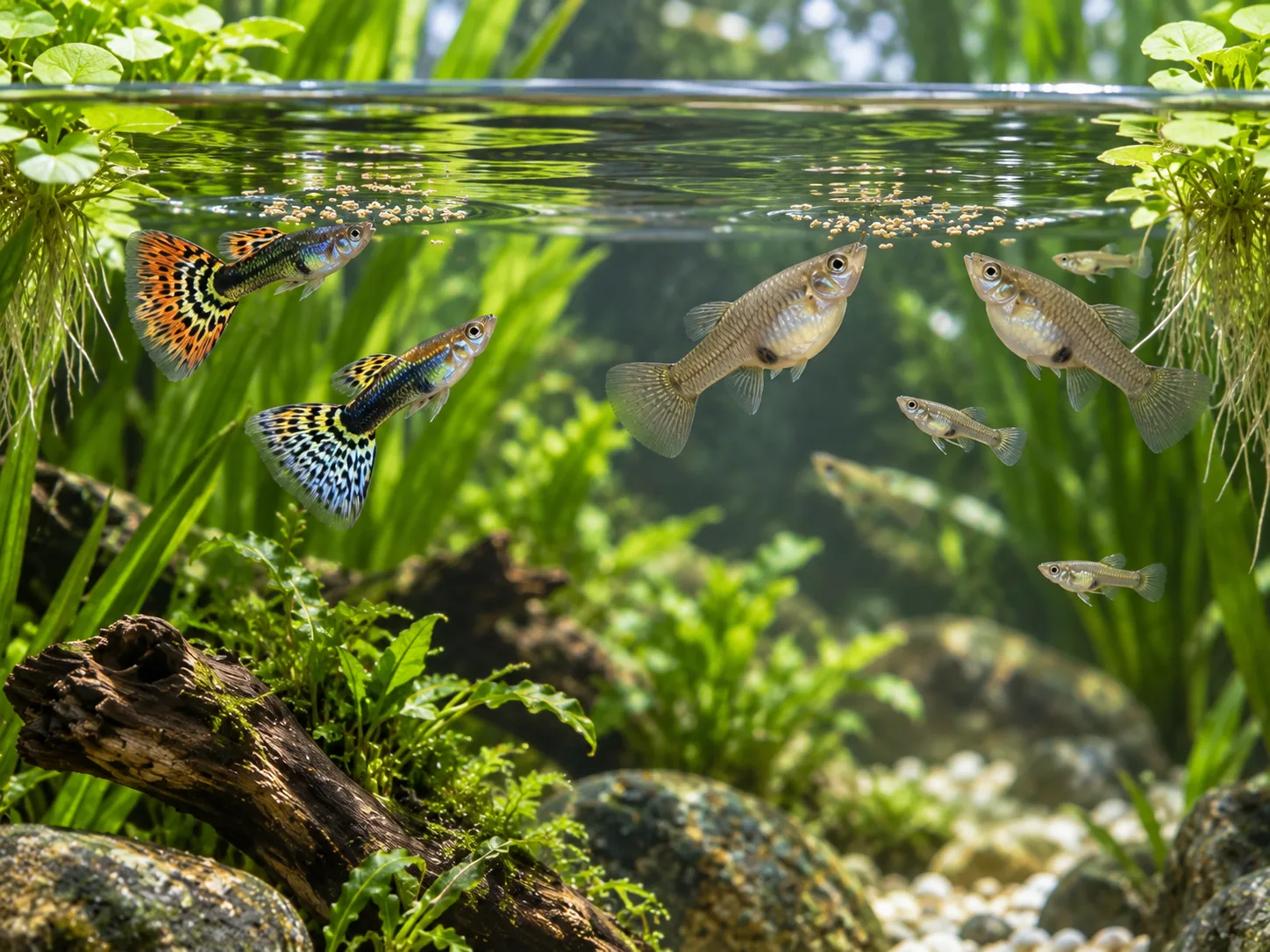
FishBase records zooplankton, small insects, and detritus. In an aquarium, use a complete small pellet or quality flake as the nutritional base, then add appropriately sized frozen, live, or plant-containing foods without letting one favourite replace the complete ration.
Guppies feed readily near the surface and through midwater, which makes overfeeding easy to miss. A large apparent appetite can reflect competition and courtship energy rather than a need to keep adding food until particles settle.
Complete staple
Your chosen particles should let both small males and large females swallow without prolonged chewing.
Distributed meal
You can release food in two areas so courtship and dominant fish do not control every bite.
Juvenile size
Your fry need appropriately fine food without the whole aquarium becoming a suspended food cloud.
Body-condition check
You should look for hollow bellies, pinched backs, persistent swelling, or one sex losing access.
Waste check
Your next portion should be smaller when food settles, nitrate rises quickly, or the intake guard clogs.
Storage check
Your dry food should remain sealed, cool, and within its usable date, so avoid a container too large to finish fresh.
You should feed fry intentionally only when you plan to retain them. Increasing survival without a population outlet transfers the problem to oxygen, filtration, adult stress, and later rehoming.
Which fish can share a guppy aquarium?
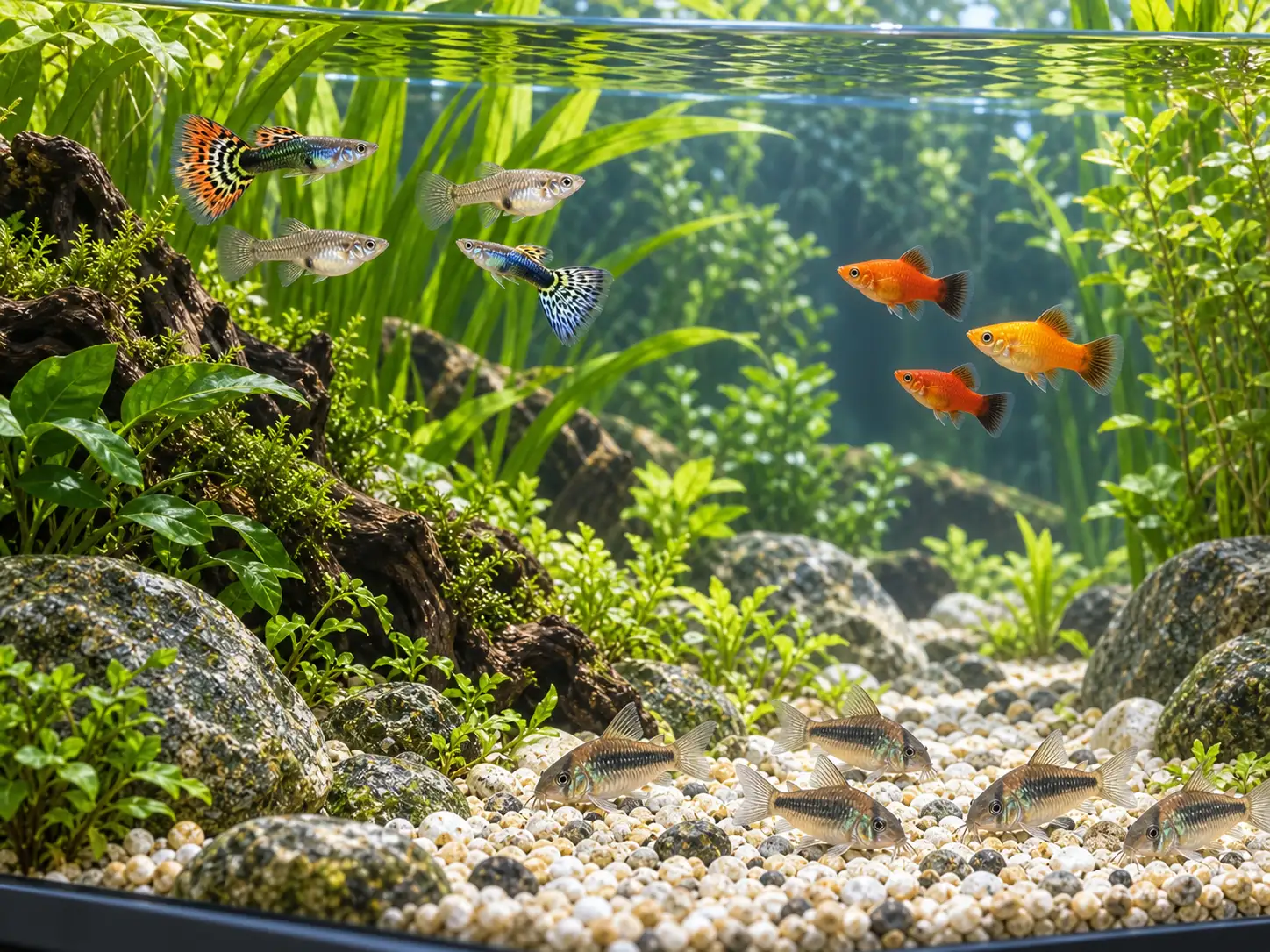
A compatible fish must tolerate the same stable mineral and temperature conditions without biting ornamental fins or being overwhelmed by guppy feeding. It must also fit after the guppy population plan, because a community calculated before the first brood can become crowded later.
Male guppies may direct courtship toward other livebearers or similarly shaped fish. Large predators may eat adults, while many otherwise peaceful community fish will eat fry; decide whether fry survival is a goal before treating predation as either helpful or unacceptable.
Compare community demands
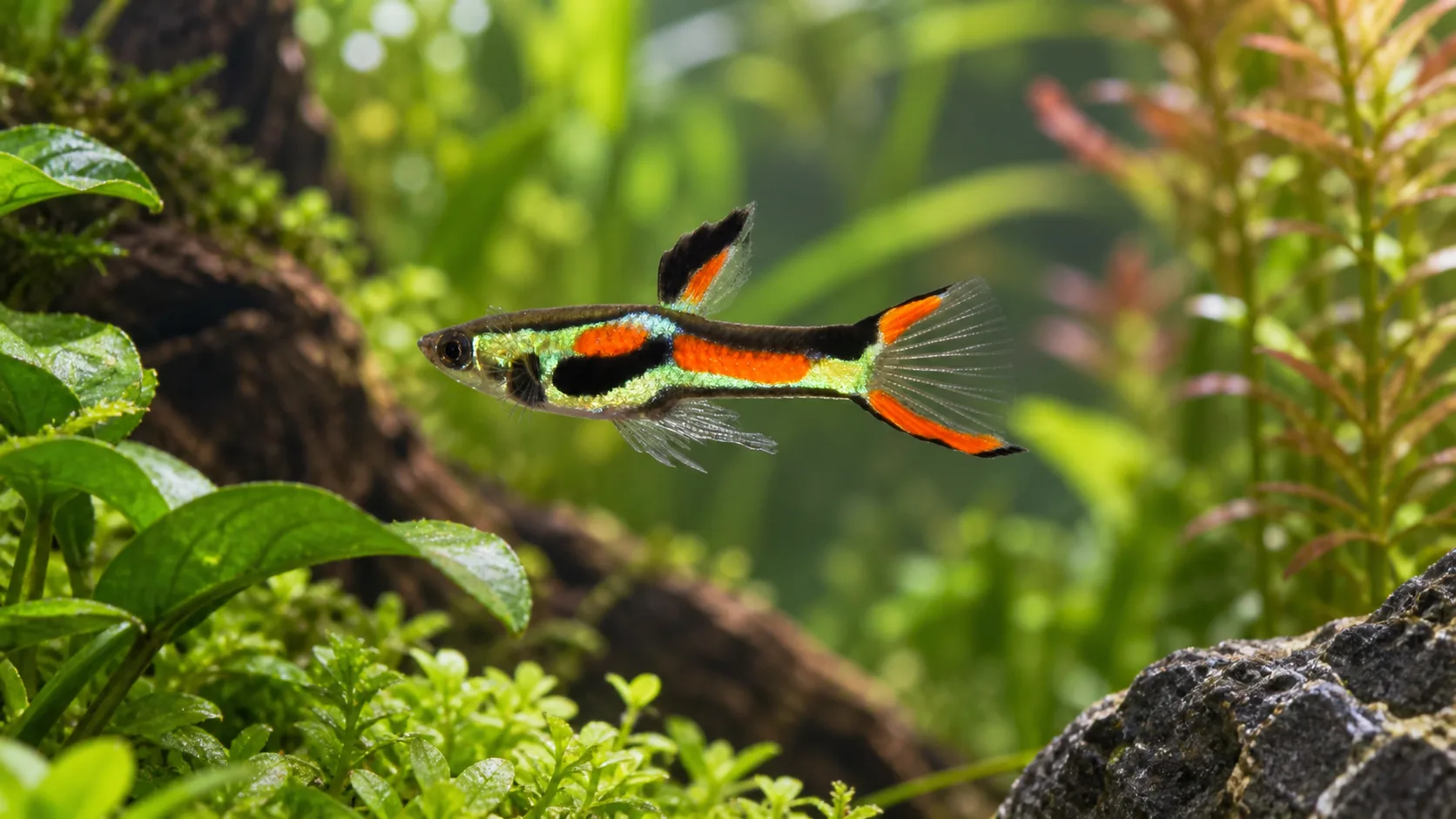 Endler's livebearer
Similar reproductive pressure and potential hybridization make lineage and population control central.
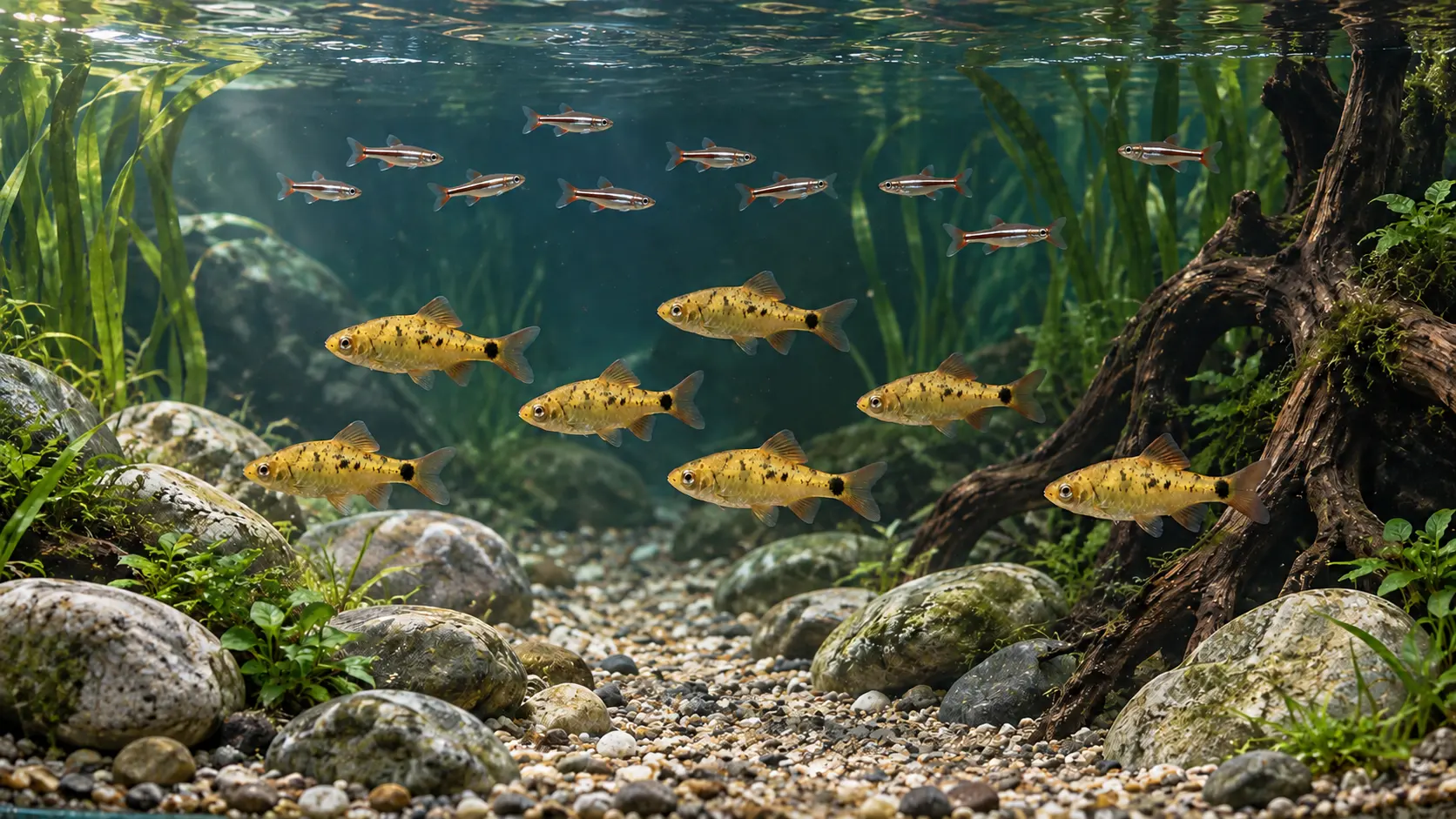 Gold barb
Larger, cooler, and more active, with a school footprint that can overwhelm long-finned guppies.
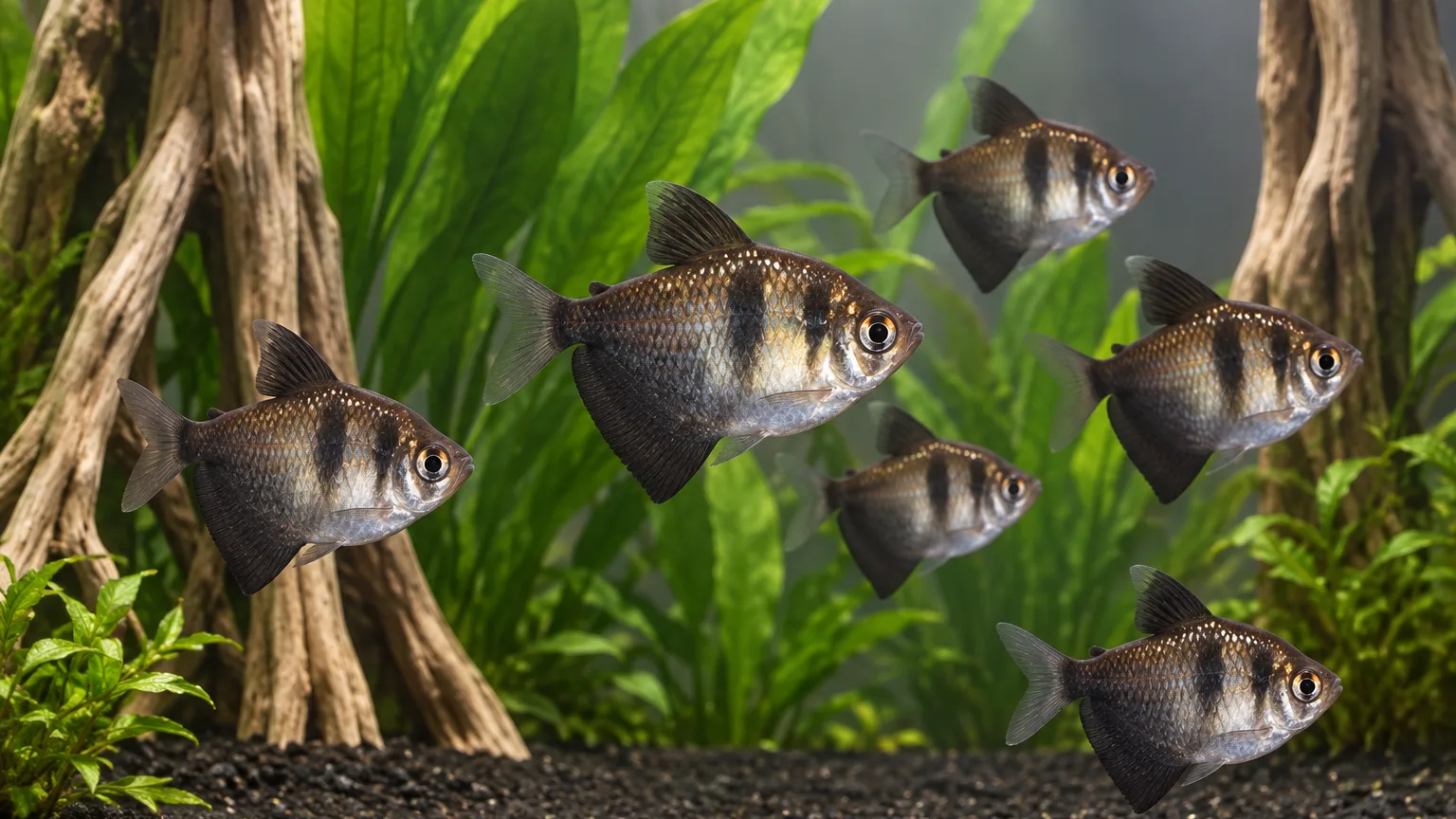 Black skirt tetra
Deeper-bodied and potentially more interested in fins, so group size and observed behaviour matter.
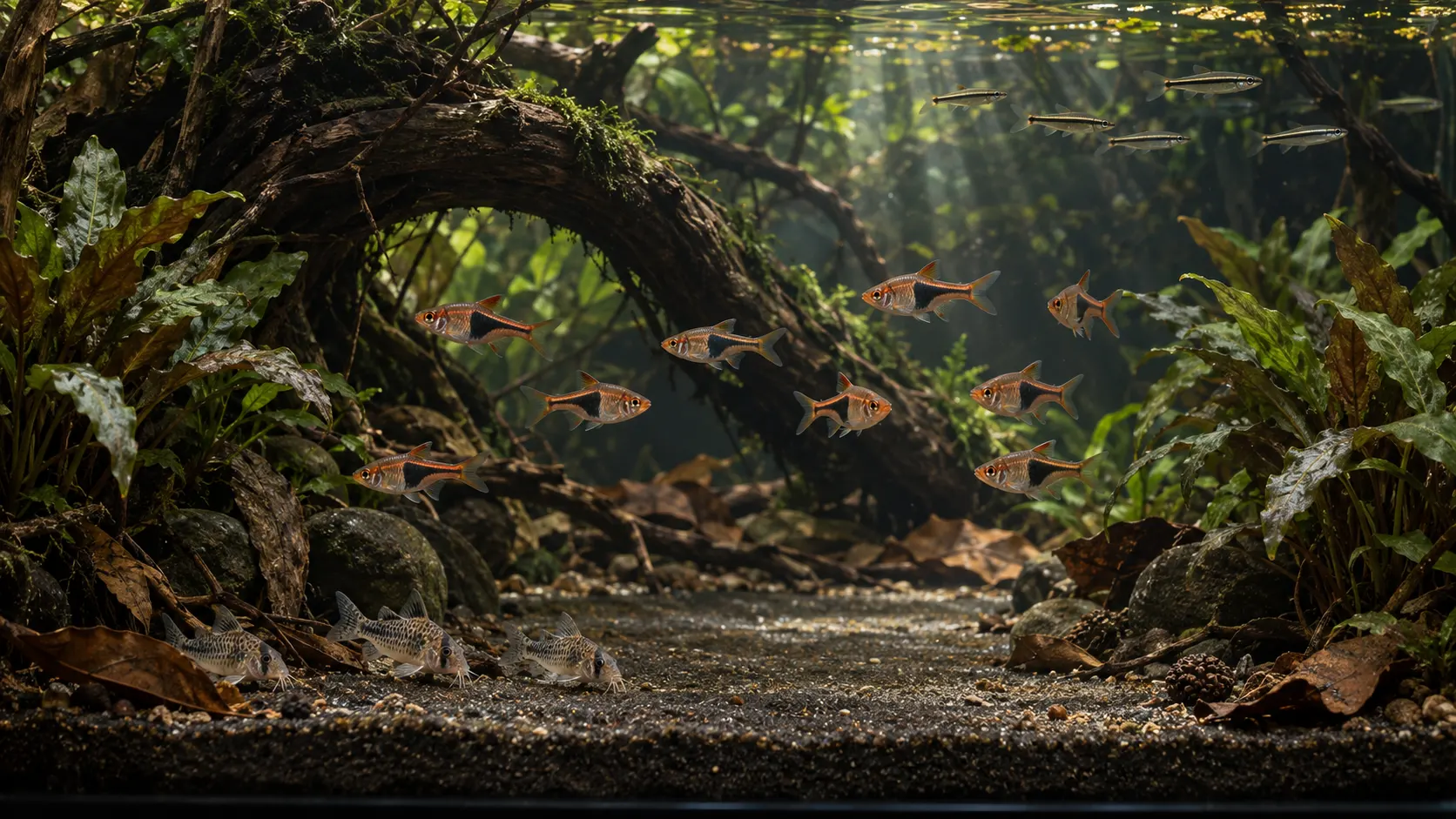 Harlequin rasbora
Peaceful but usually kept in softer water and its own full school.
 Cardinal tetra
Warm-water overlap does not erase the difference between soft-water and mineral-rich setups.
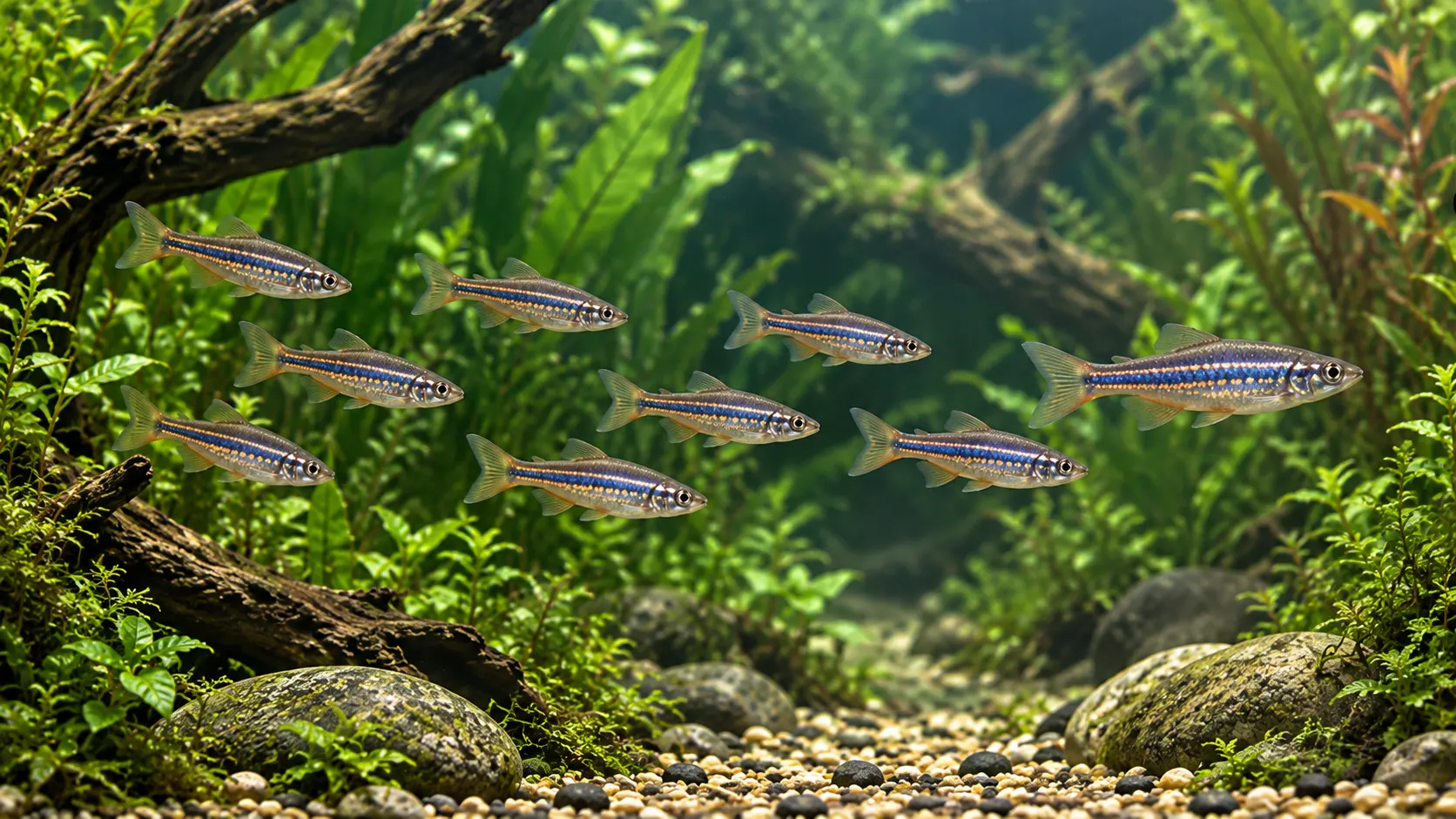 Giant danio
Its adult size and speed make it a poor match for ornamental guppy fins in a modest aquarium.
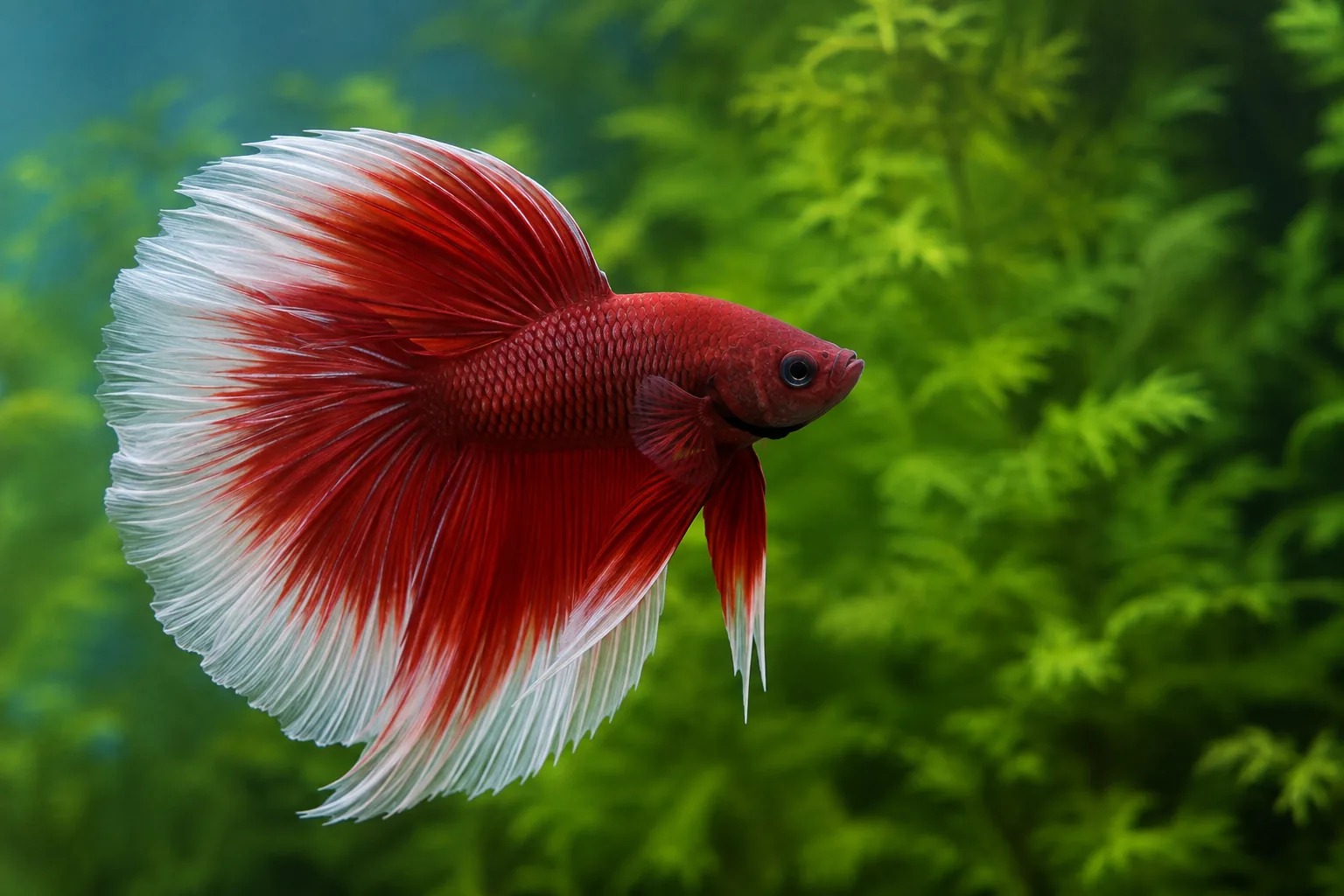 Betta fish
Long fins and individual temperament require observation and a ready separation plan.
 Cherry barb
A calmer barb, but its own group and temperature range still consume capacity.
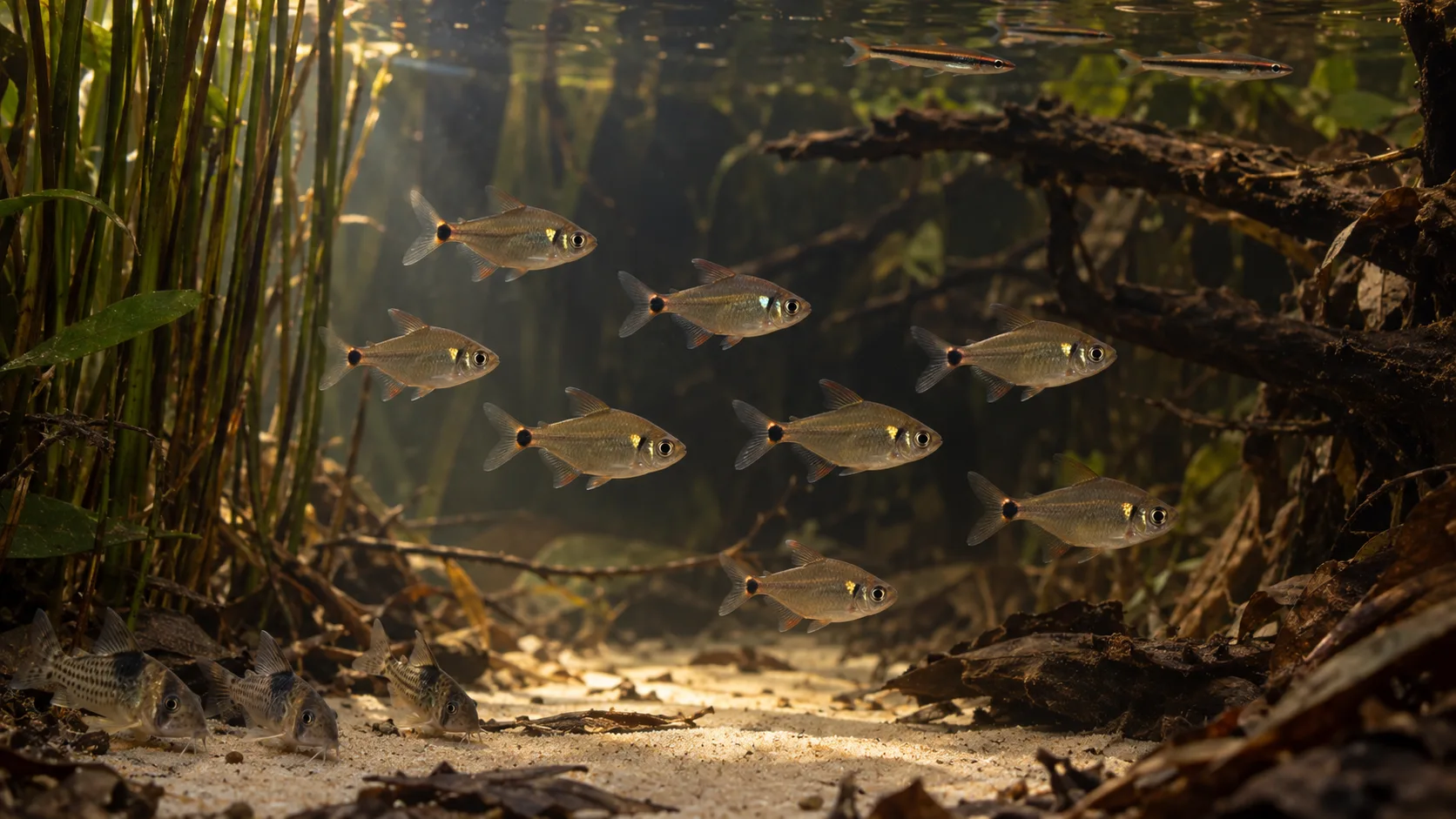 Head and tail light tetra
A schooling tetra whose broad water record still requires source-water comparison.
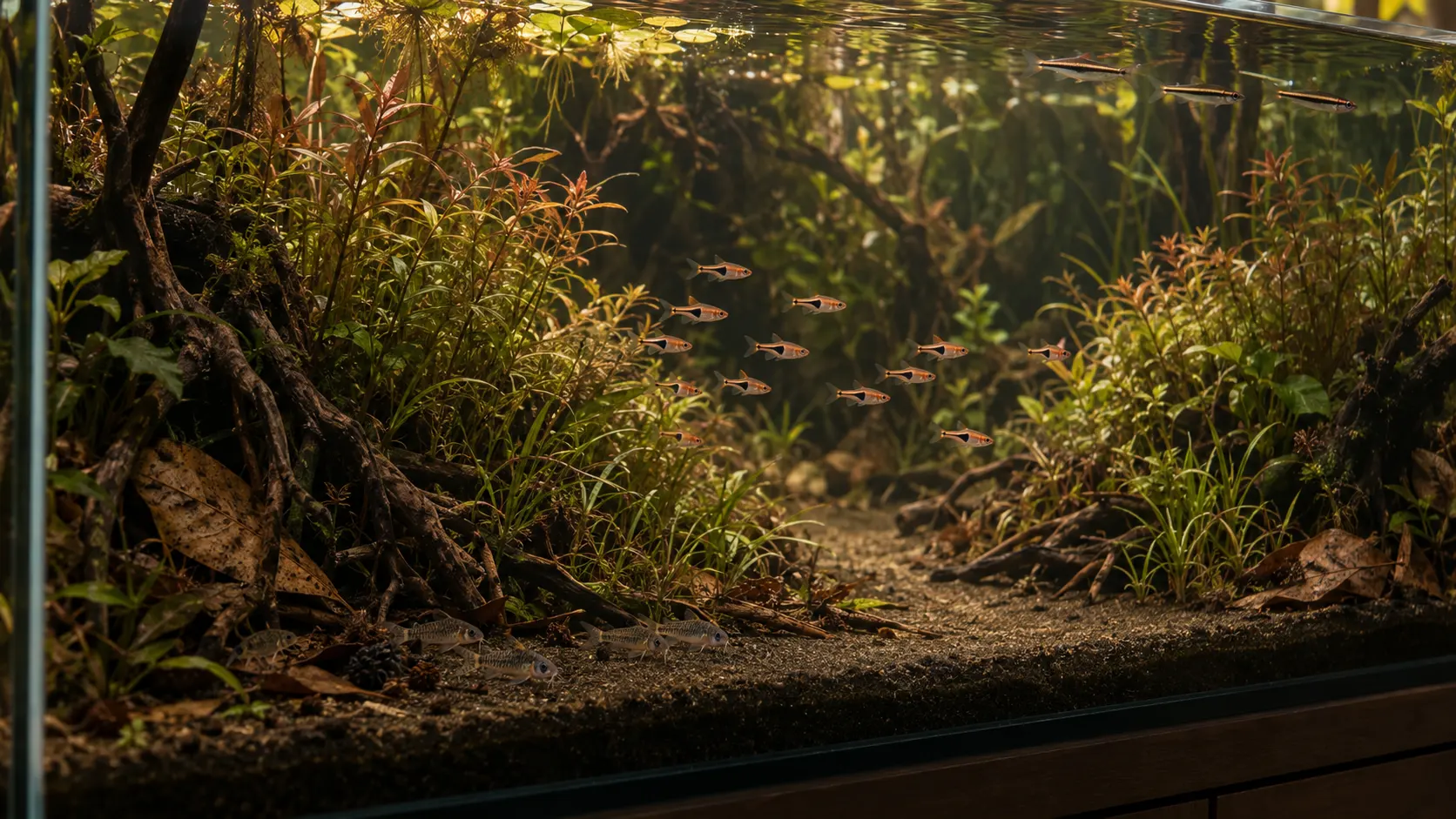 Lambchop rasbora
A tiny soft-water school that should not be added only to fill the upper tank.
You should avoid known fin nippers, large predatory fish, or tank mates that require persistent extreme chemistry outside the guppies' established source-water context. Quarantine every new group and keep a ready separation option because compatibility cannot be guaranteed by a list.
What warning signs need a tank-wide check?
Brief display, chasing, and fin spreading can be normal, but every fish should still rest, feed, and leave an encounter. Repeated cornering, shredded fins, weight loss, clamped fins, or a female remaining hidden whenever a male approaches shows that the current social plan is failing.
Check shared causes before assuming a strain defect
- Toxic nitrogen Test ammonia and nitrite after births, deaths, overfeeding, intake blockage, or filter cleaning.
- Temperature and oxygen Verify the thermometer, surface movement, room heat, and any power interruption.
- Sexual pressure Record which fish initiates pursuits and whether the same female loses food or rest.
- Fin damage source Inspect sharp décor, filter intakes, and the behaviour of every tank mate.
- Contamination Review sprays, soap, untreated water, metals, and shared equipment.
Several fish gasping, rolling, losing balance, or crowding the surface at once requires immediate water and oxygen assessment. Increase safe aeration, verify temperature, test toxic nitrogen, and replace contaminated water with conditioned temperature-matched water when measurements support that action.
You should not diagnose a disease from a tail shape, colour change, or photograph. Avoid mixing medication, salinity changes, complete filter cleaning, and major water-chemistry correction without a confirmed condition and qualified oversight.
How long is the guppy commitment?
Guppy lifespan estimates vary by strain, starting age, temperature, reproductive history, and husbandry, while the primary species records used here do not establish one dependable aquarium promise. Plan for several overlapping generations rather than one fixed number of years when males and females live together.
FishBase lists P. reticulata as Least Concern, assessed 18 May 2020, and records established populations outside the native range. A low global threat category does not authorize outdoor release or remove local restrictions on transport and trade.
A guppy group fits when the aquarium supports the largest females, gives every fish escape and feeding space, maintains stable source-appropriate water, and has a written population limit before sexes are mixed. Colour variety is secondary to movement, body condition, breathing, and the number of fish the mature system can support.