
What Is a Giant Danio, and How Much Room Does It Need?
Devario aequipinnatus
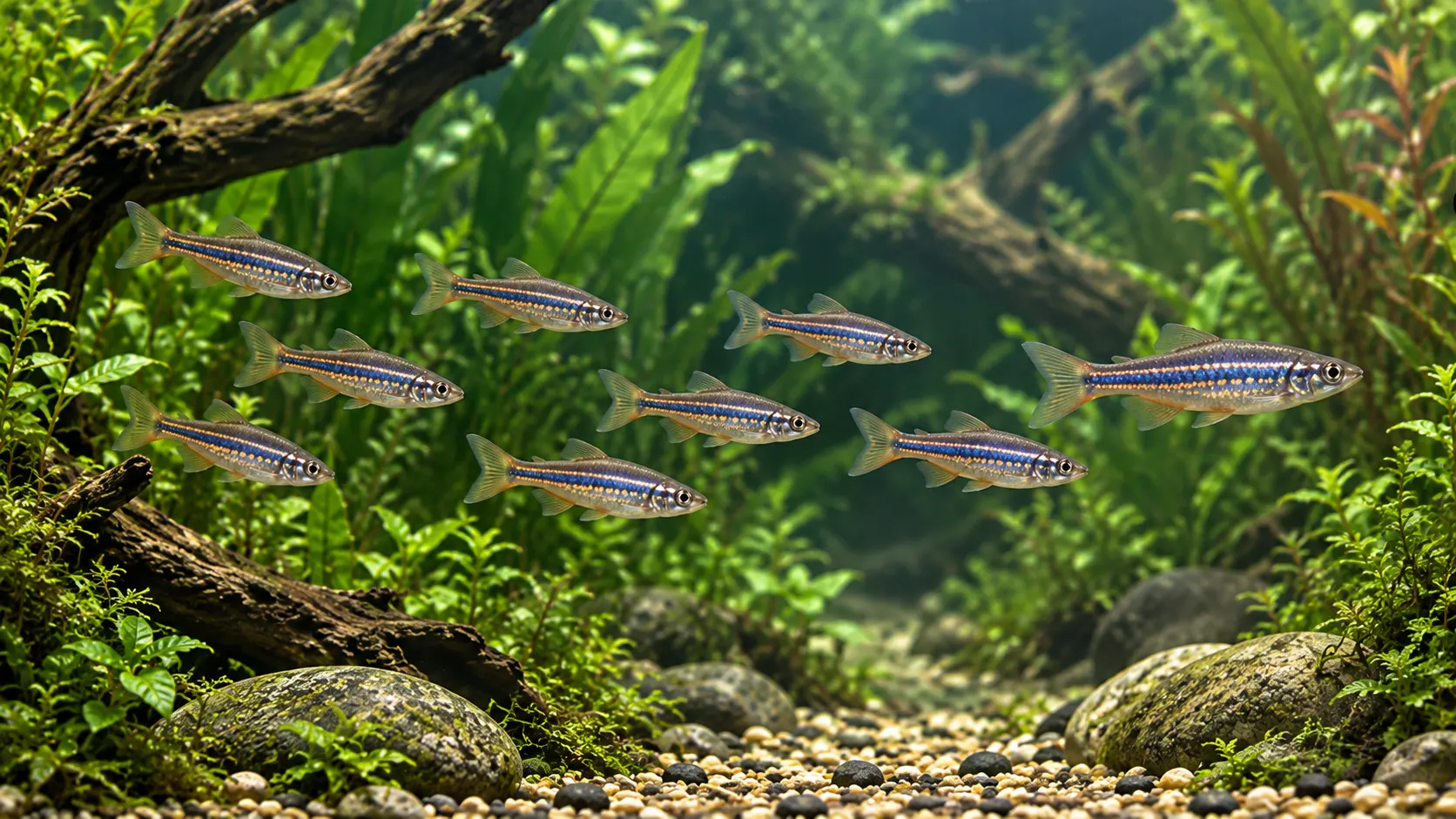
A giant danio is a fast, surface-oriented schooling fish that can reach 15 cm total length. It suits a long, covered, well-oxygenated aquarium built for a full group, rather than a small community tank chosen around the size of juveniles in a shop.
At a glance

- Adult size
- 15 cm
- Minimum footprint
- 120 × 45 cm or larger
- Minimum volume
- 243 litres
- Social structure
- Active surface-oriented school; FishBase documents at least five, while eight is the practical starting recommendation when the system can support the full group.
- Minimum group
- 5
- Diet
- Omnivore
- Feeding
- Use a complete floating or slowly sinking staple with appropriately sized insect, worm, and crustacean foods for variety; spread food across the surface and verify that every fish eats.
- Waste load
- moderate to high for a complete adult school
- Family
- Danionidae
- Native range
- Ganga, Brahmaputra, Meghna, and nearby South Asian freshwater drainages, with the exact range narrowed by recent taxonomic work
- Also sold as
- Malabar danio. Trade and hobby names, not accepted species names.
- Former scientific names
- Danio aequipinnatus, Leuciscus lineolatus, Perilampus aequipinnatus. Superseded names for this same species.
- Conservation status
- Least Concern, assessment dated 2010 Source
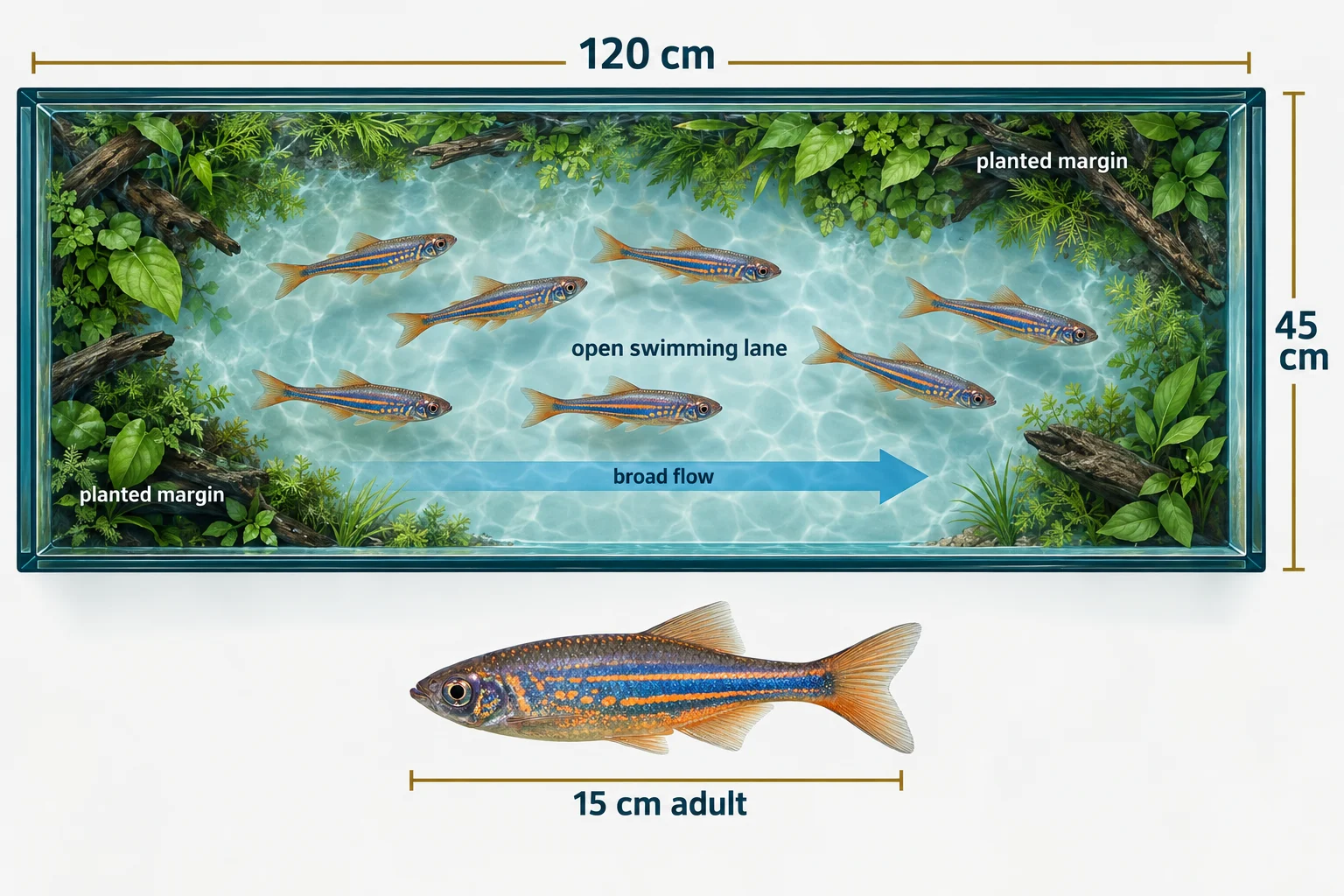
A 120 × 45 × 45 cm aquarium is roughly 243 L gross, but the 120 × 45 cm footprint is the primary recommendation because length and turning width matter more than volume alone for a fast 15 cm schooling fish.
What is a giant danio?
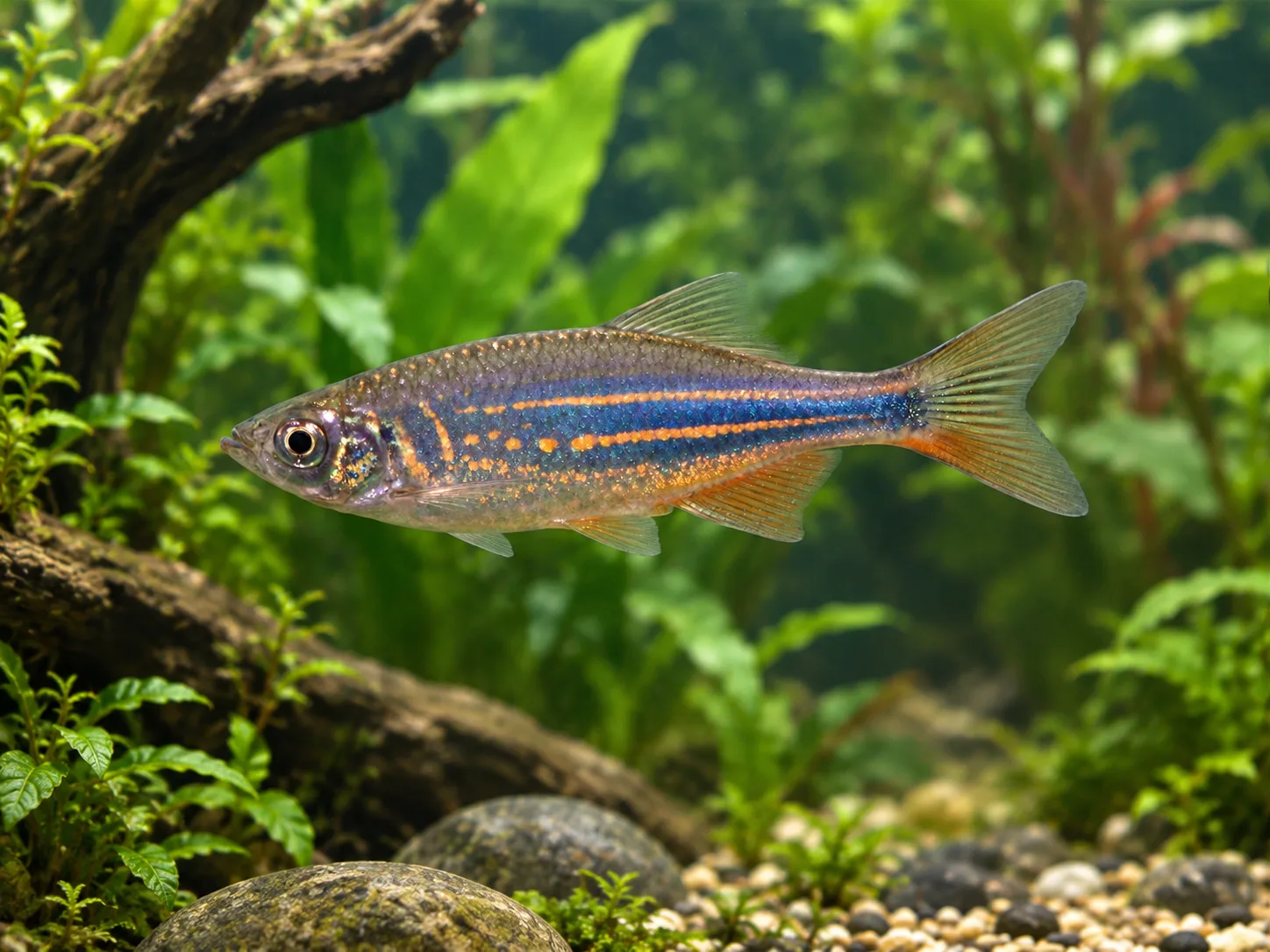
The giant danio is Devario aequipinnatus, a streamlined South Asian freshwater fish in the family Danionidae. Its long body, deeply forked tail, and horizontal blue markings suit sustained swimming in open water, while the name giant reflects its size relative to much smaller danios such as the celestial pearl danio.
The Catalog of Fishes lists the accepted name as Devario aequipinnatus and places the species in the Ganga, Brahmaputra, and Meghna basin region of South Asia. FishBase describes clear, shaded hill streams with pebble or gravel bottoms and schools holding near the surface in fast upland water.
- Accepted name
- Devario aequipinnatus
- Family
- Danionidae
- Documented maximum size
- 15 cm total length
- Social structure
- Active school, never a solitary display fish
- Documented group floor
- At least five
- Practical starting group
- Eight when the tank supports them
- Practical starting footprint
- 120 × 45 cm or larger
- Published water range
- 22 to 24 °C; pH 6.0 to 8.0; 5 to 19 dH
- Diet
- Omnivorous, with a strong insect and small invertebrate component
- Conservation assessment
- Least Concern, assessed in 2010
A seller may use giant danio for more than one similar striped Devario, so a shop label alone is weak identification evidence. Confirm the scientific name and supplier origin when identity matters, especially if you are comparing size, distribution, or breeding traits.
The lead photograph is by Faucon, licensed CC BY-SA 2.5 through Wikimedia Commons.
It is useful for general appearance, but exact identification among related Devario can require counts and structures that a casual aquarium photograph does not show.
How big does a giant danio get?
FishBase records a maximum total length of 15 cm, measured from the tip of the snout to the end of the tail fin. Maximum length is not a promise that every fish will reach exactly 15 cm, but it is the responsible planning figure because the aquarium must still work for the largest healthy adult in the group.
Juveniles can look slim and modest in a dealer tank, which makes the species easy to underestimate.
The relevant load is not one young fish; it is the adult length, turning radius, speed, group size, feeding activity, and combined waste output of the entire school.
Body size also changes compatibility. A fish that appears harmless beside a juvenile giant danio may later be stressed by the adult school's speed, outcompeted at meals, or become small enough to be treated as food.
How many giant danios should live together?
Giant danios should live in a group. FishBase gives five or more as the aquarium recommendation, so five is the documented floor, not a target that proves the social need is fully met.
A starting group of eight is a defensible welfare choice when the aquarium has enough footprint and filtration. It moves beyond the bare minimum without claiming that research has established one perfect number for every tank.
| Decision factor | Five fish | Eight or more fish |
|---|---|---|
| What it means | Documented minimum | Practical welfare recommendation |
| Space demand | Lower total load, but still needs a long tank | Higher total load and needs more open water |
| Social margin | Little room for losses or persistent targeting | More possible partners for coordinated movement |
| Owner responsibility | Upgrade or add fish only if the tank can support them | Begin here only when oxygen, filtration, and footprint are ready |
Two controlled studies help explain why group structure matters.
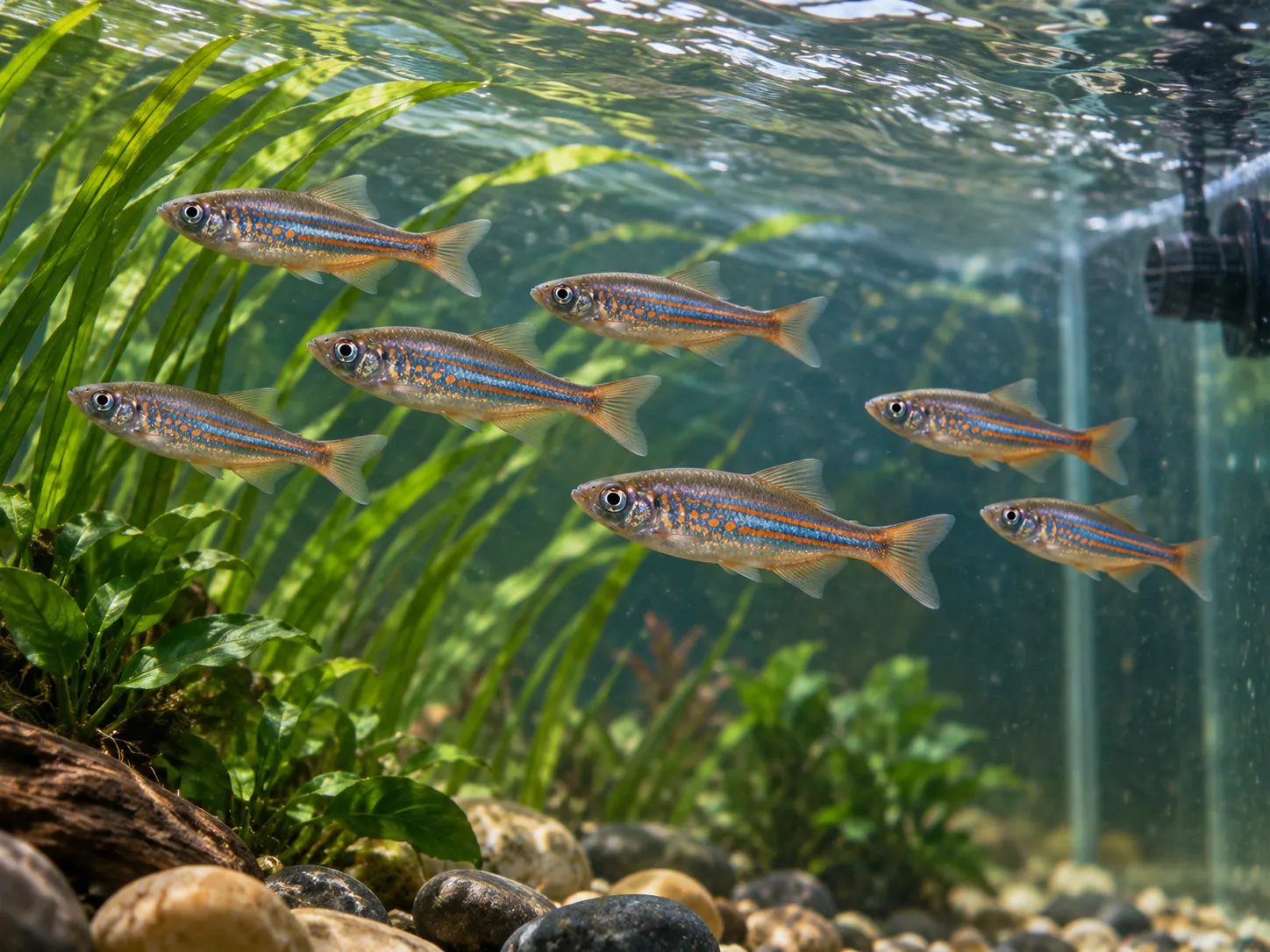
A 2014 flow experiment found that schools of eight changed their spacing and orientation as flow increased, facing upstream and spreading across the current; a 2024 physiology study found that schooling reduced the energy used per tail beat and improved aerobic performance. Those are controlled findings about how the fish move together, not permission to copy a laboratory holding tank as a permanent home.
Watch the group rather than assuming a head count has solved every social problem. Persistent isolation, one fish being driven away from food, split fins, repeated cornering, or frantic pacing deserve investigation of space, cover, current, health, and group composition.
What tank does a giant danio need?
FishBase gives a 100 cm minimum aquarium length. For a full group of fish that may reach 15 cm, the better starting recommendation is a 120 × 45 cm or larger footprint, which gives the school more useful straight-line distance and more turning width.
A typical 120 × 45 × 45 cm aquarium holds about 243 litres before substrate, hardscape, and the air gap reduce actual water volume. Use that volume only as context: a tall narrow aquarium with the same litres does not provide the same swimming route.
- Use a closely fitted lid and close cable and pipe gaps.
- Keep a long, unobstructed route through the middle or front of the aquarium.
- Place plants, wood, or rock mainly along the back and ends instead of filling the whole route.
- Provide efficient filtration and visible surface movement without turning the tank into one harsh jet.
- Leave quieter margins where fish can move out of the strongest current.
- Size the system for the waste and oxygen demand of the complete adult group.
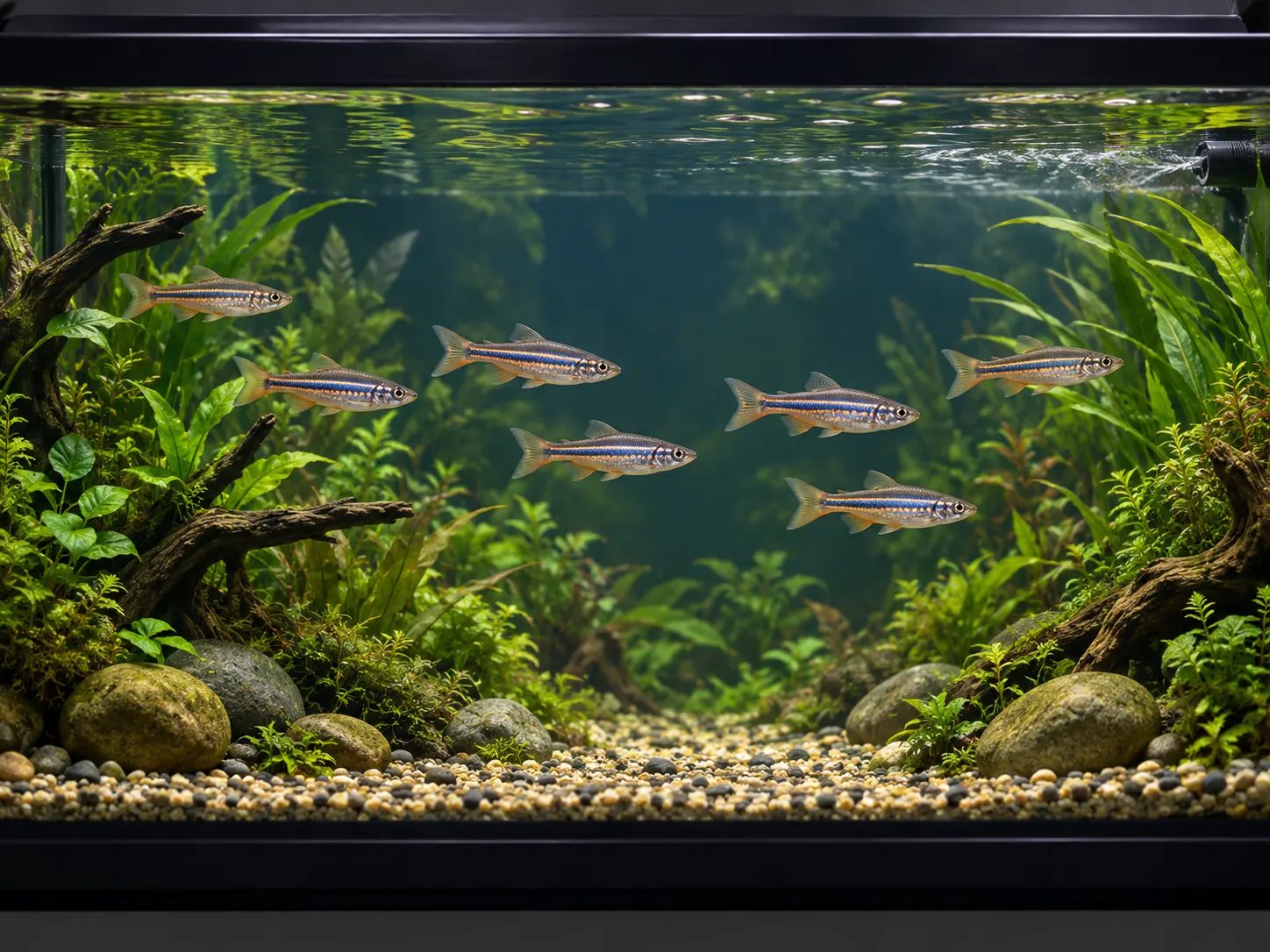
Flow should create movement and gas exchange across the tank, not pin fish at one outlet.
If every fish must fight the same concentrated jet, redirect or diffuse it and verify that the surface still moves across a broad area.
The tank is too constrained when the school repeatedly breaks apart to turn, feeding always collapses into one crowded point, slower residents cannot reach food, or fish cannot choose between strong and moderate flow. Treat those observations as reasons to change the layout, stocking, or tank footprint, not as personality quirks.
What water parameters suit a giant danio?
Published giant danio water parameters from FishBase span 22 to 24 °C, pH 6.0 to 8.0, and 5 to 19 dH. These broad chemistry limits describe documented aquarium conditions; they do not mean that a fish benefits from being moved rapidly from one end of a range to the other.
Documented giant danio water range
- Temperature22 to 24 °CSeparate aquarium thermometer.
- pH6.0 to 8.0Calibrated meter or an appropriate-range liquid test.
- General hardness5 to 19 dHDrop-count GH titration test.
Every range above applies to Devario aequipinnatus aquarium conditions in a freshwater system. Source: FishBase species summary, checked 2026-09-14.
Measure the aquarium and the water the fish currently occupies before trying to change anything. If a result is inside the documented range and the fish are stable, improving consistency, oxygenation, and maintenance is usually more useful than chasing a particular pH within that range.
Temperature readings should cover the warmest and coolest parts of the day because a room that seems comfortable can still produce a daily swing. Check a heater against a separate thermometer, and stop making adjustments if fish show rapid breathing, loss of balance, sudden hiding, or other acute distress.
The broad pH and hardness range should not be used to force a fast correction. When new fish arrive in water that differs materially from the aquarium, compare measured temperature, pH, and conductivity or hardness, then use a gradual acclimation method appropriate to the actual difference and monitor the fish throughout.
Ammonia and nitrite should not be detectable in a functioning established aquarium.
Nitrate management depends on the whole stocked system and test method, so use a repeatable test, record the trend, and correct the cause of a rise through maintenance, stocking, feeding, and filtration rather than treating one universal number as safe for every tank.
Oxygen deserves special attention because this is an active fish associated with flowing water. Maintain broad surface agitation, keep filter media working, remove decomposing food, and investigate any group gathering at the surface instead of assuming the behavior is normal for a surface swimmer.
What do giant danios eat?
The documented giant danio diet includes insects from outside the water, worms, and crustaceans. In an aquarium, a quality complete food should provide the nutritional base, while appropriately sized frozen or live invertebrate foods add variety and support natural pursuit behavior.
Choose floating or slowly sinking foods that remain available in the upper water, but do not rely on one large release at the same spot. A fast dominant fish can collect several pieces before a smaller or lower-ranking fish gets one.
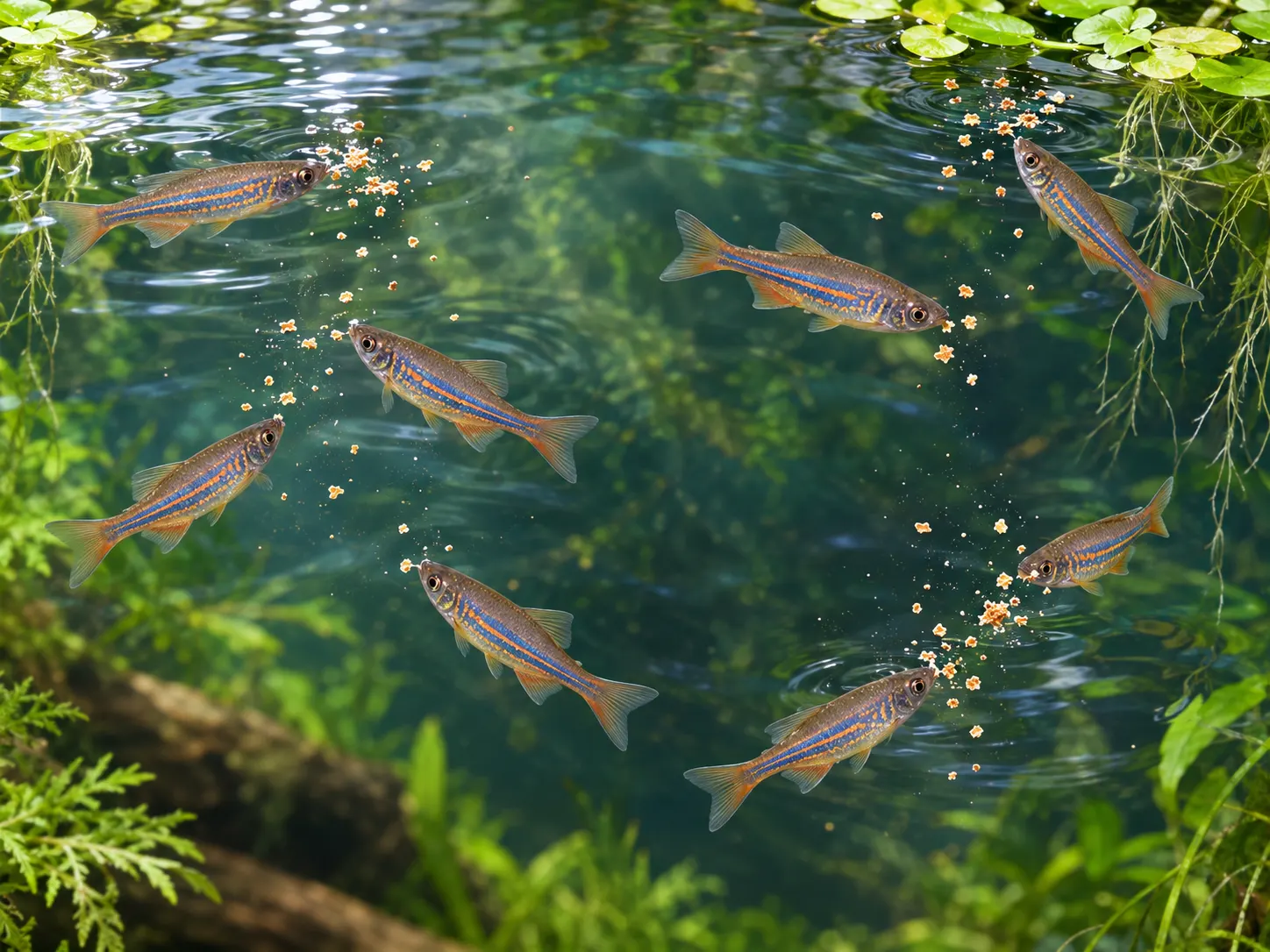
- Use a complete food sized for the fish's mouth as the regular staple.
- Add insects, worms, or small crustacean foods as variety, not as an unbalanced exclusive diet.
- Release food at two or three separated points when competition is intense.
- Stop when interest falls and remove food that reaches places the fish cannot recover it.
- Review body condition from above and from the side, not only appetite at feeding time.
- Check any fish that consistently hangs back for injury, disease, bullying, or an unsuitable current.
There is no honest universal number of pellets because food density, pellet size, fish size, temperature, and the rest of the community change the result. Use body condition, growth, waste, and uneaten food to adjust the portion, then change one variable at a time so you can see what worked.
Which tankmates work with giant danios?
The best tankmates for giant danios overlap in water requirements, are too large to be swallowed, and can feed without being overwhelmed by a rapid school at the surface. Robust midwater or lower-water fish often cope better than delicate, slow, long-finned species, but the individual species still needs its own space, social group, and temperature range.
| Decision factor | Better starting traits | Higher-risk traits |
|---|---|---|
| Swimming pace | Active enough to reach food and move away | Slow or easily startled by constant movement |
| Body and fins | Robust body with ordinary fins | Long flowing fins or very delicate finnage |
| Adult size | Clearly too large to swallow | Small enough to fit in an adult giant danio's mouth |
| Water use | Lower zones or a different open-water route | Competes for the same crowded surface space |
| Social needs | Its full group also fits the tank | Needs a group that would overfill the remaining footprint |
Profiles to compare before building the community
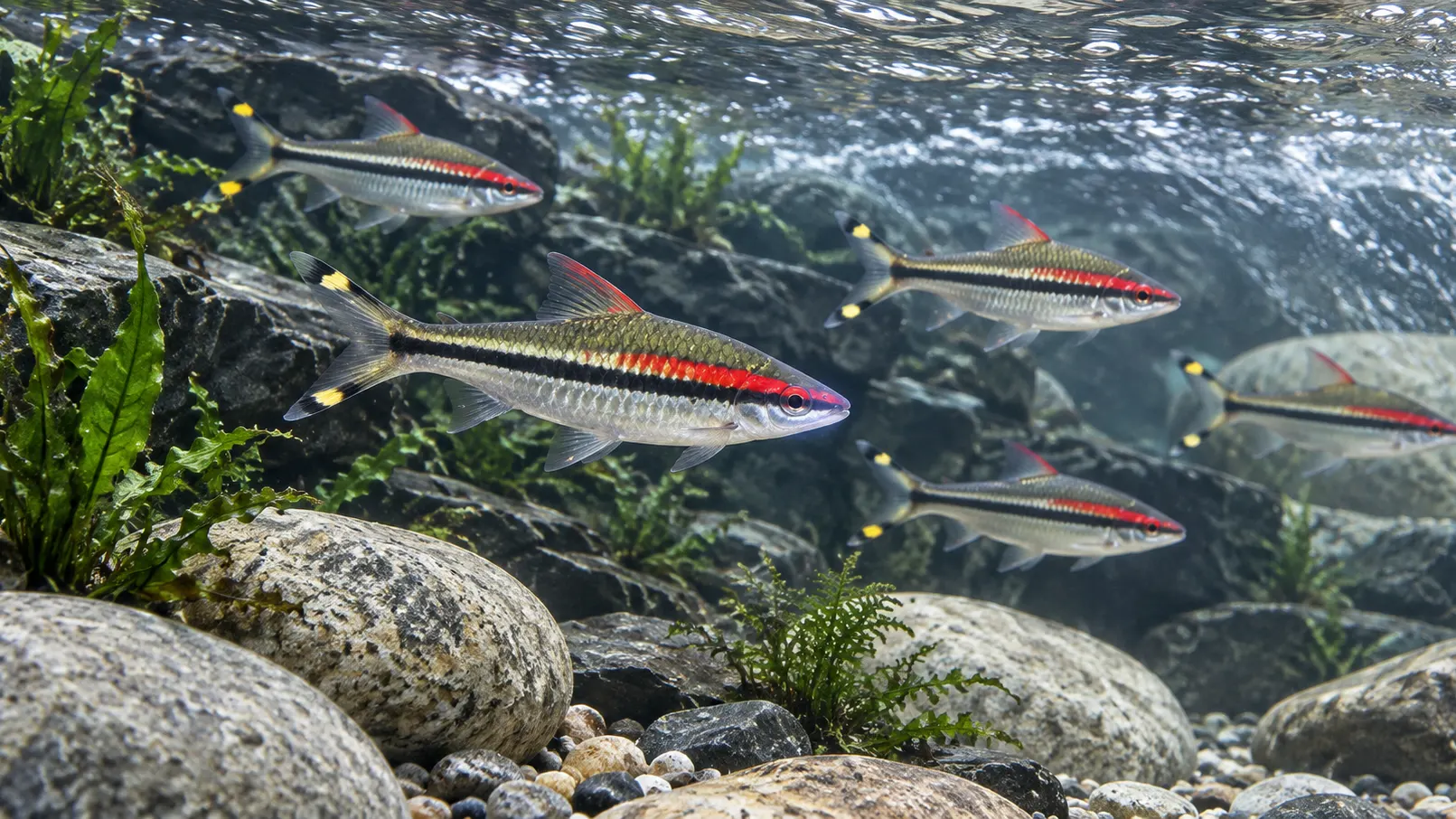 Denison barb
Another large, fast school whose footprint and water needs must be checked separately.
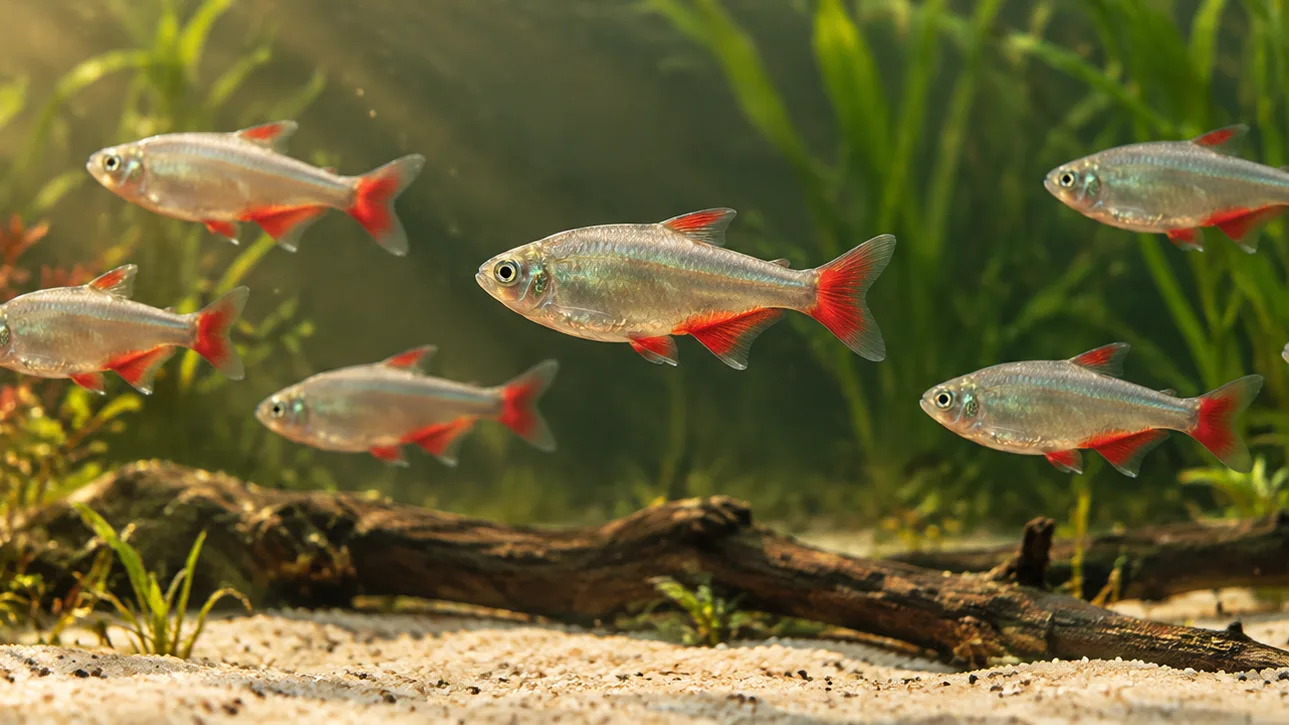 Bloodfin tetra
An active school with a different temperature question and a smaller adult body.
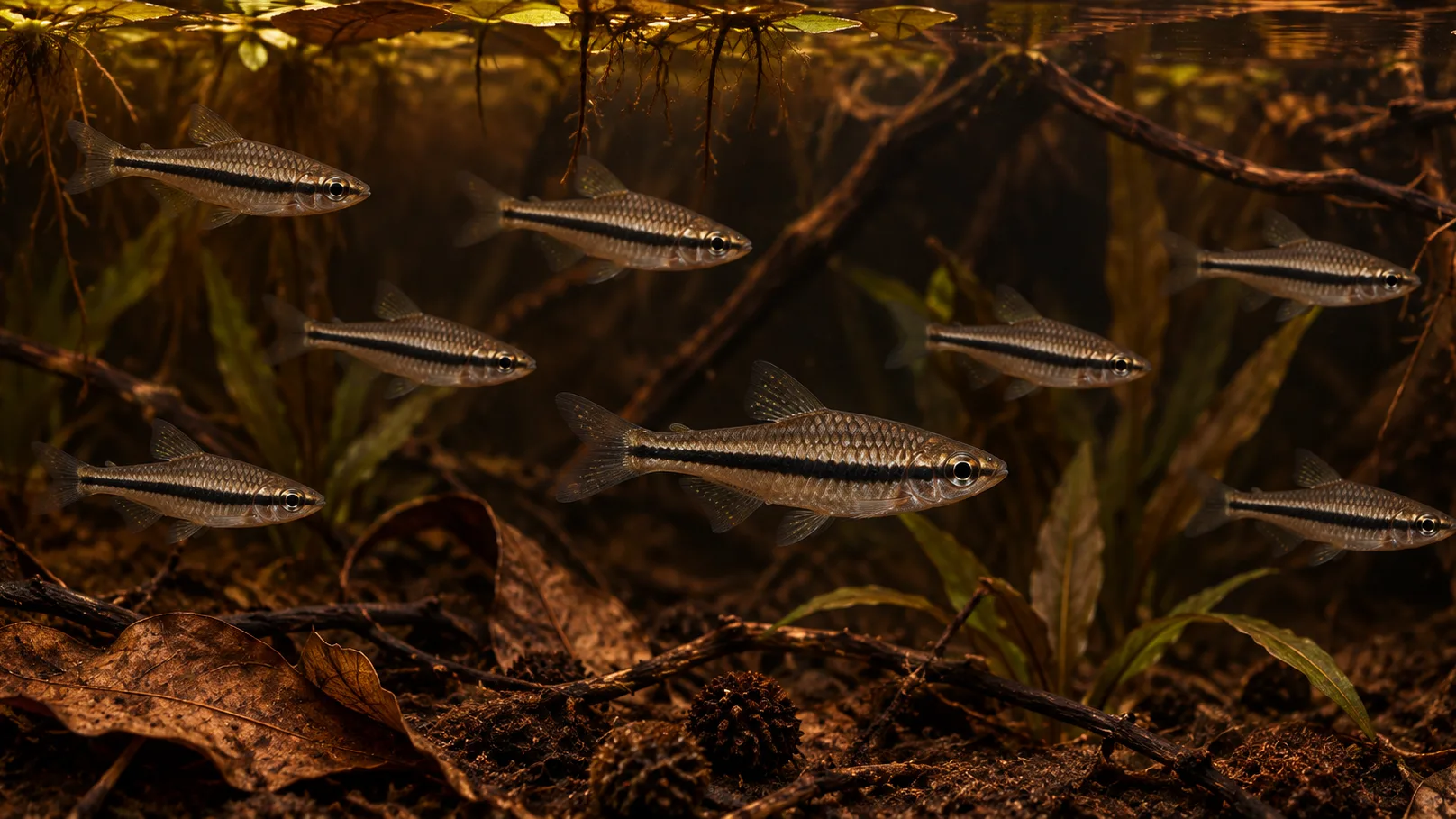
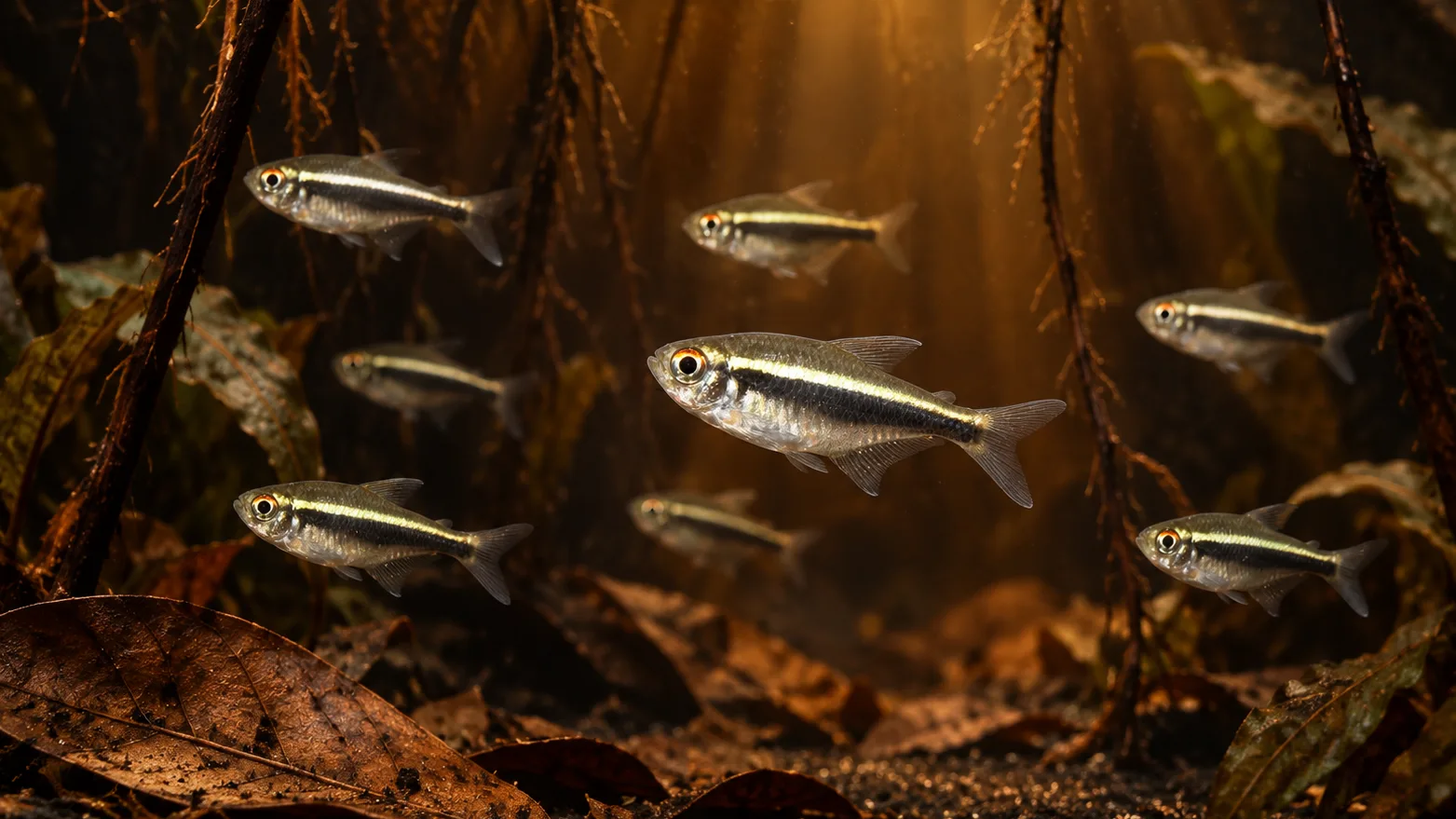 Black neon tetra
A smaller shoaling fish whose group still needs its own swimming room.
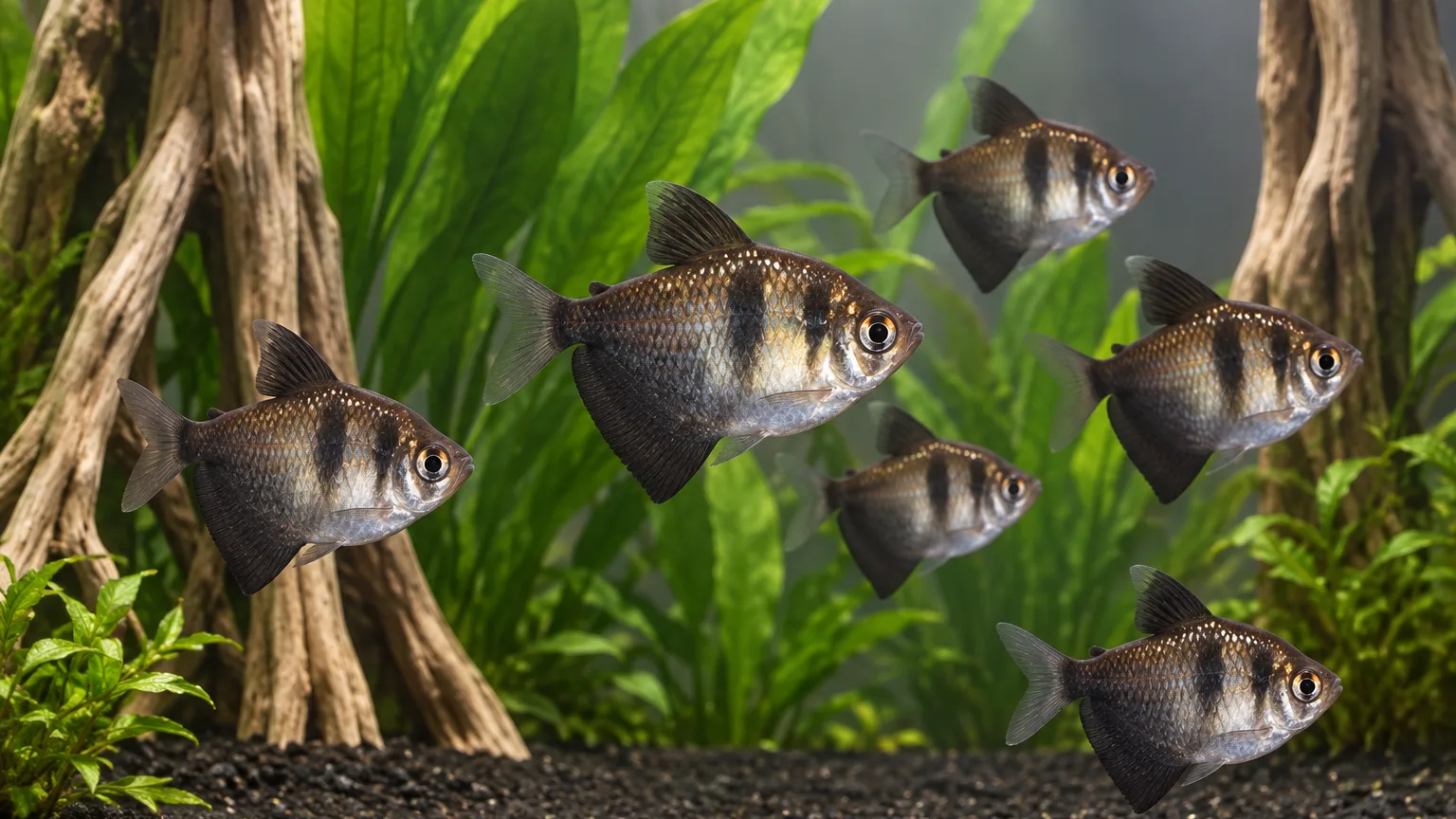 Black skirt tetra
A deeper-bodied group fish that must be assessed for pace, fins, and feeding access.
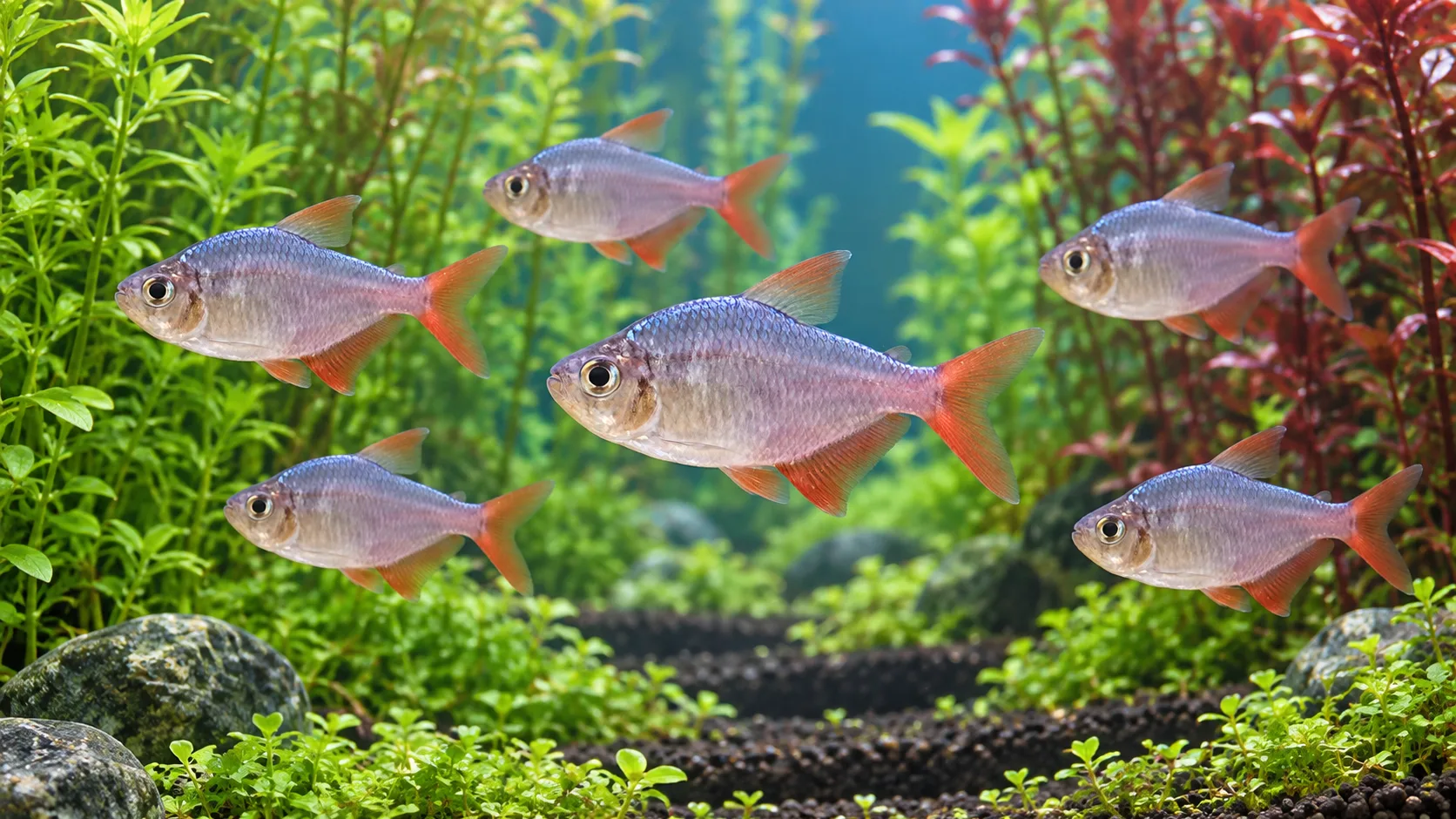 Colombian tetra
A robust tetra whose adult size and fin behavior need a separate check.
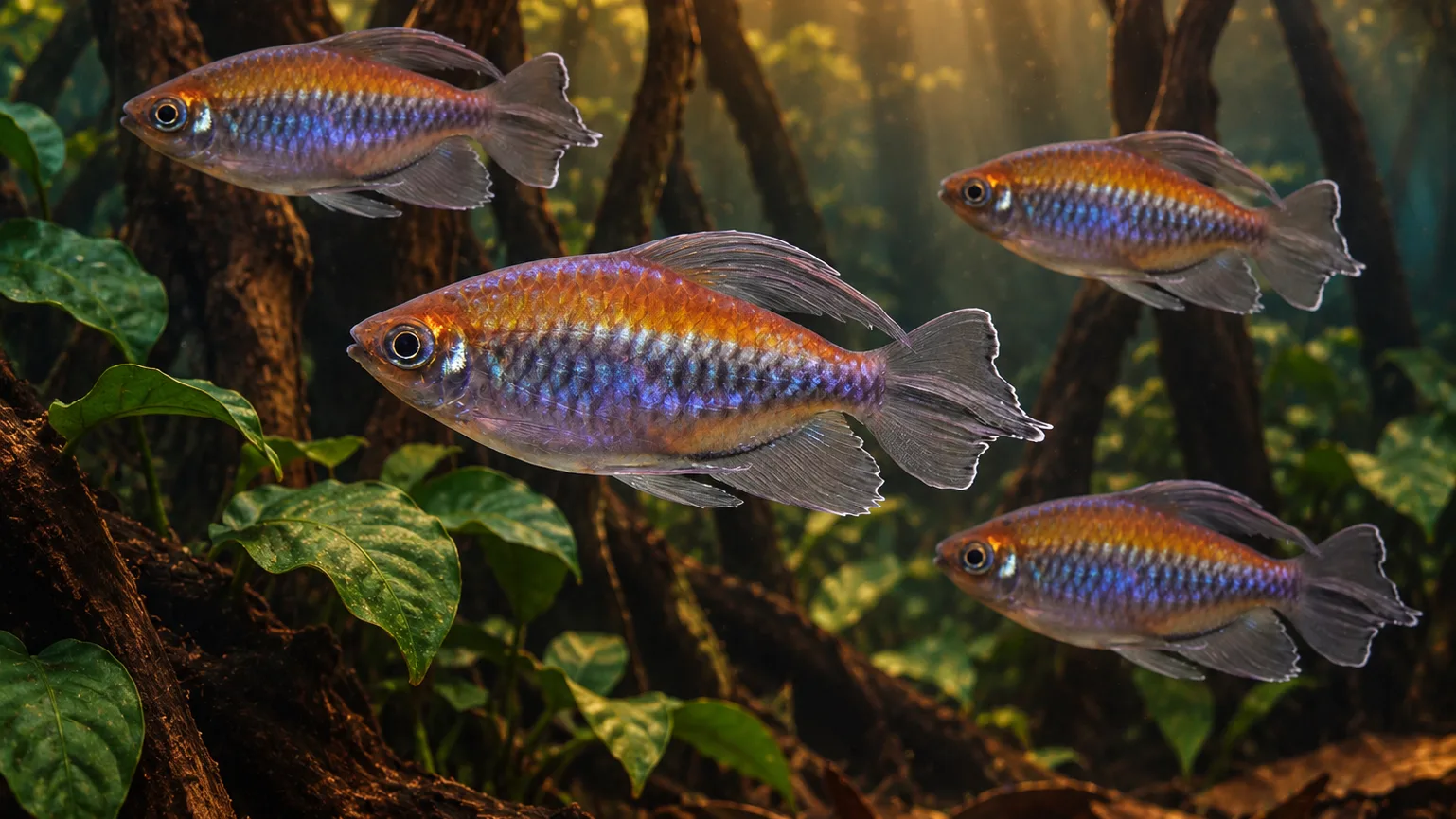 Congo tetra
A larger long-finned school that makes fin condition and swimming space central decisions.
 Brilliant rasbora
A smaller schooling alternative that still needs its full group and suitable water.
These profiles are comparison starting points, not compatibility endorsements. The complete adult groups, temperature ranges, feeding behavior, and available footprint still have to work together.
A long-finned betta is a poor default match because its slower movement and exposed fins conflict with the giant danio's pace. Very small fish, fry, and tiny shrimp also carry predation risk, especially once the danios are fully grown.
Compatibility depends on the assembled tank, not on two names that appear together on a list. Check adult size, group size, feeding access, territory, oxygen demand, and where each species uses the aquarium before buying either one.
Introduce new fish only after quarantine appropriate to the source and your existing livestock. During the first days together, watch actual feeding and resting behavior; be ready to separate fish if one animal is repeatedly chased, cannot eat, loses condition, or suffers fin damage.
How long do giant danios live?
A precise evidence-backed giant danio lifespan is not established in the authoritative species records used here. FishBase provides length, habitat, diet, water, and conservation information but does not publish a maximum age for this species.
Many care pages repeat ranges such as five to seven years, yet repetition is not a substitute for a traceable study or husbandry record. Treat the giant danio as a multi-year commitment without planning around an unsupported expiry date.
When evaluating a seller's lifespan claim, ask whether it refers to D. aequipinnatus, another fish sold under the same common name, or a general estimate for danios. A claim with no species identity, source, and observation context should not drive a purchase decision.
Is a giant danio the same as a Malabar danio?
No. Current taxonomy treats Devario aequipinnatus and Devario malabaricus as separate species, although the names have been used interchangeably in older literature and in the aquarium trade.
A 2017 taxonomic review explains that D. aequipinnatus was once applied broadly to striped Devario across much of South and Southeast Asia. The authors narrowed its confirmed distribution and separated species using features such as infraorbital structure, barbels, scale counts, fin-ray counts, and stripe patterns.
Those characters are more demanding than matching a fish to one colorful retail photograph. Color and stripe visibility also change with angle, stress, age, lighting, and image quality, so do not promise an exact species identification from a casual picture alone.
Ready
A covered aquarium with a 120 × 45 cm or larger footprint, room for a full school, broad surface movement, and an open swimming lane.
Reconsider
A compact or tall narrow tank, open lid gaps, or a community built around slow long-finned fish.
Verify before buying
Confirm the scientific name, supplier origin, adult room, complete group size, and feeding access for every tankmate.
Choose giant danios only when the adult school, not the juvenile fish at the shop, fits the aquarium you can maintain for years.