
What Is a Bloodfin Tetra, and Can It Live Without a Heater?
Aphyocharax anisitsi
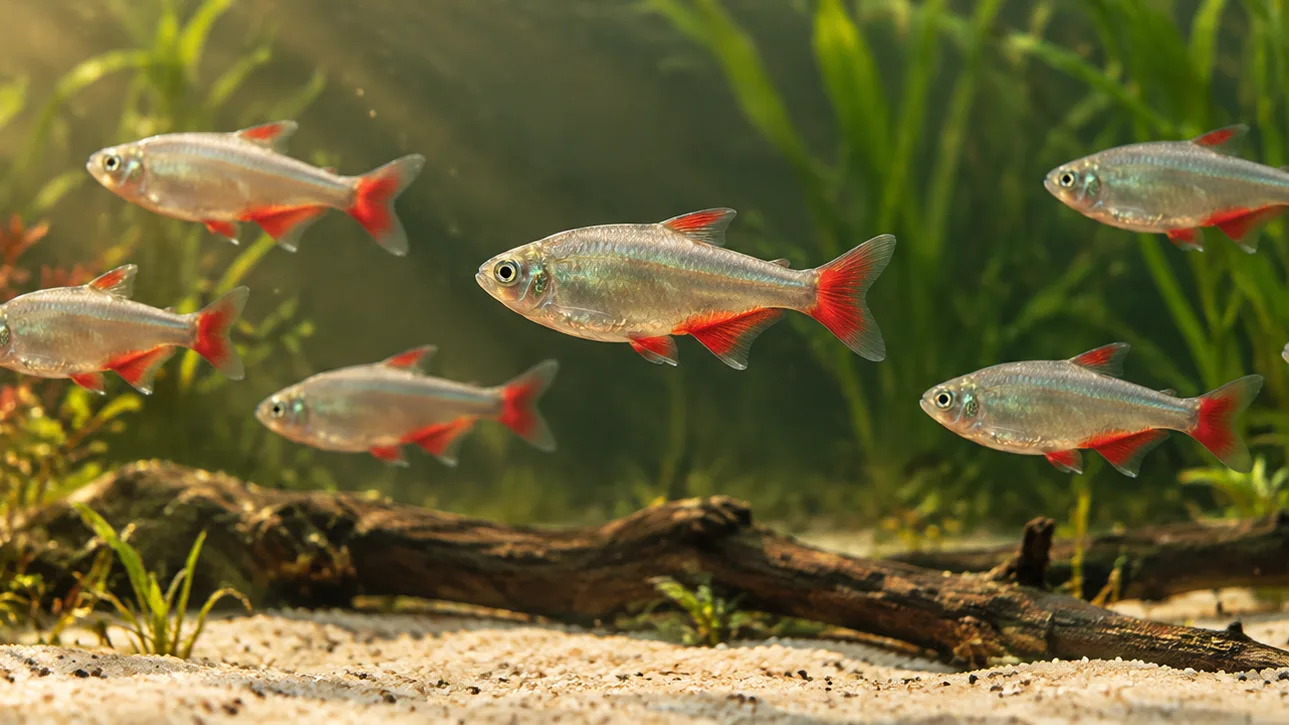
The bloodfin tetra is Aphyocharax anisitsi, a small, fast shoaling characid with a silvery body and red fins. Its aquarium fit depends on verified identity, a 60 cm or longer open swimming route, a proper group and measured temperature rather than an assumed unheated-tank label.
At a glance

- Adult size
- 5.5 cm
- Minimum footprint
- At least 60 cm horizontal aquarium length with an open upper and middle swimming route
- Social structure
- Plan at least six conspecifics; add fish only when footprint, filtration, oxygen and feeding access support every member.
- Minimum group
- 6
- Sex ratio
- No fixed routine sex ratio established.
- Diet
- Carnivore
- Feeding
- Use a complete small tropical-fish staple with appropriate invertebrate variety; distribute small portions so every fish feeds.
- Waste load
- low
- Family
- Characidae
- Native range
- Paraná and Uruguay River basins in Argentina, Brazil, Bolivia, Paraguay and Uruguay
- Also sold as
- bloodfin. Trade and hobby names, not accepted species names.
- Former scientific names
- Aphyocharax affinis, Aphyocharax ipacarayensis, Aphyocharax rubropinnis. Superseded names for this same species.
- Conservation status
- Least Concern, assessed 4 March 2021 Source
The source benchmark is length, not volume; usable route, group, decor, filtration and total stocking determine fit.
What is a bloodfin tetra?
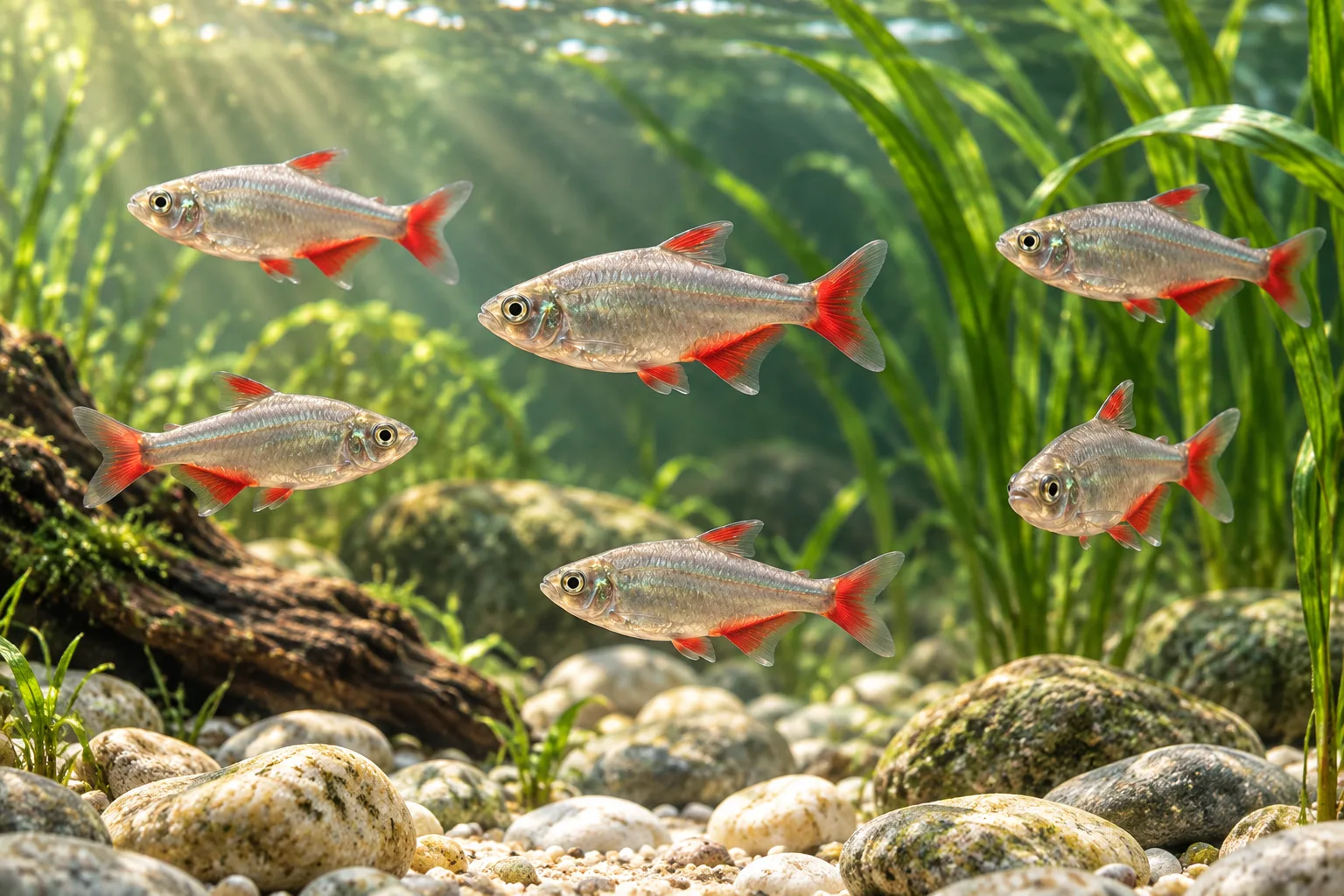
The bloodfin tetra is Aphyocharax anisitsi Eigenmann and Kennedy, 1903, a small characid native to the Paraná and Uruguay river basins. Its silver body and red fins are useful first clues, but the word bloodfin is shared across several fishes and cannot establish identity on its own.
Catalog of Fishes accepts Aphyocharax anisitsi in Characidae and records Asunción, Paraguay as the type locality. It lists Aphyocharax affinis, A. ipacarayensis and A. rubropinnis as synonyms, so those names refer to this species rather than separate aquarium forms.
Which visible features help with identification?
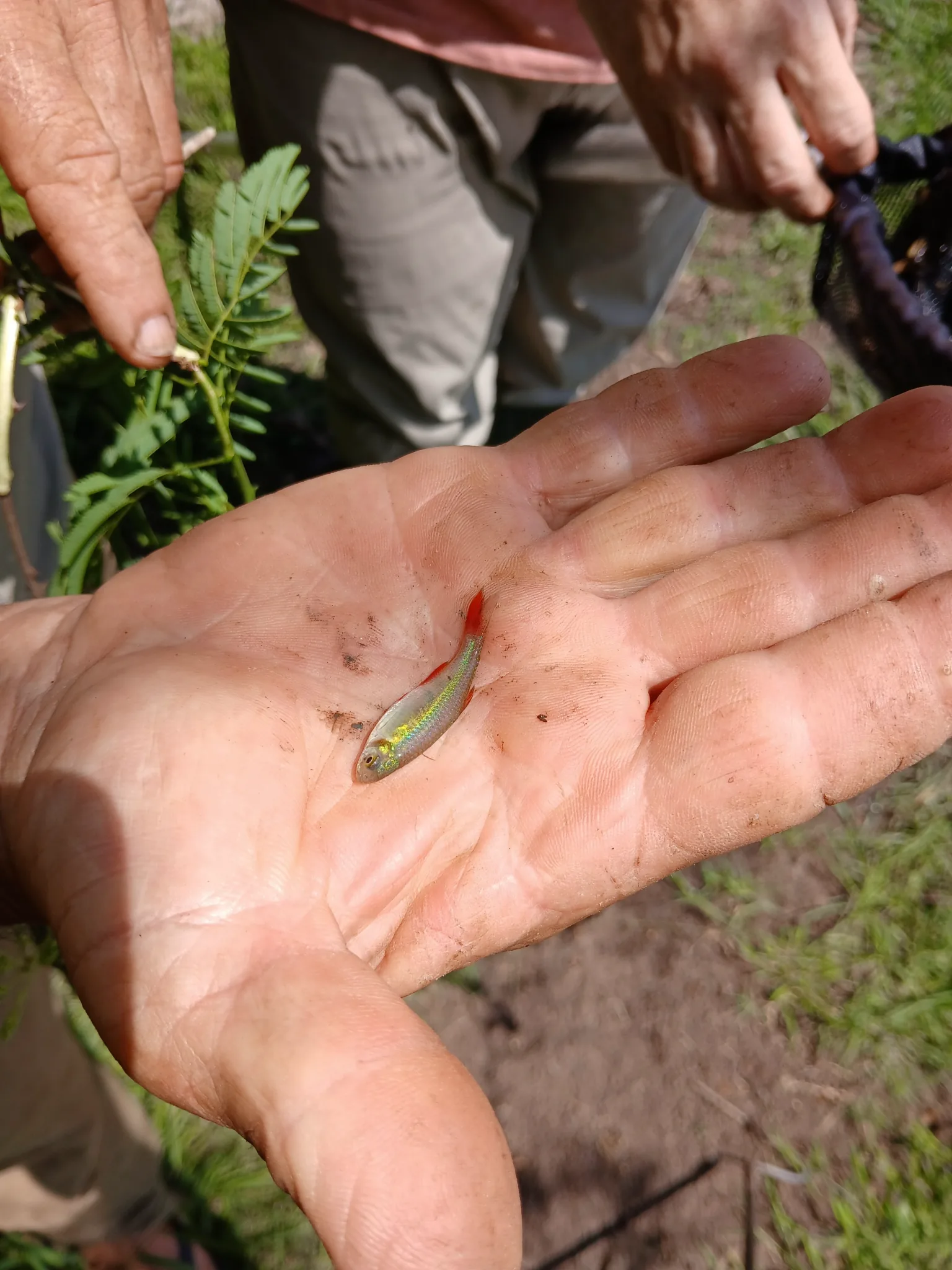
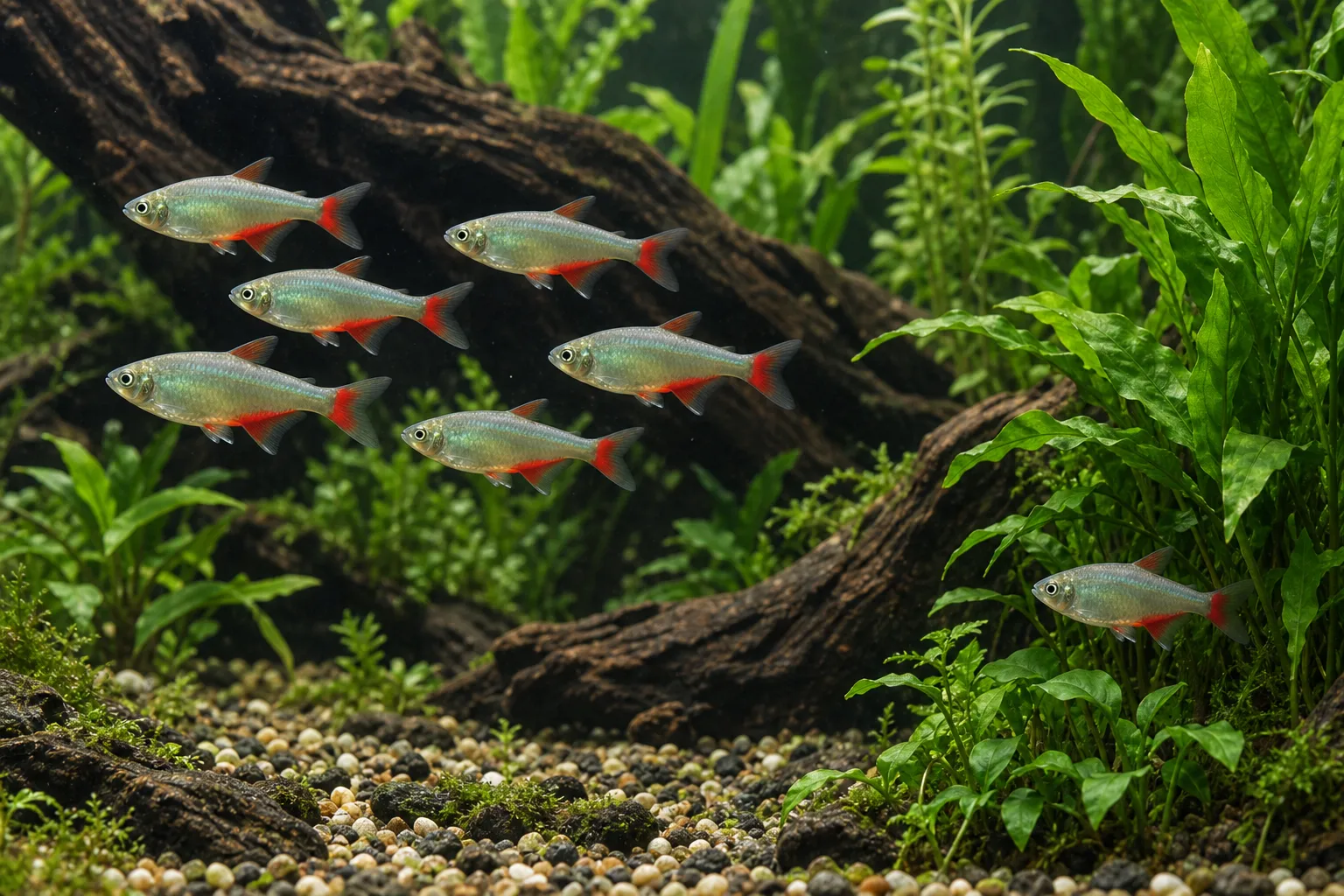
A typical A. anisitsi has a streamlined, translucent silver body with red on the caudal, anal and pelvic fins. FishBase records a maximum of 5.5 cm total length, which includes the tail fin and must not be presented as standard length.
- Accepted identity
- Aphyocharax anisitsi Eigenmann & Kennedy, 1903
- Family
- Characidae
- Type locality
- Asunción, Paraguay
- Native range
- Paraná and Uruguay river basins
- Maximum reported size
- 5.5 cm total length
- Swimming zone
- Upper and middle water layers
- Group reference
- Five or more; plan at least six for routine keeping
- Footprint reference
- Aquarium at least 60 cm long
- IUCN assessment
- Least Concern, assessed 4 March 2021
Red intensity changes with lighting, age, condition and stress. Mature males have gill glands and hooks on anal-fin rays, but those small structures are not a dependable shop-floor sexing method; body shape or one photograph cannot confirm sex, health or origin.
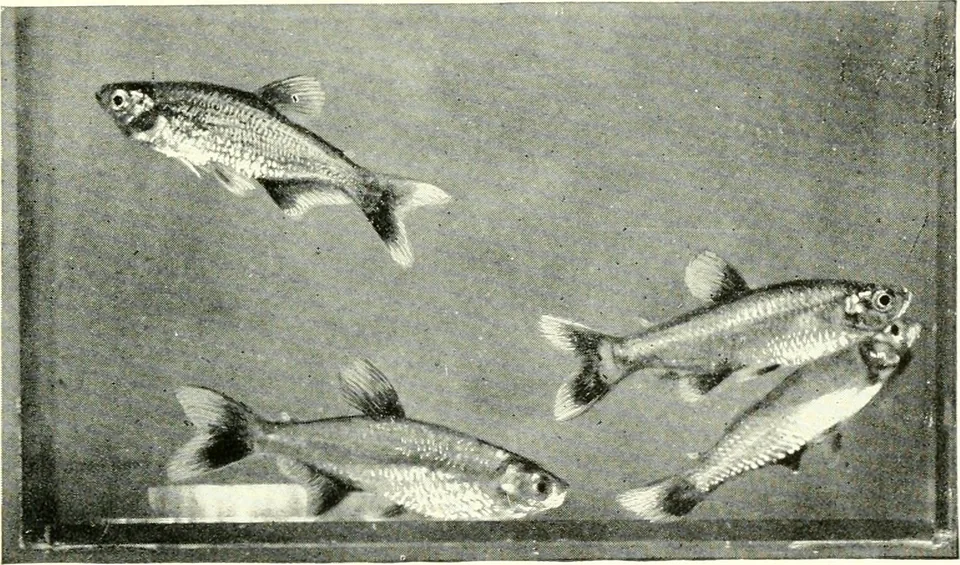
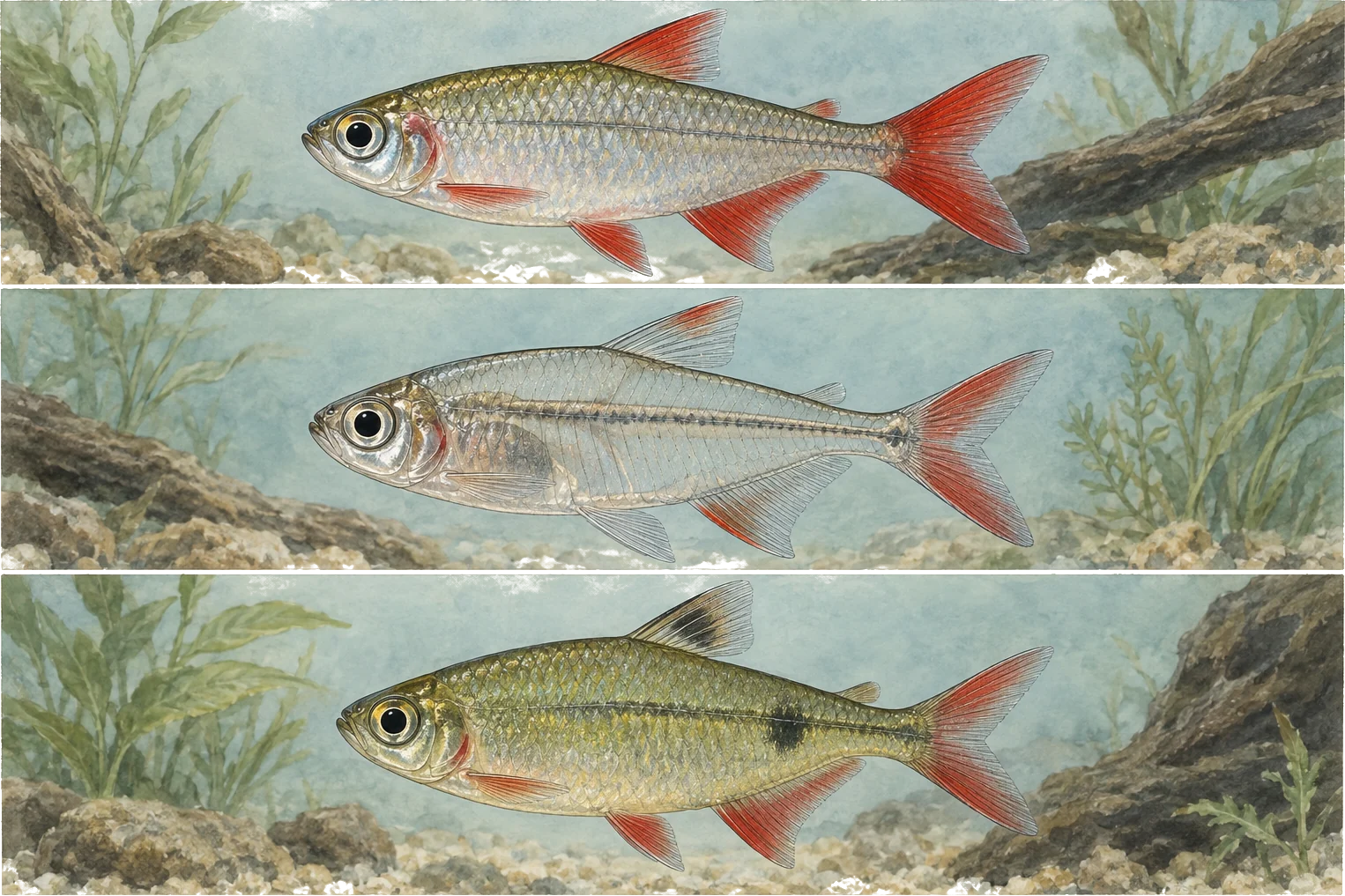
A glass bloodfin is more transparent and belongs to another genus, yet weak color, stress and poor photography can erase apparent differences.
Use provenance and scientific-name records, and seek experienced identification when the purchase depends on species-level certainty.
Where does the species occur?
Catalog of Fishes places the native distribution in the Paraná and Uruguay basins across Argentina, Brazil, Bolivia, Paraguay and Uruguay. The type series comes from Asunción, but one type locality should not be stretched into a claim that every population uses identical habitat or water.
USGS separately records a failed nonindigenous occurrence in Florida in 1988, probably associated with ornamental-fish farming. That record belongs to introduction history, not the native range, and its failed status does not show that later releases would be harmless.
FishBase describes a freshwater fish that uses upper and middle water layers. In an aquarium, that supports an open horizontal route with cover at its margins; it does not justify copying a single "biotope" recipe across the species' entire range.
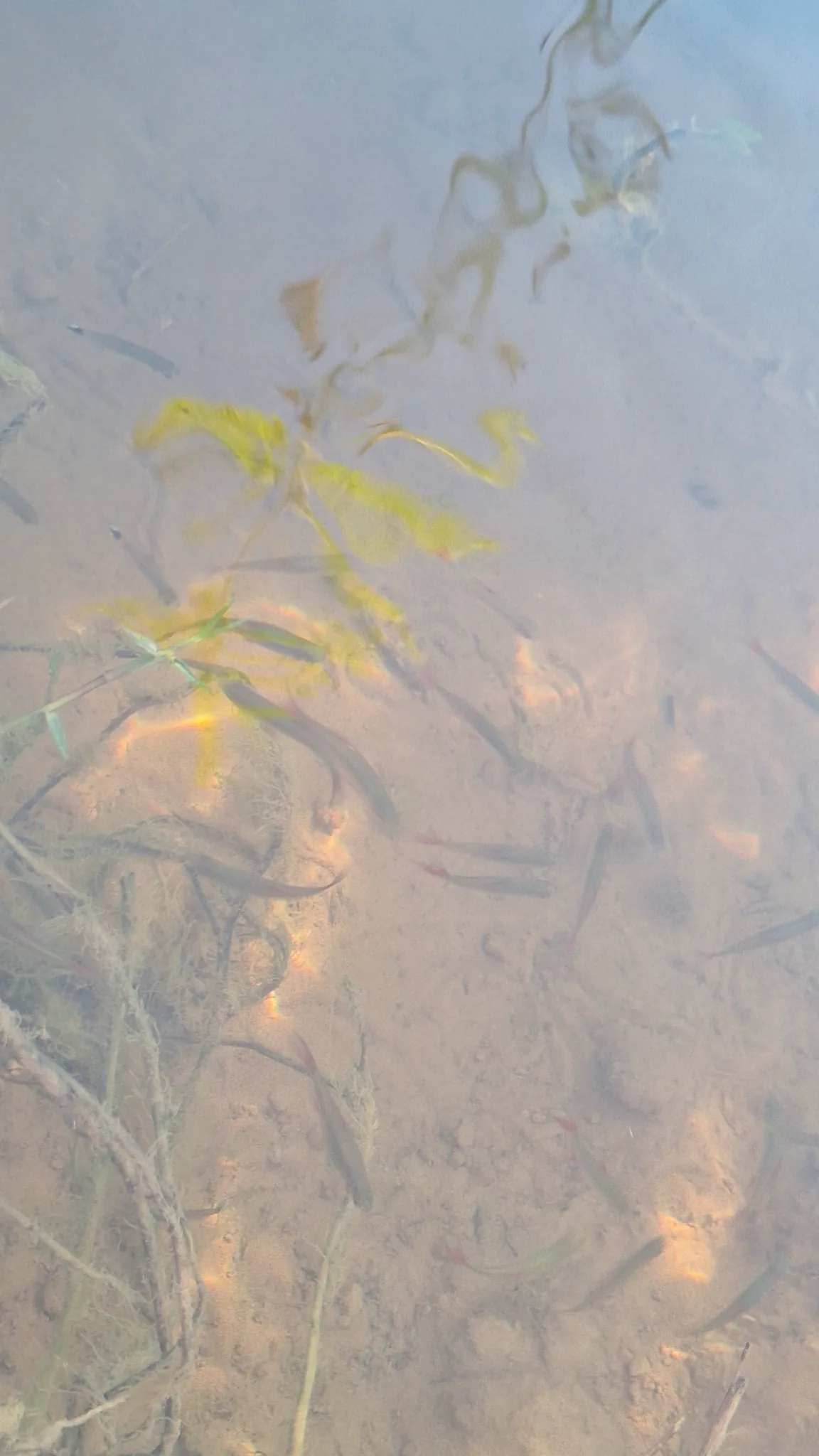
Can bloodfin tetras live without a heater?
FishBase compiles 18 to 28 °C, pH 6.0 to 8.0, and hardness up to 30 dGH. The broad temperature range explains the unheated-tank claim, but it does not make the fish universally cold-water or prove that recently imported stock can tolerate sudden cooling.
Recorded freshwater context
- Temperature18 to 28 °CSeparate aquarium thermometer; FishBase compiled range.
- pH6.0 to 8.0Calibrated pH meter or aquarium test covering the range; FishBase compiled range.
- General hardnessUp to 30 dGHGH titration test; FishBase compiled upper boundary.
Every range above applies to Aphyocharax anisitsi occurrence range in a freshwater system. Source: FishBase species summary, checked 2026-09-12.
An unheated aquarium is suitable only when a thermometer shows that the room keeps the water stable inside the supported range through cold nights and seasonal changes.
Measure the tank before purchase rather than treating "room temperature" as a number.
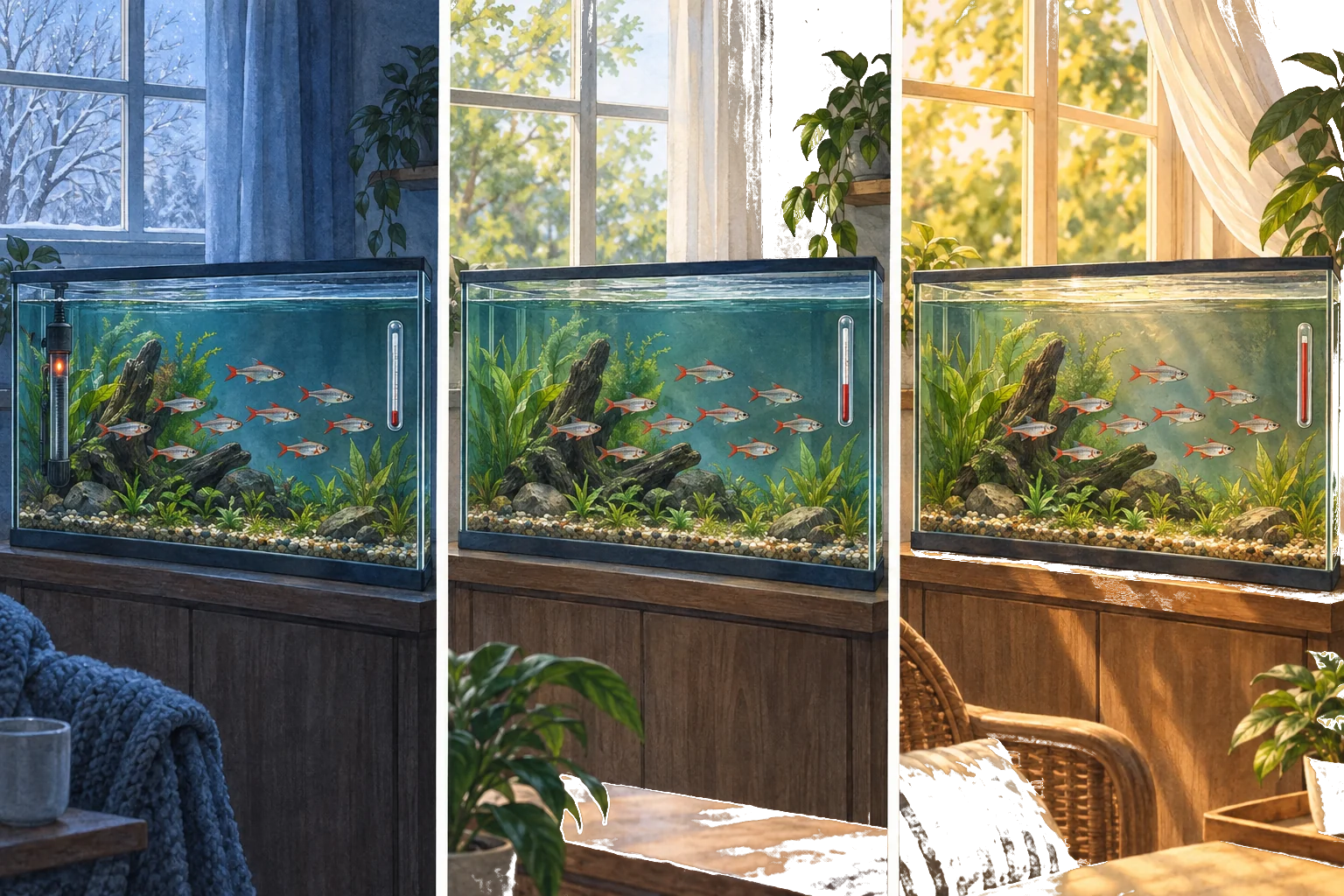
Compare the seller's measured water with the prepared aquarium and acclimate conservatively. Use controlled heating when the room cannot hold a stable temperature, and stop a transfer if fish gasp, lose balance or cannot hold position.
Do not chase the middle of pH or hardness ranges with repeated chemical correction. Consistent testing with the same method gives more useful evidence than frequent adjustments made from one isolated reading.
How much swimming room does the shoal use?
FishBase cites aquarium groups of five or more and a 60 cm aquarium length. For routine keeping, plan at least six conspecifics and treat 60 cm of uninterrupted horizontal room as a starting reference, not proof that every tank with that front length has enough capacity.
Decor, equipment and other residents reduce usable room.
A tall aquarium cannot replace a clear upper and middle route, and a nominal volume says little when dense hardscape divides that route into short pockets.
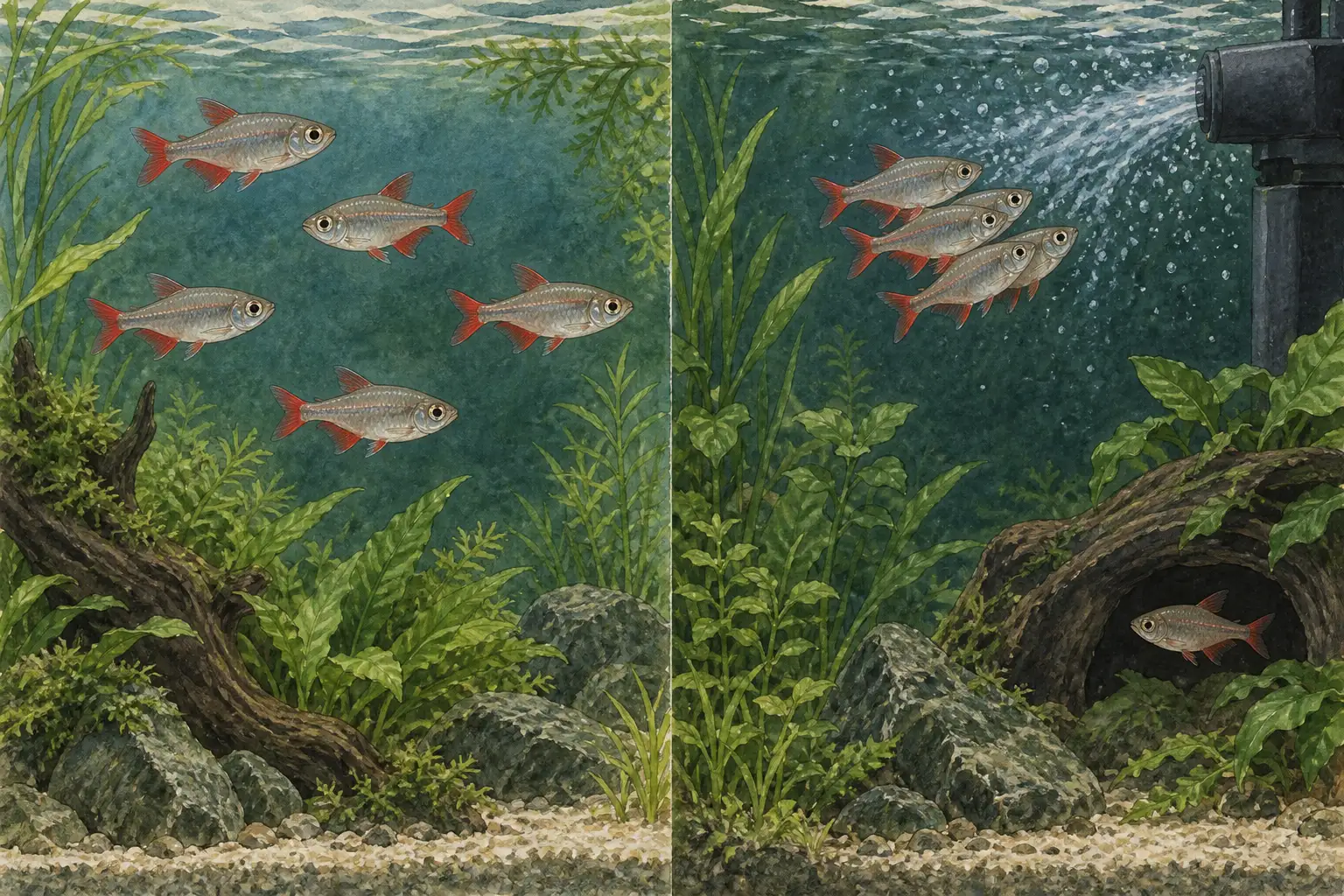
These fast fish need a mature filter and good gas exchange for the complete community. Gentle to moderate circulation should move water without holding the group in one quiet corner, while a secure lid closes gaps around cables and pipework.
What does normal group behavior look like?
A settled group may spread through open water, tighten when startled, and show brief pursuit during feeding or social interaction.
Shoaling does not mean every fish must remain in one compact formation all day.
Repeated targeting, torn fins, a fish trapped behind equipment or one member missing every meal shows that the social result is failing. Check crowding, group composition, retreat cover, current, feeding distribution and tank-mate pressure before assuming that adding more fish will solve it.
What and how should the group eat?
FishBase records worms, small insects and crustaceans. Use a complete small tropical-fish staple, with appropriately sized cultured or frozen invertebrate foods as variety rather than the whole diet.
- Choose a complete staple with particles that enter the mouth without repeated spitting.
- Release small portions at several points so faster fish cannot collect every particle.
- Watch individual fish swallow rather than judging success from a busy surface.
- Stop when the active response fades and remove persistent leftovers.
- Adjust the next ration from body condition, missed meals, leftovers, and measured water trends.
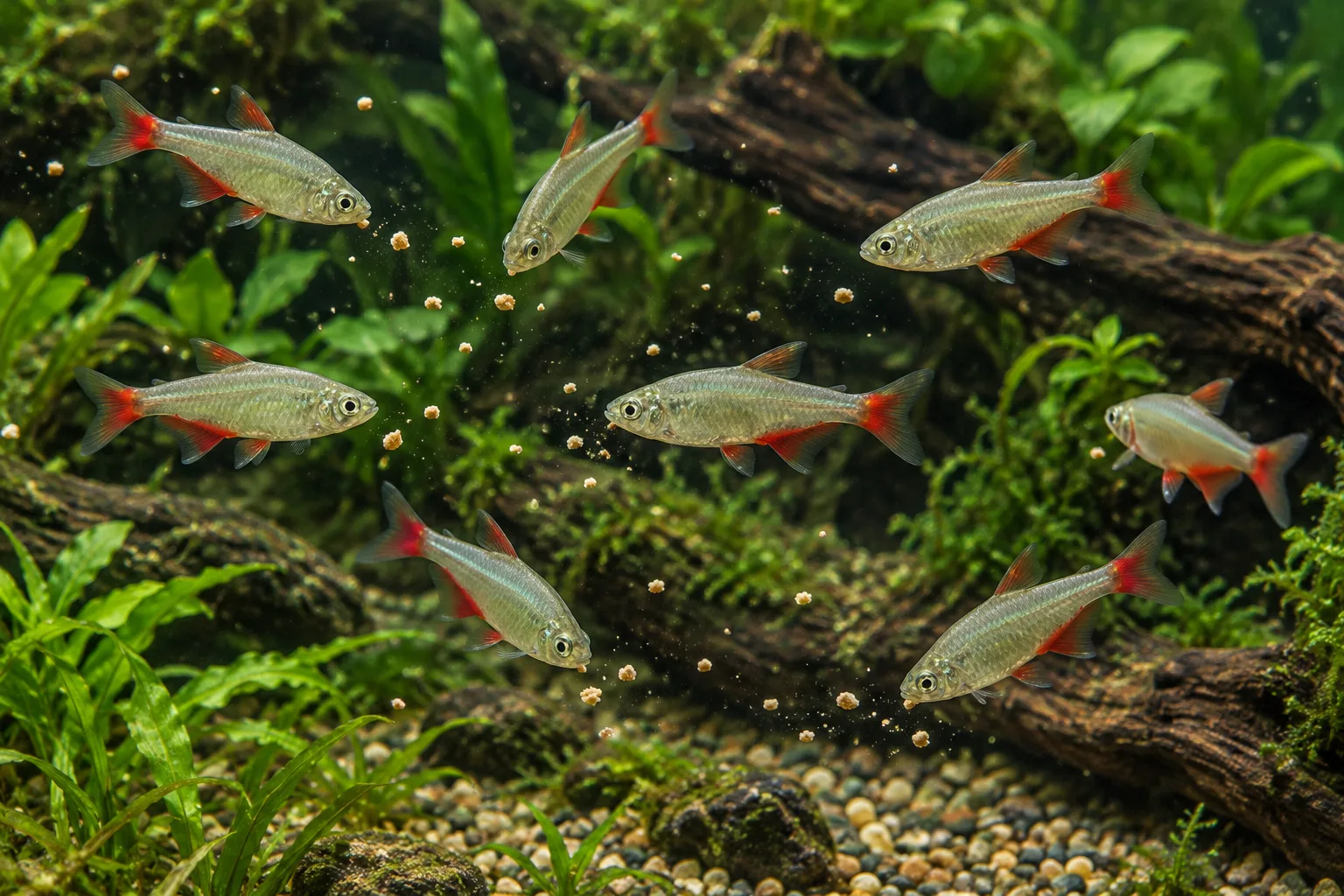
The same subordinate fish missing each pass is a feeding-access problem even when the rest of the shoal looks eager.
Which tank mates are a sensible fit?
Suitable companions overlap in measured water conditions, cannot swallow the tetras, do not depend on exposed fins, and leave enough open water for the entire shoal. "Community fish" is only a starting label because actual fit changes with body size, feeding speed, flow and individual behavior.
| Decision | Workable condition | Reject or separate when |
|---|---|---|
| Scale | No resident can swallow or seriously injure an adult bloodfin tetra | Stalking, lunging, injury, or unexplained disappearance occurs |
| Food | Several release points let fast and cautious fish eat | One species repeatedly blocks another from food |
| Flow | Every resident can hold position and reach a calm zone | Fish remain pinned, hide from the outlet, or lose swimming control |
| Fins and pursuit | Brief contact ends without one fish becoming the target | Fraying, cornering, or repeated chasing continues |
| Space | Open upper and middle water remains after stocking | The shoal is compressed behind decor or equipment |
A black neon tetra provides a clear identity contrast through its horizontal body stripes. A black skirt tetra has a deeper body and broad anal fin, and also shows why fin shape and chasing risk deserve separate observation.
A long-finned Betta fish is a conditional match. Feeding speed, flow preference, exposed fins and individual aggression can conflict even when temperature overlaps, so observe the actual animals after feeding and light changes and keep a safe heated separation option ready.
How long do bloodfin tetras live?
Available authoritative sources do not establish a reliable species-specific captive lifespan range.
Publishing a confident number would turn repeated aquarium claims into false precision.
Source stock, chronic stress, disease exposure, nutrition and water stability can all affect survival, but those factors do not establish a maximum age. Treat a seller's lifespan number as a claim that needs its own evidence, not as a warranty or a stocking shortcut.
What stress signs require action?
Rapid breathing, surface gasping, loss of balance, or several fish suddenly clustering at an inflow require immediate system checks.
Rule out the water first
- Temperature and flow Confirm the thermometer reading and verify that the filter is moving water without pinning the shoal.
- Oxygen and surface Restore gas exchange when fish cluster at an inflow or gasp, while avoiding a second abrupt temperature or chemistry shock.
- Nitrogen waste Test ammonia and nitrite separately and confirm an abnormal result before making a correction.
- Social pressure Look for one fish being cornered, excluded from food, or kept away from open water.
Persistent isolation, clamped fins, sores, swelling, progressive fin damage, or repeated refusal of food also require attention. Appearance alone does not diagnose disease; contact an aquatic veterinarian or experienced fish-health professional when severe signs persist or several fish decline.
What do conservation and trade checks establish?
Catalog of Fishes and FishBase report a Least Concern IUCN assessment dated 4 March 2021. That global assessment does not establish local abundance at a collection site and does not remove the keeper's responsibility to buy accurately identified, legally supplied fish.
No direct species result was found in the official CITES checklist on 12 September 2026.
This is a dated search limitation, not proof that every import, possession or release is legal, because national and local rules can apply independently.
When should you postpone the purchase?
Postpone when the seller cannot confirm A. anisitsi, the aquarium lacks a 60 cm clear route, the filter is immature, or the plan depends on one or two fish. Also wait if the room produces large temperature swings or current residents already monopolize the upper and middle levels.
- The label or supplier record confirms Aphyocharax anisitsi.
- The 5.5 cm figure is understood as reported total length.
- At least six fish have a continuous 60 cm or longer swimming route.
- Temperature has been measured through the coldest part of the day.
- pH and GH overlap without repeated chemical correction.
- Every member can reach appropriately sized food.
- No resident can swallow, corner or repeatedly damage the tetras.
- A mature filter, good gas exchange, secure lid and separation option are ready.
Browse the freshwater fish directory for other profiles. Leave without buying when identity, water history or group condition remains uncertain.
Which tetras make useful comparison points?
Ember tetra
A tiny warm-water tetra whose low competitive weight and small mouth change feeding and tankmate choices.
Cherry barb
A small planted-stream barb that contrasts sex-linked colour, social structure and habitat cover.
Colombian tetra
A robust medium tetra whose feeding pace and fin-nipping risk change an otherwise similar community plan.
Diamond tetra
A medium deep-bodied characin that offers a closer comparison in warm water, adult mass and display behaviour.
Cardinal tetra
A small blackwater shoaler whose soft-water context and quiet group behaviour narrow the comparison.
Chili rasbora
A minute blackwater group fish whose mouth size, water and refuge needs set a much smaller scale.