
What Is a Colombian Tetra, and Does It Really Nip Fins?
Hyphessobrycon columbianus
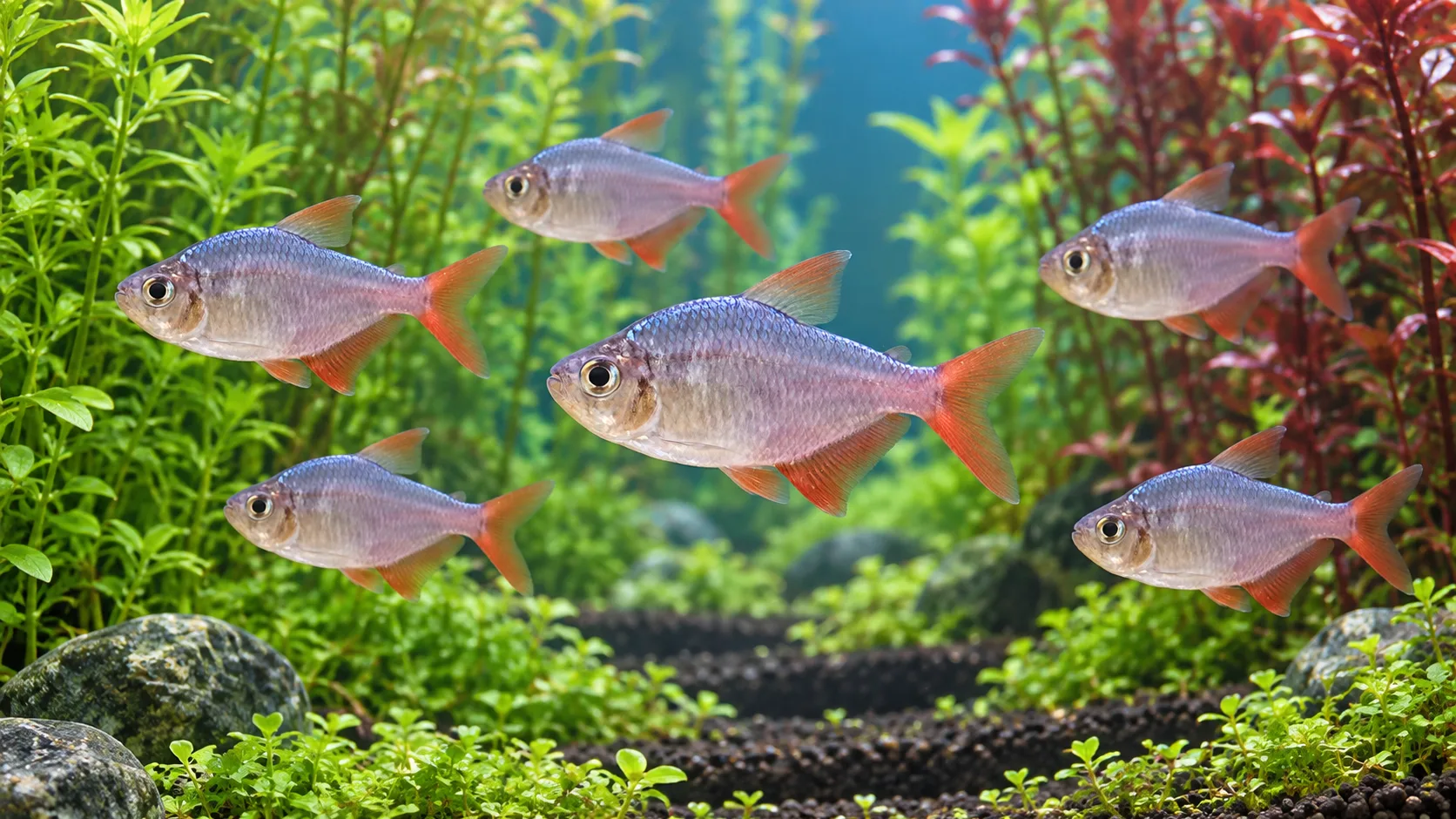
The Colombian tetra is Hyphessobrycon columbianus, a deep-bodied silver characin with blood-red tail and anal fins, described only in 2002 and apparently known in the wild from a single Colombian river. It is also the tetra most often warned about for nipping fins, and the published record does not say that at all.
At a glance

- Adult size
- 6.5 cm
- Minimum footprint
- A base of 90 cm by 30 cm, given as the minimum to consider for a group
- Social structure
- A mixed-sex group of at least eight to ten, bought together, with other schooling species alongside them for security.
- Minimum group
- 8
- Sex ratio
- A mixed-sex group is specified. Mature males are more intensely coloured, slimmer, a little smaller and carry a more extended dorsal fin than females.
- Diet
- Omnivore
- Feeding
- Good quality dried flakes and granules as the routine, some of it carrying added plant or algal content, with regular small live and frozen foods for colour and condition.
- Waste load
- low
- Family
- Characidae
- Native range
- Apparently the Río Acandí alone, in Chocó, northern Colombia
- Conservation status
- Data Deficient, assessed 9 October 2014 Source
The published benchmark is a base footprint of about 81 litres. Body depth runs to roughly half the standard length, so this fish presents far more bulk per centimetre than a slender tetra and a stocking estimate carried over from one will be wrong.
What is a Colombian tetra?
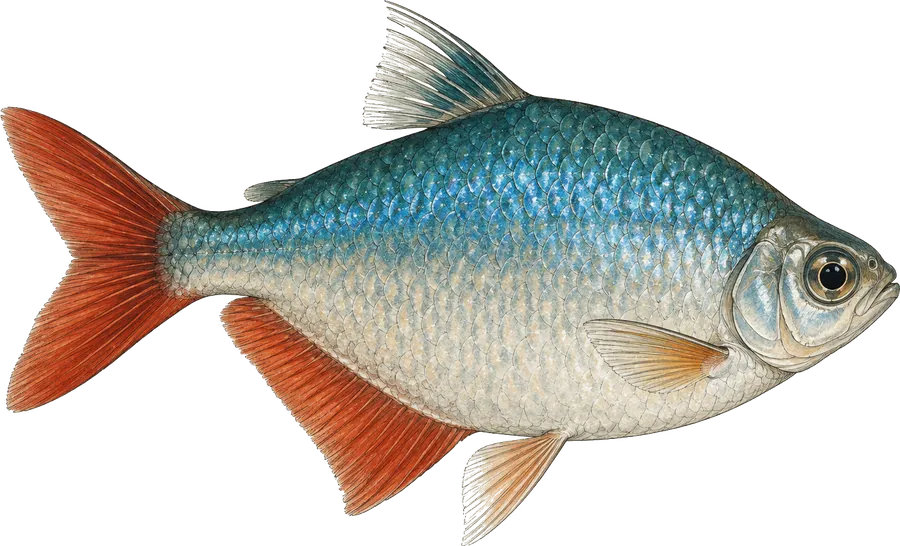
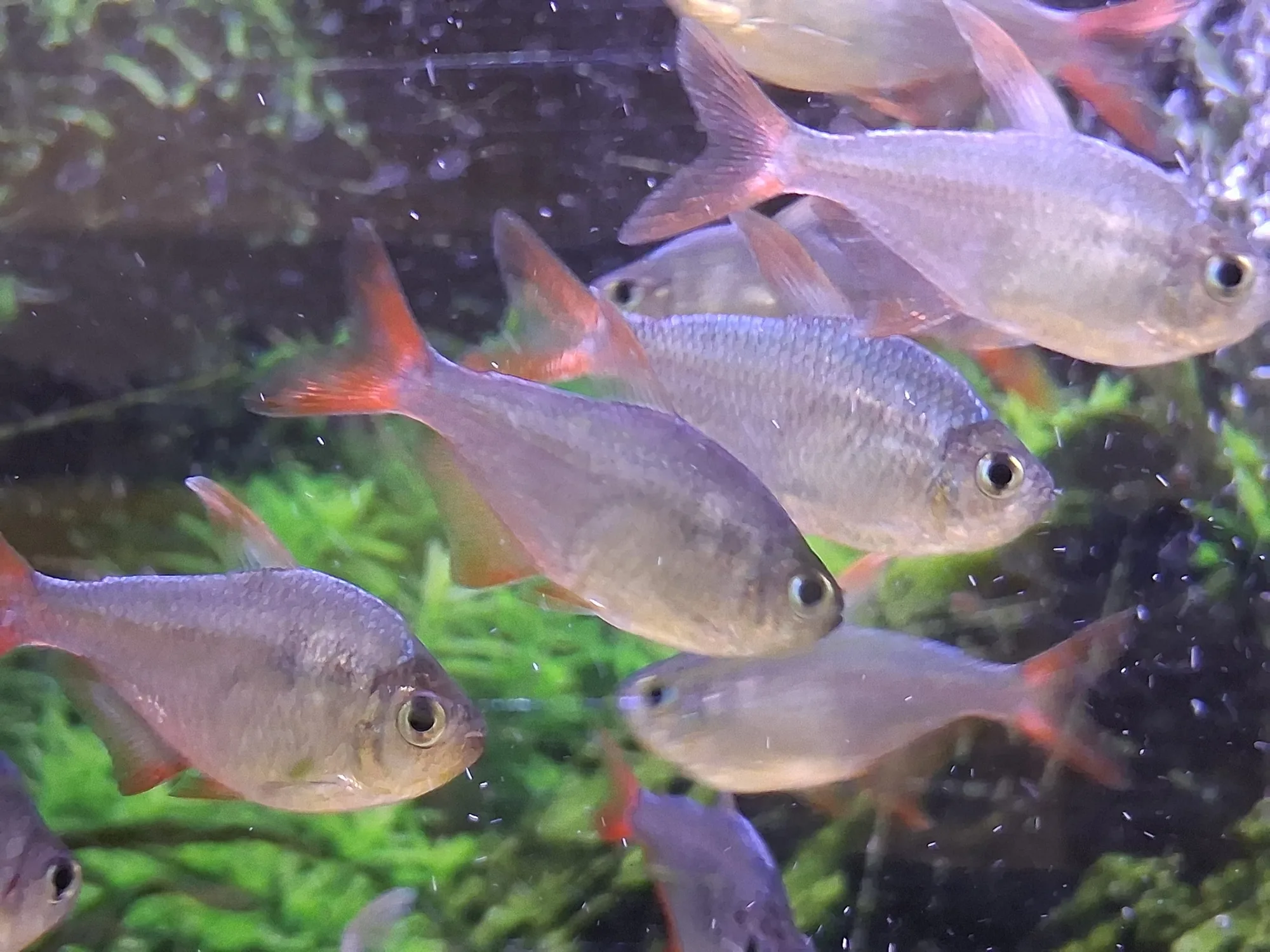
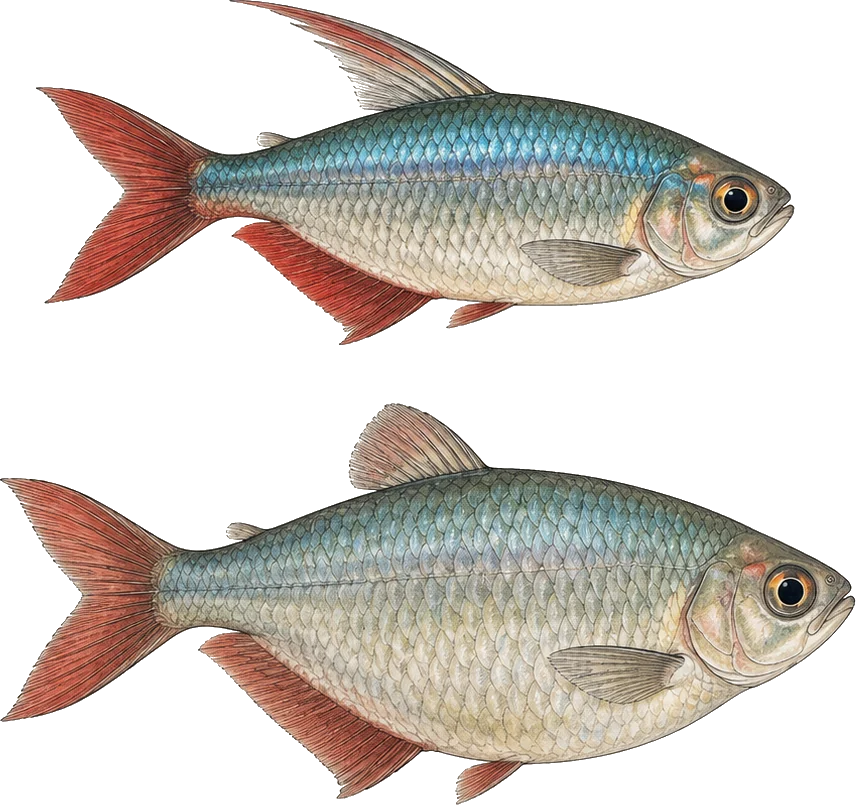
The Colombian tetra is Hyphessobrycon columbianus, a deep-bodied silver characin with blood-red caudal and anal fins and an iridescent blue sheen across its back.
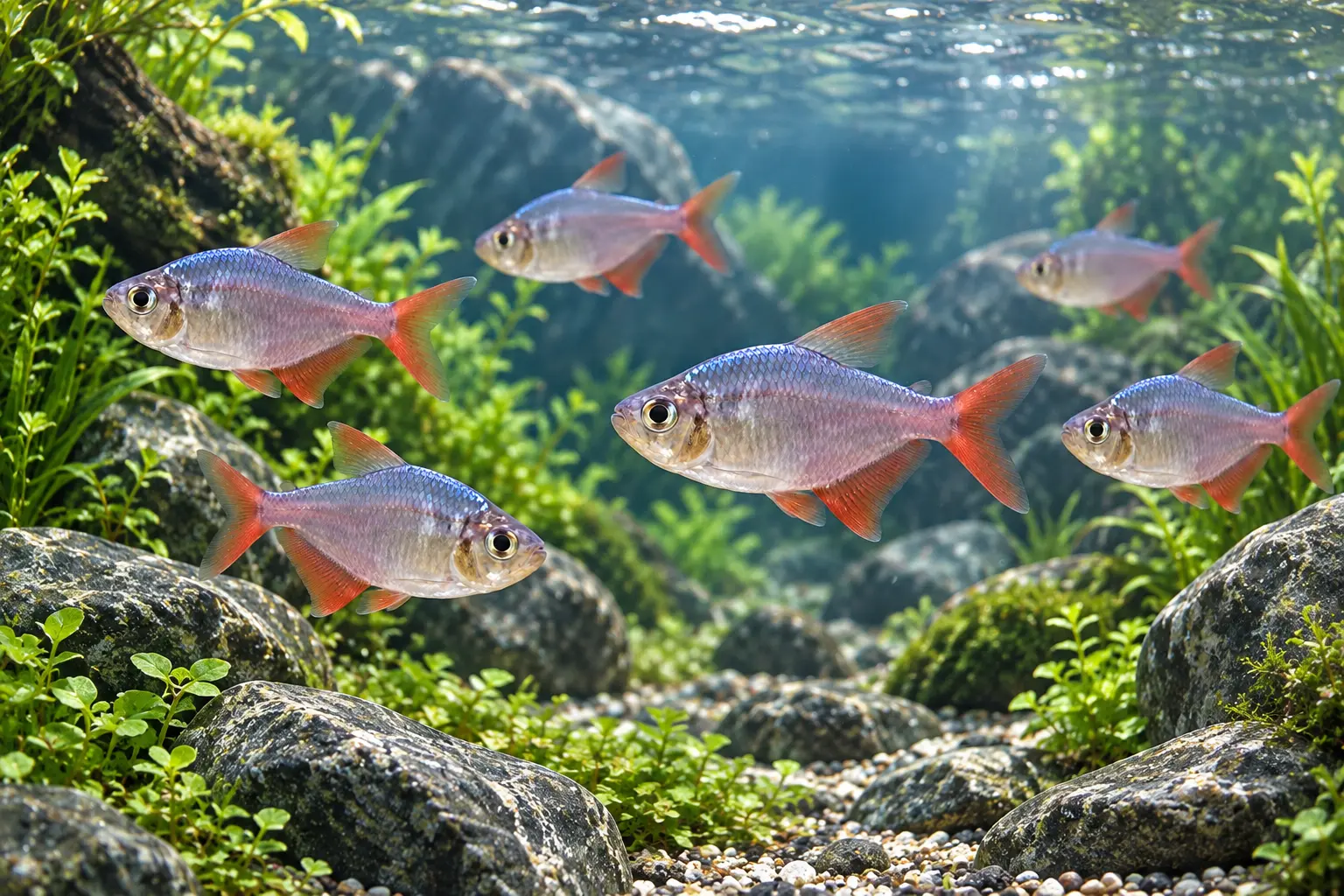
Zarske and Géry described it in 2002, which makes it a recent arrival in the literature for a fish this common in shops.
The combination to look for is the depth of the body against the red of the tail and the fin along its underside. The blue over the back comes and goes with the light, so it is the least reliable of the three.
It also sells under at least three other names, so confirming the scientific name is the first practical step.
- Accepted identity
- Hyphessobrycon columbianus Zarske & Géry, 2002
- Family
- Characidae
- Also traded as
- Blue flame tetra, blue-red tetra, Colombian red fin tetra
- Native range
- Apparently the Río Acandí alone, in Chocó, northern Colombia
- Standard length
- 65 mm
- Body colour
- Silver with iridescent blue over the upper flank
- Fin colour
- Caudal and anal fins blood red, paired fins transparent to light orange
- IUCN assessment
- Data Deficient, assessed 9 October 2014
Two of those lines carry the surprises: the range, and the assessment.
Where does a Colombian tetra come from?
From one river. Seriously Fish records the species as apparently known only from the Río Acandí in Chocó Department, northern Colombia, close to the Panamanian border.
The type locality is more specific still: a small stream about six kilometres downstream from Acandí, at the entry of the Río Acandí on the Atlantic coast.
The species name carries no more information than that. Columbianus simply means of Colombia.
FishBase records the species as being in commercial aquarium use and records no fisheries interest in it. Neither entry says what share of that trade is bred and what share is collected.
So the honest summary is that a fish stocked worldwide traces back to a recorded range you could walk along in an afternoon, and the published record does not tell you how much pressure that range is under.
Why was it sold under the wrong name for years?
Because it had no name of its own. Before the 2002 description the fish moved through the trade as Hyphessobrycon ecuadorensis, a misidentification that persisted for several years.
That history is why an older aquarium book and a current reference can describe the same animal and disagree about what to call it.
| Name | What kind of name it is | Still correct? |
|---|---|---|
| Hyphessobrycon columbianus Zarske & Géry, 2002 | The accepted scientific name, with authors and a date | Yes |
| Hyphessobrycon ecuadorensis | An earlier misidentification, not a synonym | No |
| Blue flame tetra | Trade name | No taxonomic standing |
| Blue-red tetra | Trade name | No taxonomic standing |
| Colombian red fin tetra | Trade name | No taxonomic standing |
None of the three trade names is wrong in the sense of pointing at the wrong animal. They are simply names the trade invented, and asking for the binomial is the way to be certain what is in the bag.
Which tetras is a Colombian tetra confused with?
Two, and the published description separates them character by character.
The nearest relative is Hyphessobrycon savagei, a Costa Rican endemic described by Bussing in 1967. The other is Hyphessobrycon panamensis, from Costa Rica, Panama and possibly Colombia.
| Decision factor | Colombian tetra | H. panamensis |
|---|---|---|
| Body depth | 47.4 to 50.7 per cent of standard length | 35.2 to 39.7 per cent of standard length |
| Gill rakers | 15 to 17 | 19 to 21 |
| Body colour | Silver with iridescent blue over the upper flank | Silvery grey, sometimes with a dark lengthwise band |
| Male dorsal fin | Slightly longer than the female's | Significantly longer than the female's |
Only two of those four are any use in a shop. Body depth and colour you can see through glass; gill rakers need the fish in your hand, and a count of 15 against 19 is not a judgement anyone makes across an aquarium.
The separation from H. savagei runs the same way, on colour and on depth.
Its blue appears only in the anal region of males, its caudal fin is orange rather than red, and it is a shallower fish at 37.3 to 44.3 per cent of standard length.
How big is a Colombian tetra, and why does it look bigger?
Two published lengths, and then a third figure that explains the mismatch between them and what people actually see.
| Figure | Source | What it measures | What it governs |
|---|---|---|---|
| 65 mm SL | Seriously Fish | Standard length, snout to tail base | Every space and tank mate decision |
| 7.0 cm TL | FishBase | Total length, including the tail fin | Nothing extra; it is the same fish measured further |
| 47.4 to 50.7 per cent SL | Seriously Fish, from the description | Body depth at its deepest point | Why the fish reads as large |
Six and a half centimetres is already at the large end for a community tetra. The depth is what turns that into a fish people describe as surprisingly big.
A body half as deep as it is long presents roughly twice the silhouette of a slender tetra of identical length.
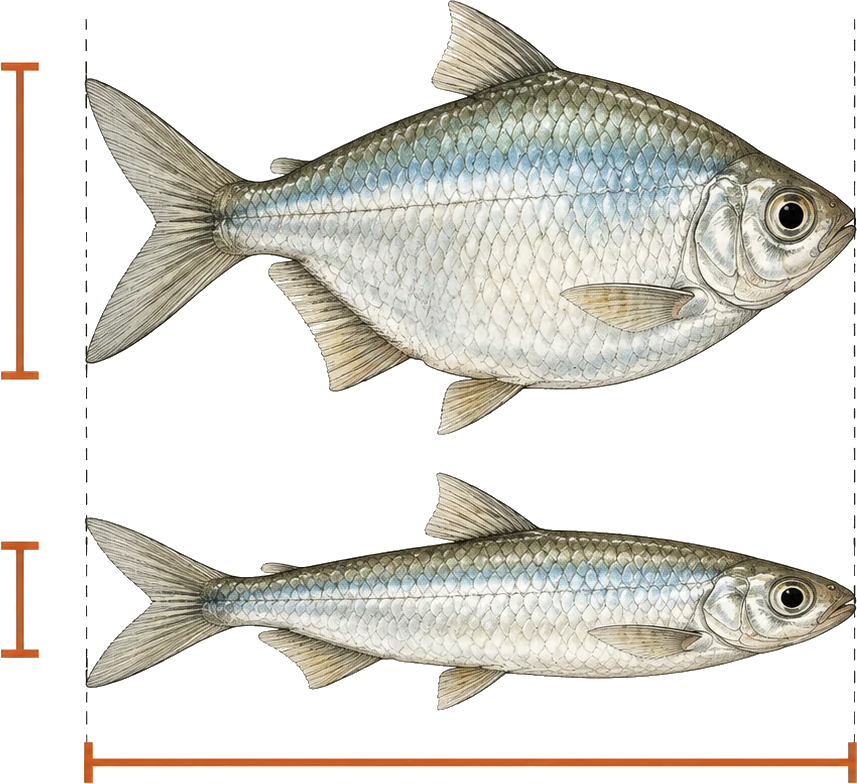
The practical consequence is a stocking one. Six Colombian tetras are not six neons in terms of what they eat, what they produce and how much water they need.
What tank does a group of Colombian tetras need?
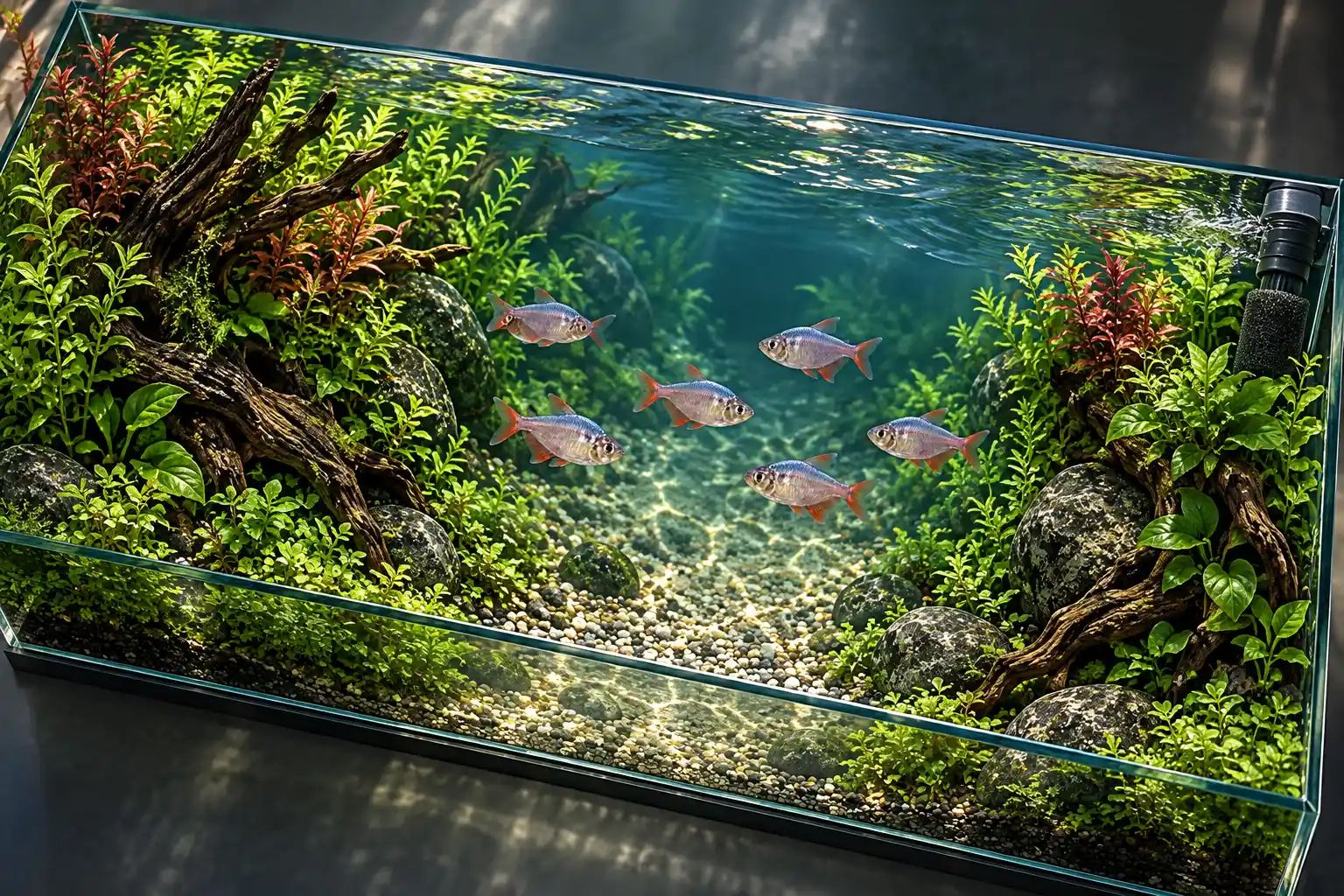
Seriously Fish gives base dimensions of 90 by 30 cm as the minimum to consider, which works out at about 81 litres.
- Published base footprint
- 90 by 30 cm
- Approximate volume
- About 81 litres
- Filtration
- Need not be strong, though the species appreciates some water movement
- What the figure assumes
- A group, which the behaviour section sizes at eight to ten
That is a minimum for a proper group rather than a target, and the two figures have to be read together. A 90 cm tank holding four of these fish is a worse home than the same tank holding ten, for reasons the next sections set out.
Décor is not especially critical, though the source notes the fish colours up better in a well-structured, ideally planted, set-up.
What water does a Colombian tetra need?
Unusually forgiving water, by the standards of a South American characin.
Published ranges and how they were taken
- Temperature20 to 28 °CSeparate aquarium thermometer rather than the heater dial.
- pH5.0 to 7.5Calibrated meter or an aquarium test spanning acidic to neutral.
- General hardness1 to 10 dGHGH titration test in degrees of general hardness.
Every range above applies to Hyphessobrycon columbianus in a freshwater system. Source: Seriously Fish, checked 2026-09-12.
An eight-degree temperature band is wide. So is a pH range running from distinctly acidic to slightly alkaline, and a hardness range that covers most tap water in most places.
Seriously Fish rates the species as unfussy on temperature and suitable for tap water, and the published figures support that.
What the width of a range does not license is movement inside it. A fish that tolerates 20 °C and tolerates 28 °C is not a fish that tolerates travelling between them, and the same holds for pH.
Treat the ranges as a description of where the fish can live rather than as room to let a tank drift.
Is a Colombian tetra a fin nipper?
It has that reputation, and the published profile does not record it.
Aquarium writing about this species returns to fin nipping repeatedly, usually with a warning about long-finned tank mates. Seriously Fish describes the same fish as generally peaceful and calls it an ideal resident of a well-researched community aquarium.
Both of those can be true of one species, and the same source points at what separates them.
Its recommendation is not simply to buy the fish. It is to buy a mixed-sex group of at least eight to ten, and to include other schooling fishes alongside them specifically to provide security.
Those conditions help the fish maintain settled group behaviour. A small, insecure group of an active, deep-bodied, boisterous characin is a different animal from a settled one, and it is the version most of the nipping reports are describing.
- Buy a mixed-sex group of eight to ten, not three or four, and buy them together rather than building up over months.
- Stock other schooling species alongside them, which the source asks for as security rather than as decoration.
- Leave out long-finned and slow-moving fish, the category the nipping reports name most consistently.
- Give the group the published tank length, because a boisterous mid-water fish in a short tank has nowhere to take its energy.
Neither body colour nor a peaceful sales-tank group settles the compatibility question. What a buyer can act on is that every condition attached to the peaceful description is a decision made before the fish is bought, and none of them can be fixed afterwards without buying more fish or a longer tank.
What can share a tank with a Colombian tetra?
Seriously Fish names categories rather than a species list, which is more useful than it sounds, because it lets you judge a fish the list never mentioned.
Similarly sized characids and relatives
Matches on size, water and speed, and adds to the schooling mass the behaviour section asks for. A shoal of another mid-water tetra is doing a job here, not just filling space.
Smaller armoured and suckermouth catfishes
Callichthyids and loricariids work on the bottom and at the glass, out of the water layer this fish occupies, and they are not a target for something that feeds in open water.
Non-predatory medium-sized cichlids
Large enough not to be harassed by a boisterous shoal, and slow enough that they are not competing for the same food at the same speed.
Long-finned and slow-moving fish
The exclusion. Trailing fins are what the nipping reports describe as the casualty, and a slow fish cannot leave a fast one alone with its tail.
Set against the species documented here, the categories resolve into two that fit and two that do not.
Species documented here, and where each one lands
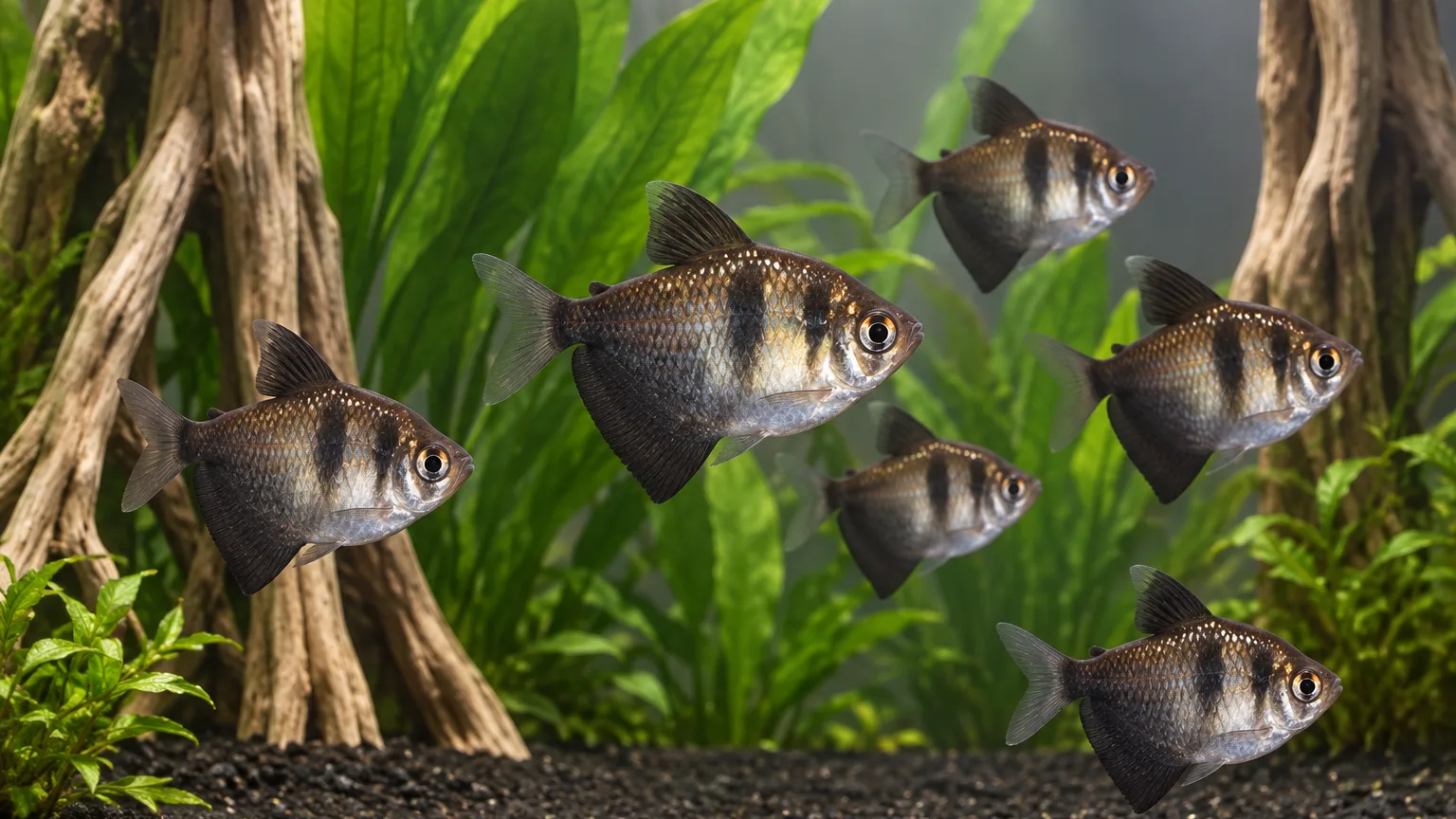 Black skirt tetra
A deep-bodied characin of comparable size wanting comparable water. The first category, and a second mid-water shoal doing the same job.
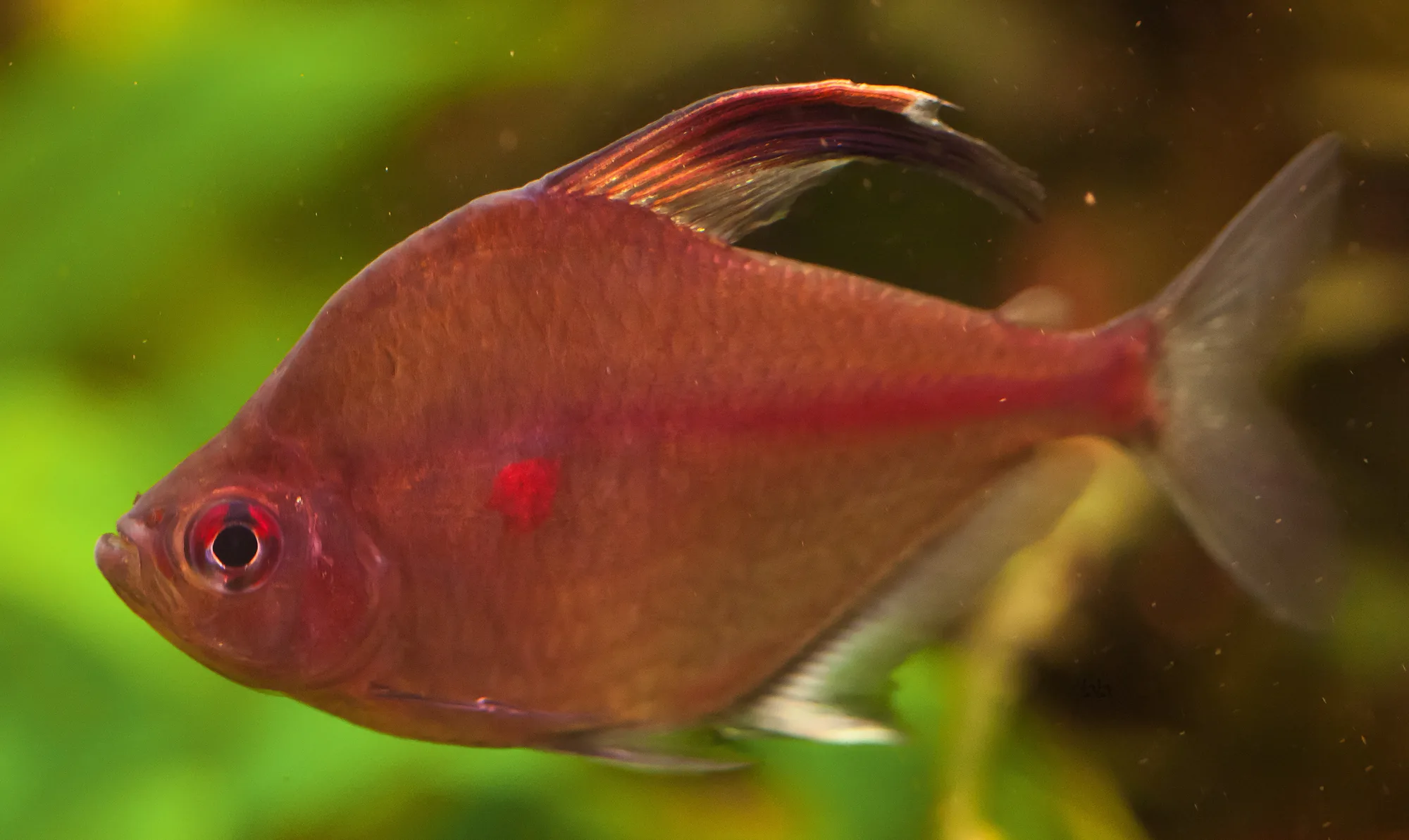 Bleeding heart tetra
The same range and the same water, at a similar length. Also longer-finned than average, so it benefits from the same exclusion this species needs.
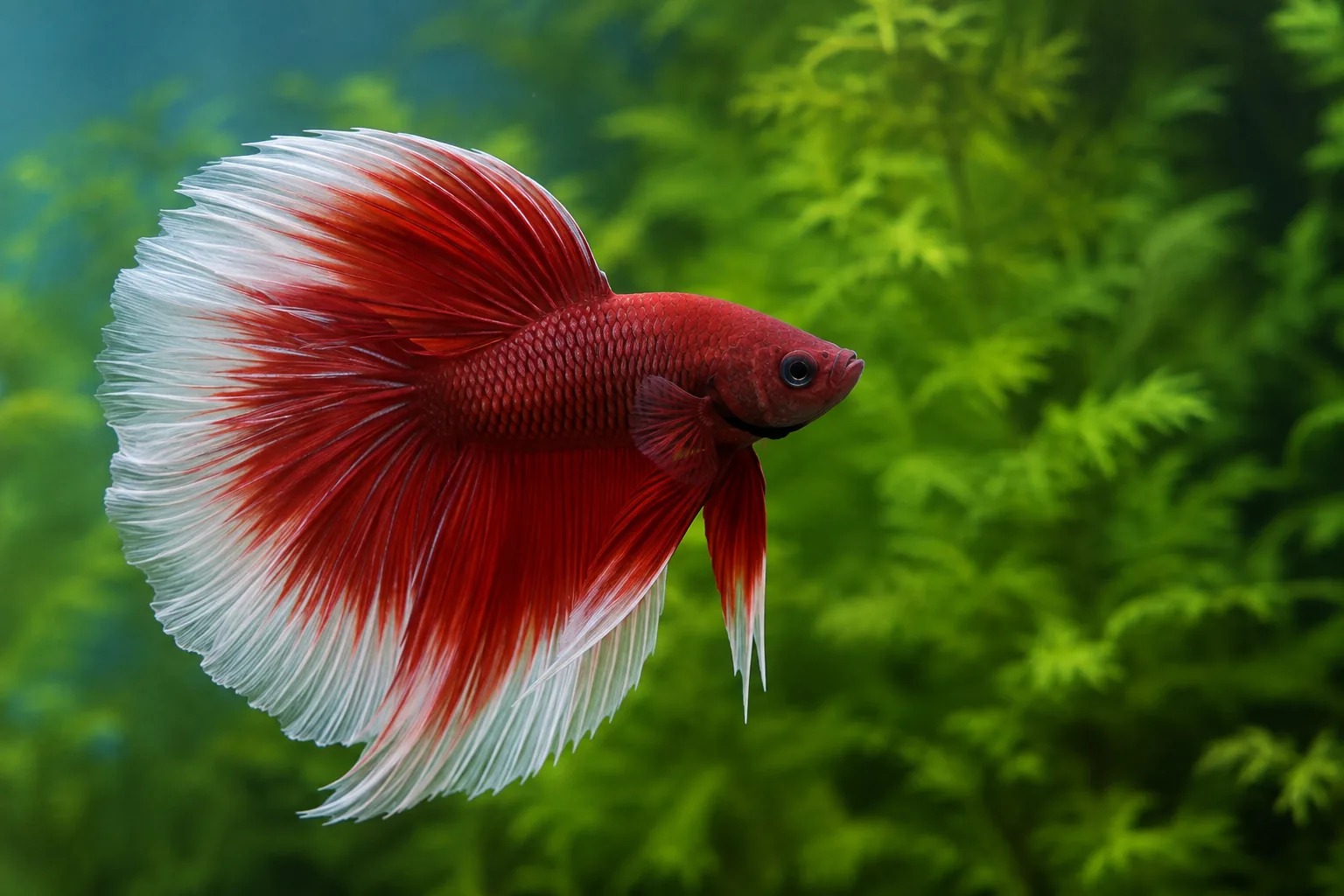 Betta
Exactly the fish the exclusion is about. Slow, long-finned, and unable to do anything about a shoal of fast characins except lose fin tissue.
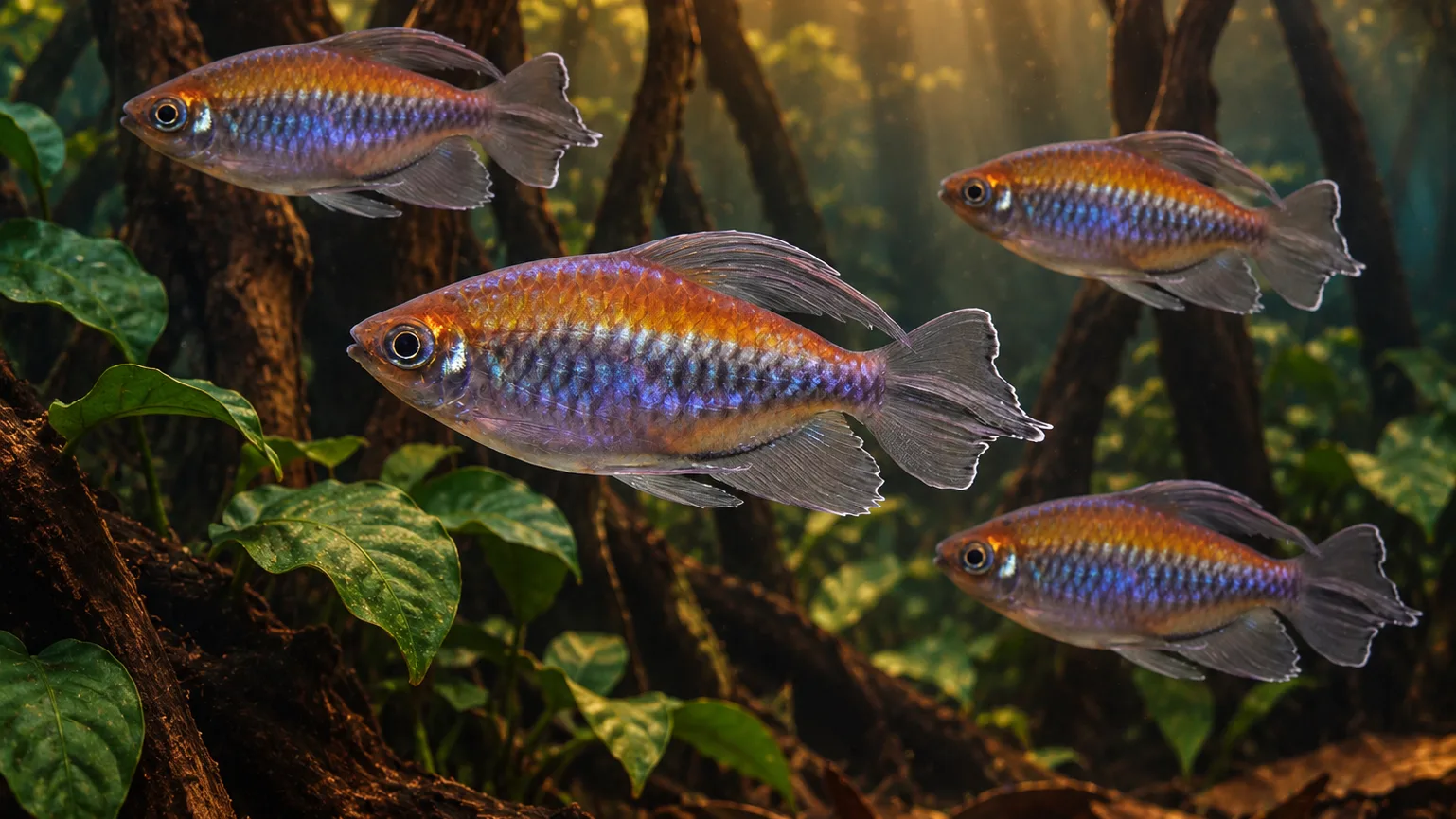 Congo tetra
A peaceful fish whose males carry long trailing fins that take months to grow. It sits on the wrong side of the same exclusion.
The exclusion is worth taking literally rather than as a general caution. Fin tissue lost to a persistent nipper does not come back on any timescale that matters to the fish.
What do Colombian tetras eat?
They accept many foods in small amounts, but distribution matters as much as variety.
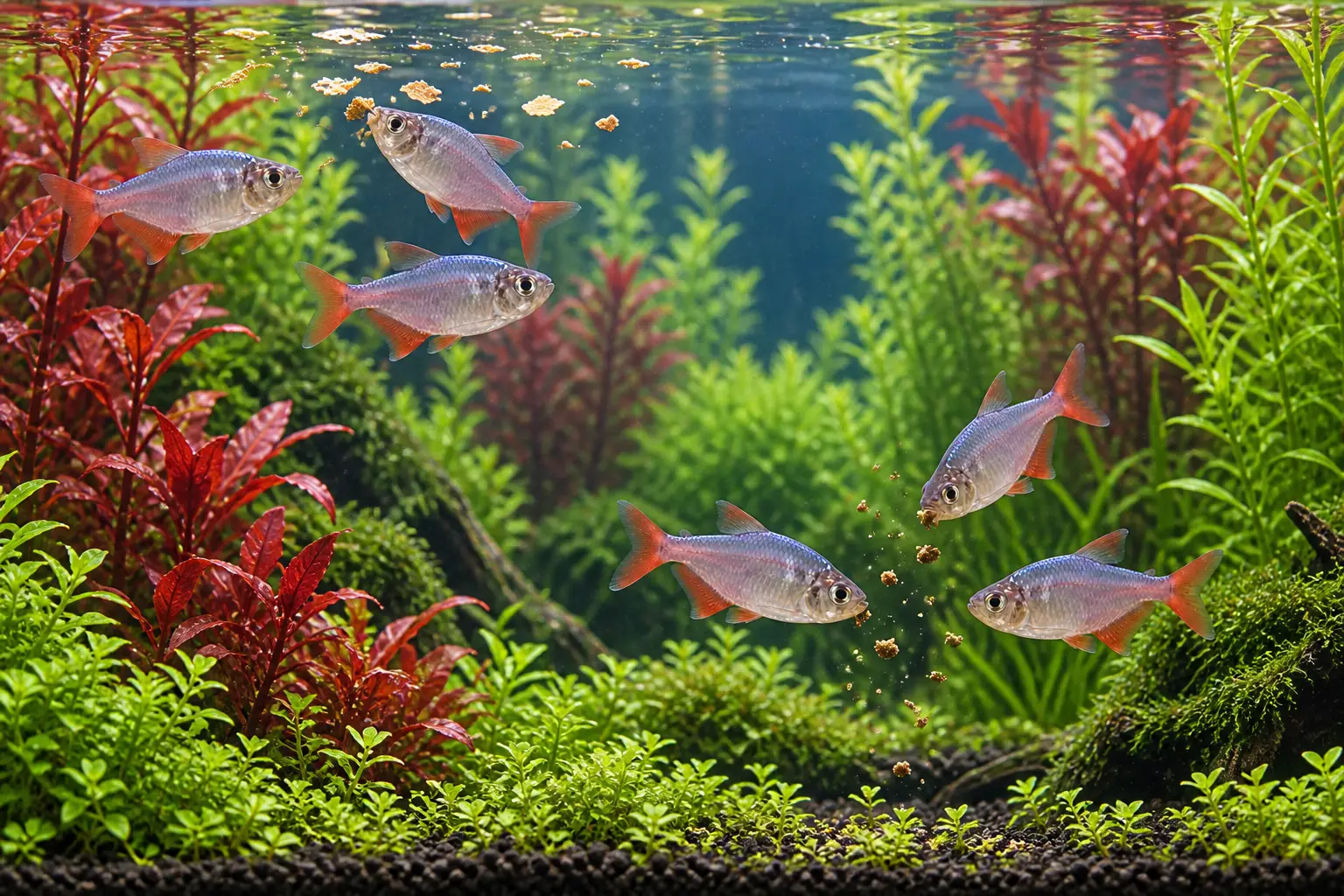
- Recorded wild diet
- Worms, insects and zooplankton, with smaller amounts of plant material and organic detritus
- Trophic level
- 2.9, from FishBase
- Routine food
- Good quality dried flakes and granules
- For best colour and condition
- Regular small live and frozen foods such as bloodworm, Daphnia and Artemia
- The part usually missed
- At least some of the dried food should carry added plant or algal content
- Basis of the wild diet
- Inferred in the source rather than measured from stomach contents
This is a foraging omnivore rather than a small predator, and the trophic level of 2.9 says the same thing in a different way.
Feeding it as though it were a carnivorous tetra will keep it alive and will not keep it in condition. The plant or algal fraction is named explicitly in the source and is the easiest thing to leave out of a shopping basket.
How do you tell males from females?
This matters more than it usually does, because the group this species needs is a mixed-sex one, and that is a decision made at the shop rather than afterwards.
Four characters separate them, and they are easier to read across a group than on a single fish.
| Character | Male | Female | How usable it is in a shop |
|---|---|---|---|
| Dorsal fin | Noticeably more extended | Shorter and plainer | The clearest character, and the one to look for first |
| Body | Slimmer through the belly | Deeper and rounder | Reliable on well-fed adults, useless on juveniles |
| Colour | More intensely coloured | Paler in the same pattern | Works only when you can compare two fish side by side |
| Length | A little smaller | A little larger | Real, but too slight to judge on its own |
None of this works on the juveniles most shops stock. If the fish in the tank are all small and all identical, the practical answer is to buy the full group of eight to ten and let the sexes sort themselves out by arithmetic.
One caution on colour. The published description notes that this species shows no pronounced sexual colour change in spawning condition, unlike its close relative H. savagei, so a fish that suddenly colours up is not announcing anything about its sex.
How do you breed Colombian tetras?
This is one of the few species on this site with a published method rather than a hopeful description, and the method is specific.
Adults spawn readily in good condition, and in a mature aquarium a few fry may appear without any intervention at all. Getting a useful number of them requires separating the eggs from the parents, because this fish scatters eggs and then eats them.
- Set up a separate spawning tank Filled with mature water, kept very dimly lit, with an air-powered sponge filter or air stone for oxygen and gentle movement.
- Cover the base with an egg trap A mesh of a grade the eggs fall through but the adults cannot reach into. Plastic grass matting or a layer of glass marbles does the same job, as does filling the tank with fine-leaved plants or spawning mops.
- Introduce conditioned fish A single pair, or one or two males with several females, left in place until eggs appear.
- Expect eggs the next morning Spawning normally runs two to four hours, and a well-conditioned mature female may lay as many as 2,000 eggs.
- Hatch and first feed Eggs hatch in 24 to 36 hours, with a good-sized yolk sac still attached. First food is Paramecium or a dry food of 5 to 50 micron grade, moving on to Artemia nauplii once the fry can take them.
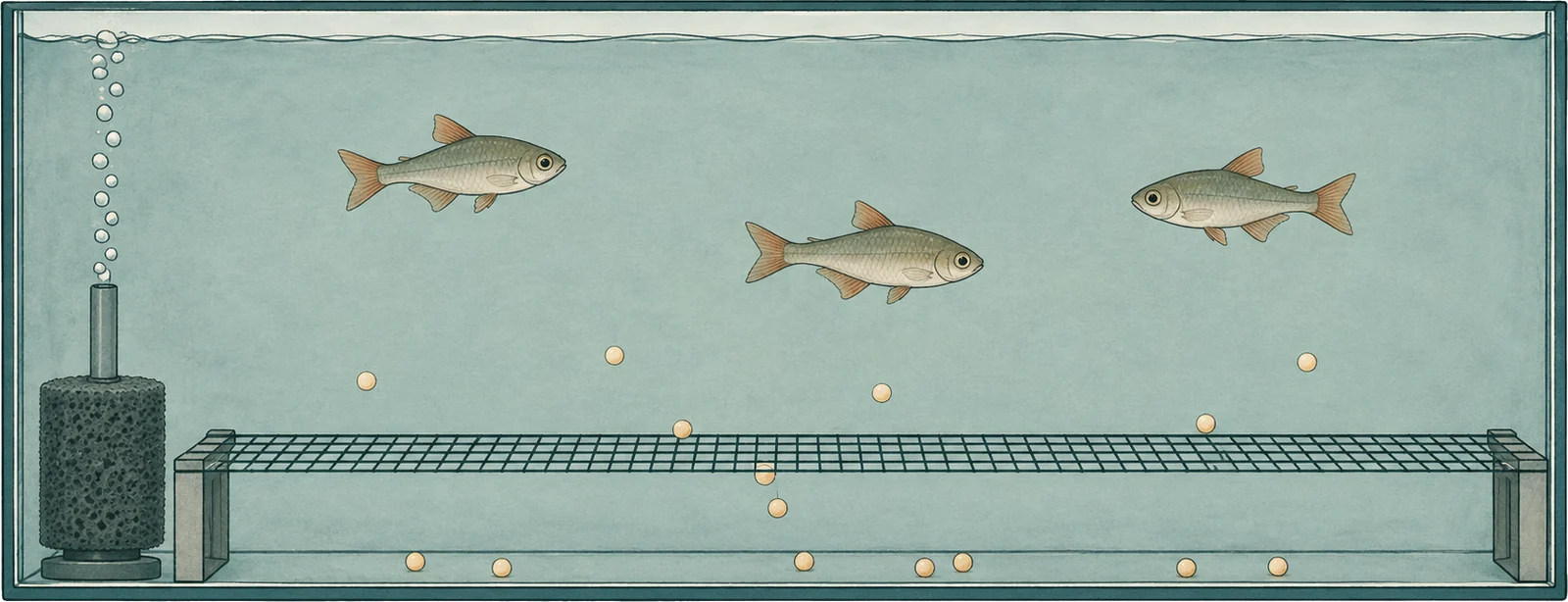
The first-food grade is the step that catches people out, and it is worth seeing why.

The conditioning itself is described qualitatively in the source, and no success rate is published. Treat the sequence as a method that works rather than as a yield you can predict.
How long do Colombian tetras live?
Around five years is the figure in general circulation, and it is worth knowing where it comes from before planning around it.
It comes from aquarium sources rather than from an institutional record. FishBase carries no longevity entry for Hyphessobrycon columbianus at all.
What FishBase does record is high resilience, with a minimum population doubling time of under 15 months. That describes how fast a population recovers from loss, not how long one fish lives, and the two are easy to conflate.
So the honest position is that five years is a reasonable planning estimate that nobody appears to have measured. A small characin of this size living several years in good conditions is unremarkable, and the absence of a published figure is not evidence that it lives a short time.
What is the conservation and trade status?
Short entries, and the combination of them is the interesting part.
| Record | Status | Dated | What it does not cover |
|---|---|---|---|
| IUCN Red List | Data Deficient | 9 October 2014 | Whether the population is stable, growing or falling |
| CITES | Not Evaluated | Checked 12 September 2026 | National and local rules, which apply separately |
| Recorded use | No fisheries interest; commercial aquarium trade | FishBase, checked 12 September 2026 | Whether a given fish was bred or collected |
Data Deficient does not mean secure and it does not mean threatened. It means the assessors could not reach a conclusion, and that entry has stood since 2014.
Set that beside a species apparently known from one river and sold worldwide as an ornamental, and the shape of the gap is clear enough. Nobody is in a position to say what the wild population is doing.
The one thing a buyer can do about that is ask. Nothing in the register distinguishes a bred fish from a collected one, so the only way to know which is in front of you is to put the question to the supplier.
Which tetras make useful comparison points?
Emperor tetra
A medium tetra whose males hold display positions, adding territory and sight lines to the group decision.
Bloodfin tetra
A small, active school that changes the temperature, swimming-speed and feeding-access questions.
Bucktooth tetra
A scale-feeding specialist that shows why similar body size can hide a completely different housing decision.
Giant danio
A large, fast danio that makes horizontal room, group speed and oxygen demand the central comparison.
Ember tetra
A tiny warm-water tetra whose low competitive weight and small mouth change feeding and tankmate choices.
Cardinal tetra
A small blackwater shoaler whose soft-water context and quiet group behaviour narrow the comparison.