
Gold Barb Care: What Does a Healthy School Need?
Barbodes semifasciolatus
The gold barb is the cultivated golden form of Barbodes semifasciolatus, and it needs a complete social group rather than space for one small fish. Keep at least eight adults, start with a 90 × 30 cm footprint, and maintain stable water within the species' published range before adding community fish.
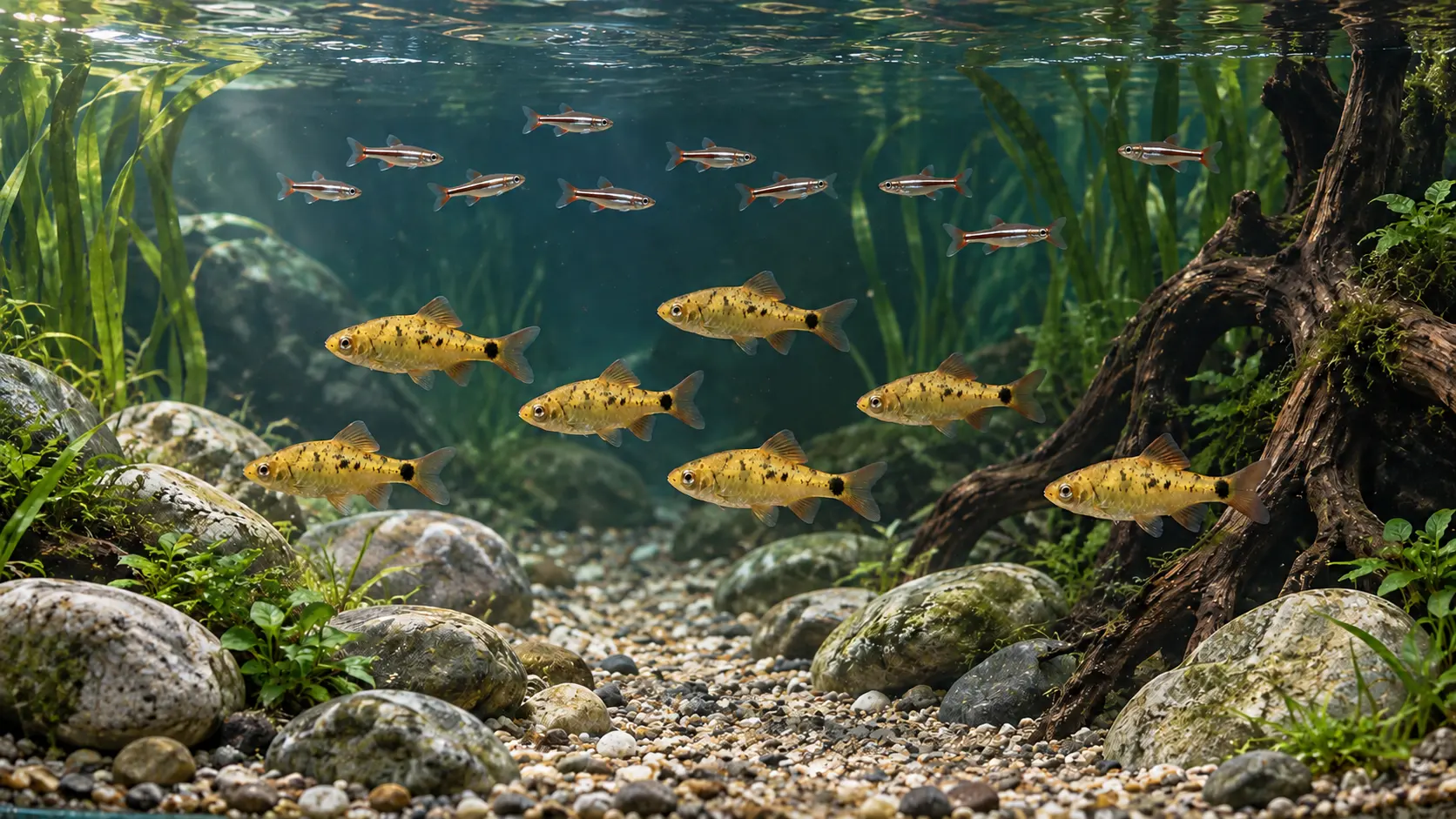
At a glance

- Adult size
- 7.6 cm
- Minimum footprint
- 90 × 30 cm
- Social structure
- Active lower-to-midwater school
- Minimum group
- 8
- Diet
- Omnivore
- Feeding
- Use a complete small staple, varied invertebrate and plant-containing foods, and at least two feeding areas.
- Waste load
- Moderate per fish and substantial across the complete adult school
- Family
- Cyprinidae
- Native range
- Northern Vietnam, southwestern China, Taiwan, and Hainan
- Also sold as
- Barbus schuberti, Chinese barb, Green barb, Puntius schuberti, Schubert's barb. Trade and hobby names, not accepted species names.
- Former scientific names
- Barbus sachsii, Puntius semifasciolatus. Superseded names for this same species.
- Conservation status
- Least Concern, assessed 20 September 2011 Source
Starting footprint for at least eight adults; larger schools and mixed communities need more length and filtration capacity.
What is a gold barb?
A gold barb is the cultivated golden form of Barbodes semifasciolatus, a small East Asian cyprinid. It is an active social fish, so a suitable home starts with a complete school, a long swimming route, and cooler stable water rather than the space needed by one juvenile.
The current Catalog of Fishes record accepts Barbodes semifasciolatus in the family Cyprinidae. Verified records place the species across northern Vietnam, southwestern China, Taiwan, and Hainan, while a recent population genetics study sampled it widely across Vietnam and southern China.
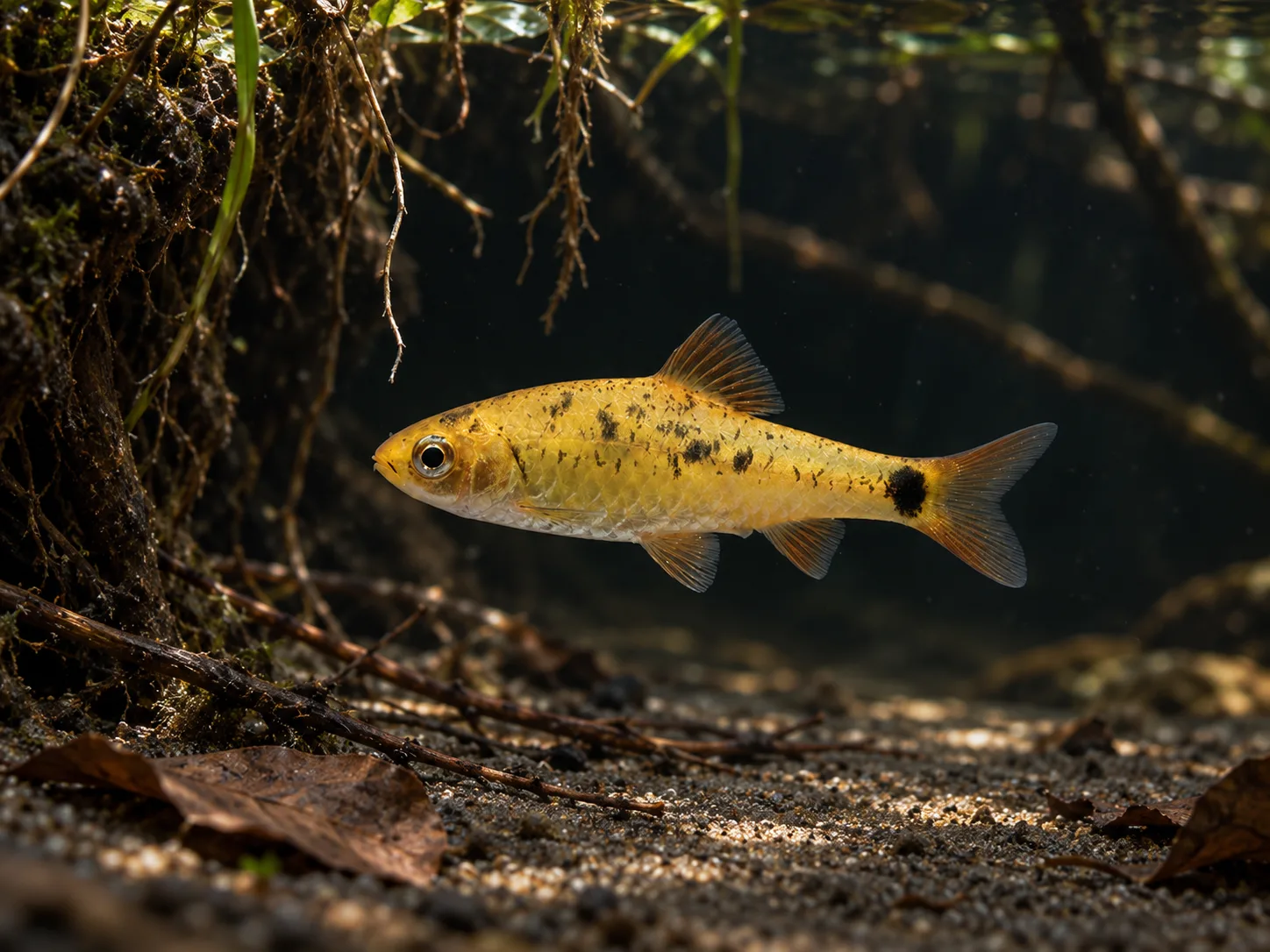
- Accepted identity
- Barbodes semifasciolatus (Günther, 1868)
- Family
- Cyprinidae
- Verified range
- Northern Vietnam, southwestern China, Taiwan, and Hainan
- Published maximum
- 7.6 cm total length
- Recommended social unit
- At least eight gold barbs
- Starting footprint
- 90 × 30 cm for the first adult school
- Published water range
- 18 to 24 °C, pH 6.0 to 8.0, 5 to 19 dH
- Recorded diet
- Worms, crustaceans, insects, plant matter, and detritus
- Conservation
- Least Concern
Wild-type fish are more subdued, with a yellowish or olive body and a series of narrow bars or irregular dark spots. Selective breeding makes the aquarium form much brighter, but colour alone cannot prove the identity, purity, or origin of an individual fish.
The USGS species account uses the common name green barb and also records gold barb and Schubert's barb. Those names can describe the same accepted species in different trade or historical contexts.
Why is Schubert's barb not a separate accepted species?
Schubert's barb, gold barb, and Chinese barb are names you may see on shop labels. The accepted species name remains Barbodes semifasciolatus, while Puntius semifasciolatus reflects an older generic placement and Barbus sachsii appears in the synonymy recorded by Catalog of Fishes.
The label Barbus schuberti or Puntius schuberti persists in aquarium literature for the golden form. Catalog of Fishes does not accept it as a separate species, so it should not replace the current scientific name in your records.
| Name on a label | What it can mean | What it does not prove |
|---|---|---|
| Gold barb | The familiar selectively bred golden aquarium form | A separate species or a documented lineage |
| Schubert's barb | A long-used trade name for the golden form | That Barbus schuberti is currently accepted |
| Chinese barb | A common name for B. semifasciolatus | The exact collection locality of a captive fish |
| Green barb | A common name often applied to the natural-looking form | Wild origin or legal collection |
| Puntius semifasciolatus | A former scientific combination still found in books and listings | That the accepted genus is still Puntius |
| Barbus sachsii | A published synonym | A second species in the aquarium trade |
Your records should keep the exact shop label, supplier, purchase date, and any captive-bred claim together. If a label conflicts with the accepted name, preserve both instead of silently converting an uncertain identity into a firm one.
How much space does an adult gold barb school use?
FishBase lists a maximum published length of 7.6 cm total length. One adult is modest in size, but eight active adults create a very different swimming, feeding, oxygen, and waste commitment from one small fish in a shop tank.
FishBase records aquarium groups of at least five. A recognized husbandry account from Seriously Fish recommends eight to ten, which is the better starting point because it gives individuals more social choice and spreads brief display pressure across a real group.
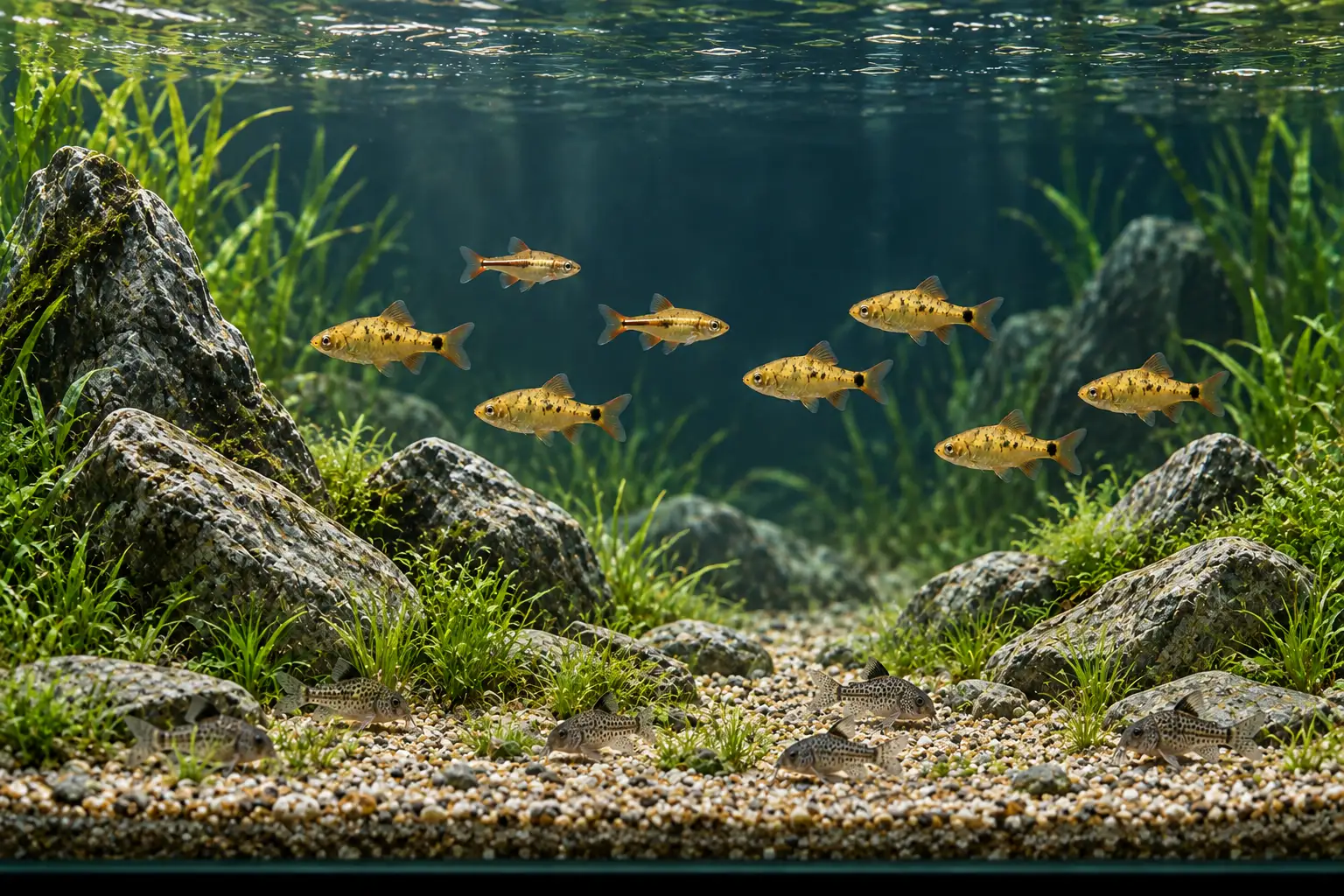
Gold barbs do not hold one perfect formation all day. A settled group may spread out to forage, tighten after a sudden movement, then separate again once the disturbance passes.
Plan for the adults you intend to keep, including the full body length of every companion and the space displaced by wood, rocks, plants, filter sponges, and equipment. A tank that looks generous around eight juveniles can become crowded without any new fish being added.
- Reserve room for at least eight adult gold barbs before choosing companions.
- Keep a continuous horizontal route through the middle and lower water.
- Confirm that every fish can leave a chase without meeting glass or hardscape.
- Count the waste and oxygen demand of the whole community, not each species in isolation.
- Leave enough access to remove trapped food beneath wood and dense planting.
- Choose an upgrade point before the fish outgrow the current footprint.
The social unit is the stocking unit. Adding one or two more barbs to a cramped aquarium can increase waste and competition without giving the group enough room to reorganize.
What tank setup suits gold barbs?
FishBase gives 60 cm as a compiled aquarium-length minimum, but the stronger practical choice is a 90 × 30 cm footprint or larger for the first adult school. The extra length allows eight active fish to pass, spread, and regroup without making every encounter happen in the same short corridor.
A larger mixed community benefits from 120 cm of length, especially when another midwater school is included. Height can add water volume, but it cannot replace horizontal distance for fish that travel back and forth through the lower and middle layers.
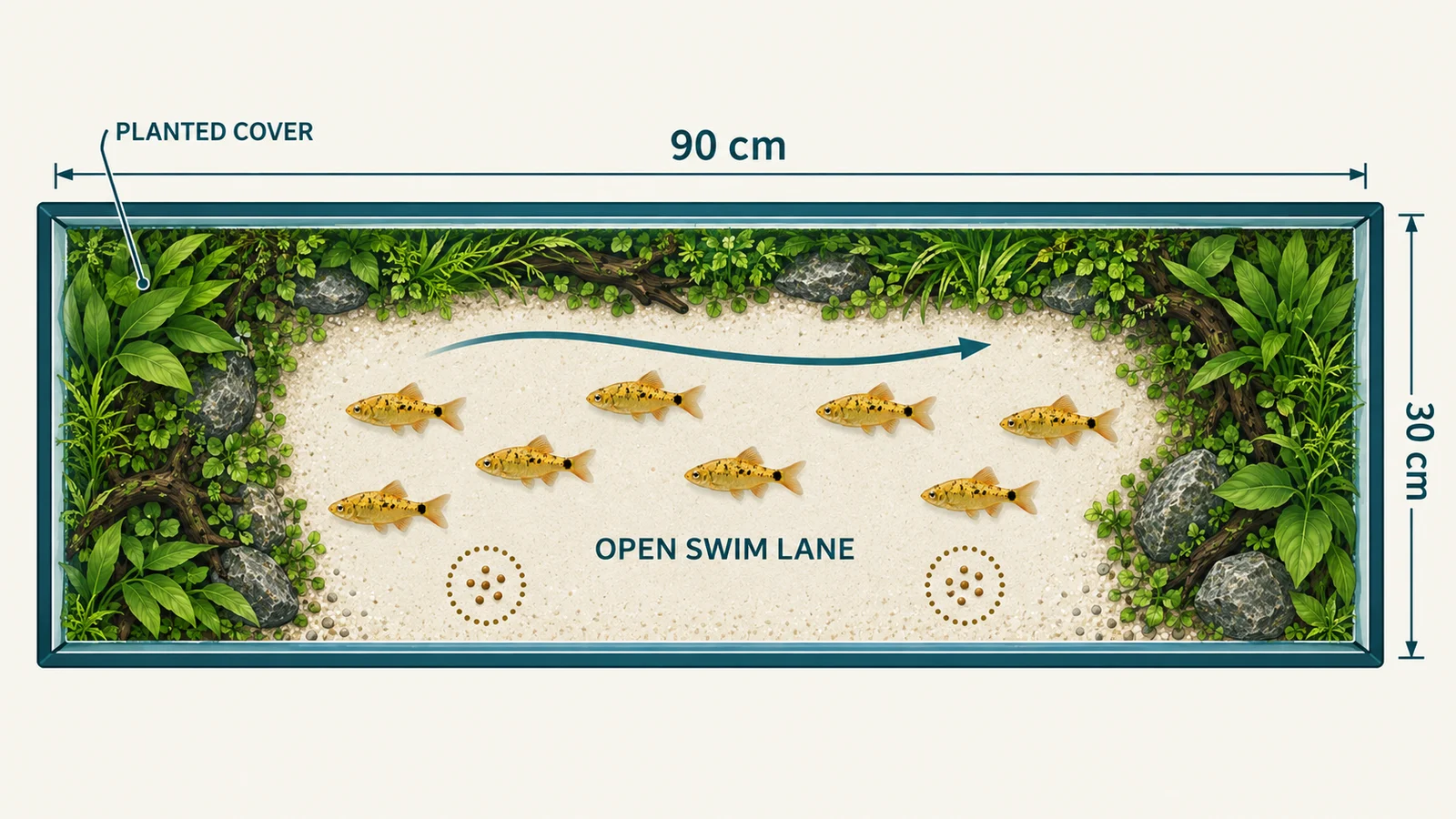
Open swimming route
Preserve one uninterrupted lane across most of the tank length instead of dividing it with a central wall of plants or wood.
Cover at the margins
Use plants, roots, or rock edges at the rear and ends so a fish can pause without becoming isolated from the group.
Secure top
Fit a lid and close cable gaps because a startled active fish can leave an open aquarium.
Mature filtration
Size and maintain the filter for the adult community while keeping its intake safe and its flow observable.
Surface movement
Keep a visible ripple for gas exchange without blasting every resting area with strong current.
Maintenance access
Leave a clear route for a siphon and enough space to inspect food traps, dead leaves, and reduced filter flow.
Rounded stones, fine gravel, sand, wood, and live plants can all work. Gold barbs may investigate soft growth and loose leaves, so choose robust planting and do not rely on a delicate display staying untouched.
Use a timer for predictable light and avoid placing the tank beside a radiator, sunny window, speaker, or frequently slammed door. A stable location often improves group behaviour more than another ornament.
Compare other freshwater fish profiles as complete adult groups, but never combine headline tank sizes as if both schools occupy the same space. Draw the actual adult community onto the footprint and leave a margin for maintenance delays, warm weather, and filter slowdown.
Which water conditions suit gold barbs?
FishBase publishes [18 to 24 °C, pH 6.0 to 8.0, and 5 to 19 dH](/water-chemistry/gold-barb-water-parameters/) for B. semifasciolatus. These broad compiled ranges describe possible conditions, not a command to push a stable aquarium toward the midpoint.
Published gold barb water context
- Temperature18 to 24 °CSeparate aquarium thermometer positioned away from direct heater and filter-return flow.
- pH6.0 to 8.0 pHCalibrated meter or liquid test that spans the source-water value.
- General hardness5 to 19 dHDrop-count GH titration test reported in degrees of hardness.
Every range above applies to Barbodes semifasciolatus compiled aquarium range in a freshwater system. Source: FishBase, checked 2026-09-15.
Before moving the fish, you should measure the seller's water and the receiving aquarium. A gold barb settled at one edge of the published range may be harmed by an abrupt correction that produces a more attractive number but a less stable environment.
The 18 to 24 °C range also rules out some permanently warm community plans. A heater may still be needed in a cold or changeable room, but it should prevent unsafe swings rather than automatically hold the tank at a typical tropical setting.
The OATA barb care sheet advises zero measurable ammonia and nitrite, adequate filtration, oxygenation, and regular partial water changes. Test ammonia and nitrite with methods you can repeat consistently, and investigate any detectable result in an occupied aquarium instead of waiting for visible distress.
Complete the aquarium's biological cycle before adding the school. After stocking, track temperature, toxic nitrogen, feeding, filter output, and fish behaviour together because a normal-looking pH cannot make an immature or oxygen-poor system safe.
What do gold barbs eat?
FishBase records worms, crustaceans, insects, plant matter, and detritus in the diet. The US Fish and Wildlife Service risk summary reports the same broad omnivorous pattern, which supports variety but does not make scraps or algae a complete diet.
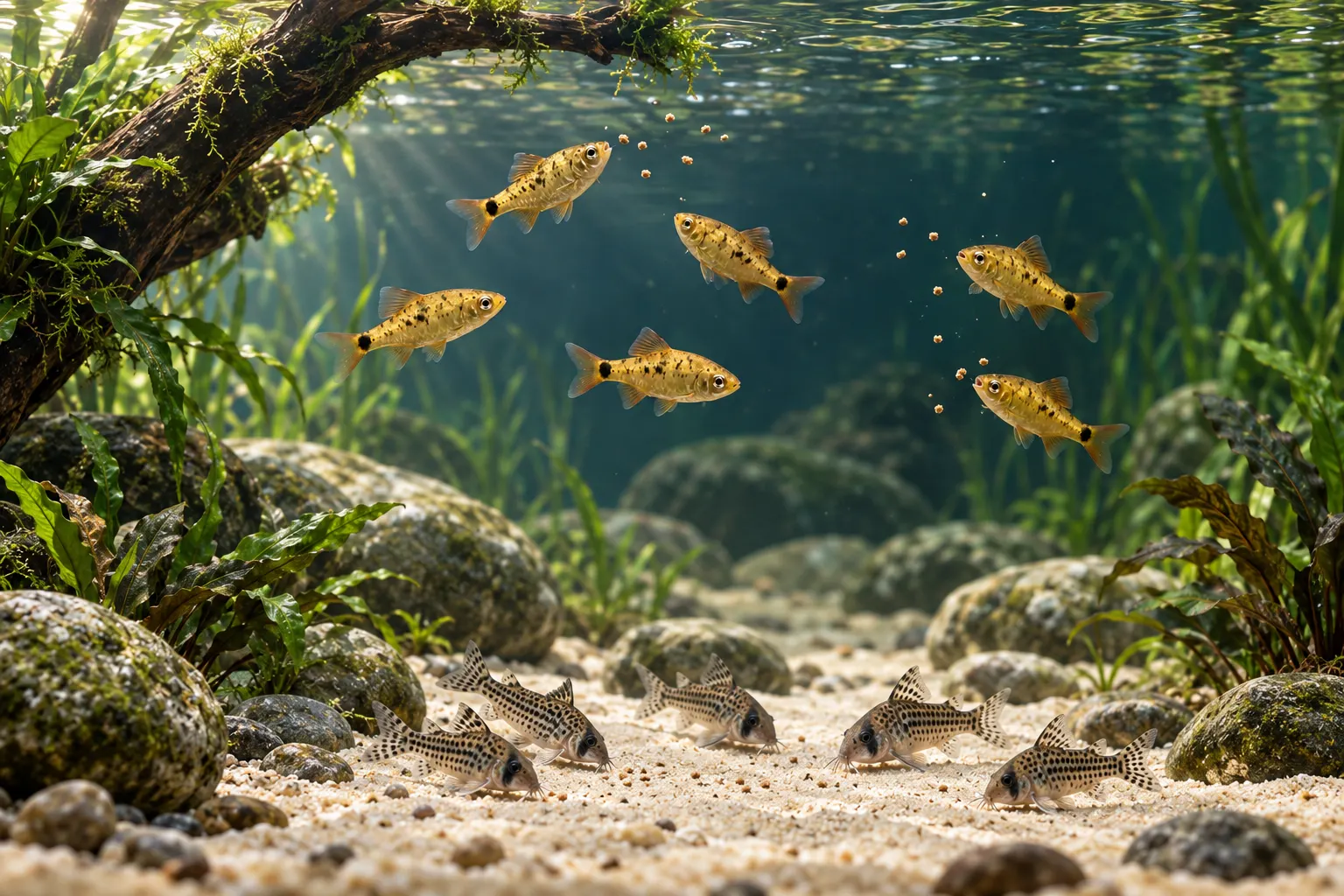
Use a nutritionally complete small pellet or quality flake as the staple. Add appropriately sized frozen or live foods such as daphnia, Artemia, or insect larvae, plus foods containing plant material, without allowing extras to displace the complete ration.
- Choose a complete staple Pick a small food that adult gold barbs can swallow promptly and that supplies more than one favourite ingredient.
- Divide the portion Release a little food in two separated areas so one bold cluster cannot control the meal.
- Watch the edges Confirm that fish near cover and lower in the group actually swallow food.
- Feed bottom fish deliberately Place their food where they can reach it instead of expecting them to clean up after the barbs.
- Stop before food accumulates End the meal while particles are still found quickly and remove persistent deposits.
- Review the trend Adjust only after checking body condition, competition, waste, nitrate, and filter performance over time.
Plant picking is normal exploratory behaviour, but gold barbs are not an algae-control substitute. A fish that grows thin despite joining meals may be losing food to faster companions or may have a health problem that needs closer observation.
Do not use a universal pellet count. Pellet size, density, formulation, fish size, water temperature, and the number of competing mouths all change what an appropriate ration looks like.
Which tank mates can share a gold barb aquarium?
Gold barbs are generally peaceful, yet they are quick, social feeders that may unsettle very slow or long-finned fish. A workable companion overlaps at a stable temperature, cannot swallow the barbs, can reach food, and still fits after both species receive their full adult group sizes.
A peaceful-looking moment does not guarantee a particular pairing. Individual behaviour, the actual footprint, sex balance, cover, introduction order, and a ready separation option still matter.
Which species make useful comparisons?
A cherry barb is smaller and usually less forceful, so its group and planted-cover needs should be assessed separately. Bloodfin tetras share an active open-water style, but a second fast school can make a modest tank feel crowded even when the temperatures overlap.
Compare adult community demands
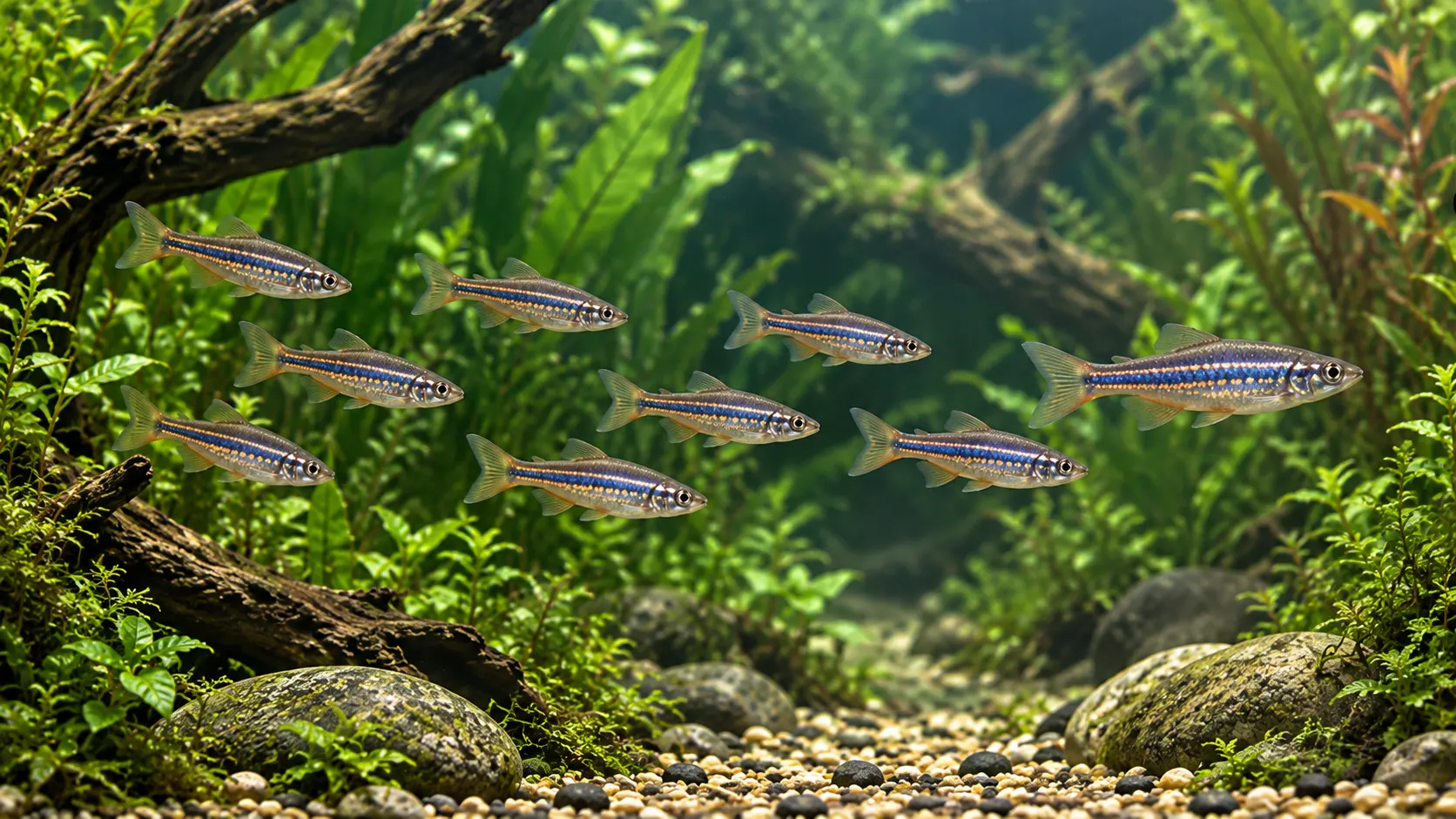 Giant danio
Much larger and faster, so it needs substantially more length and can make gold barbs look static by comparison.
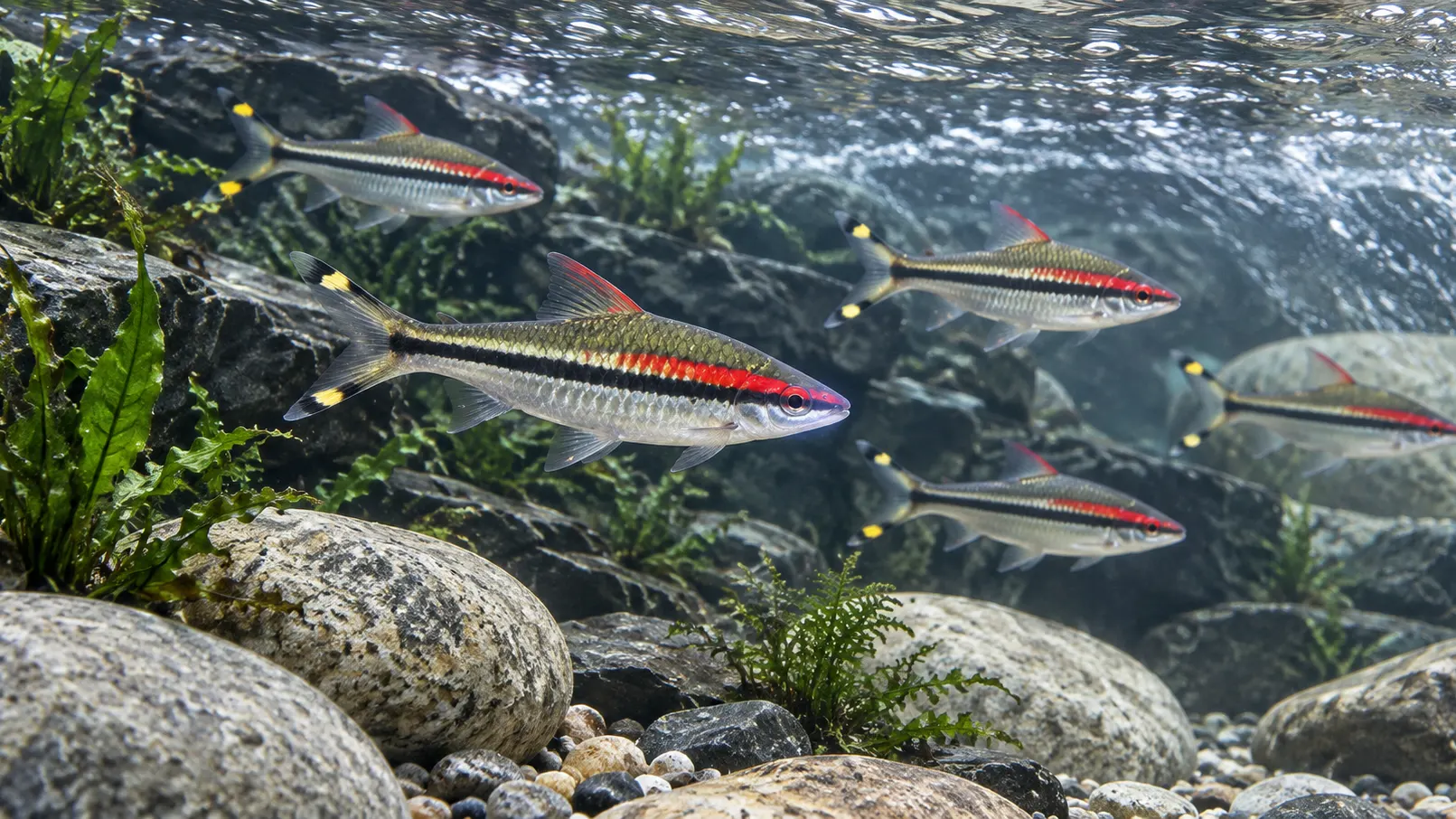 Denison barb
A far larger schooling barb whose adult footprint rules out treating all barbs as interchangeable.
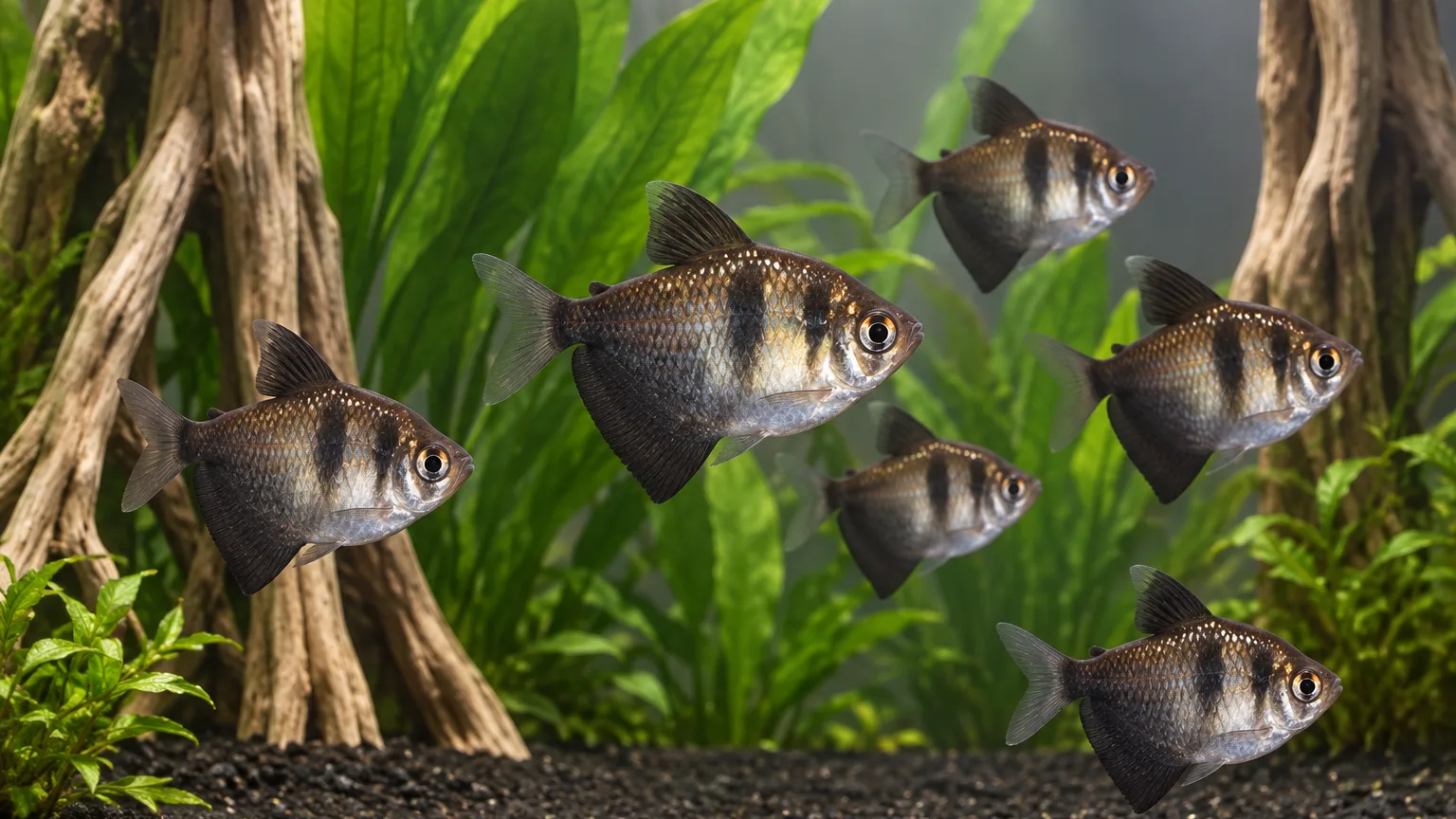 Black skirt tetra
A deeper-bodied group fish with its own fin-interaction risks and feeding pace.
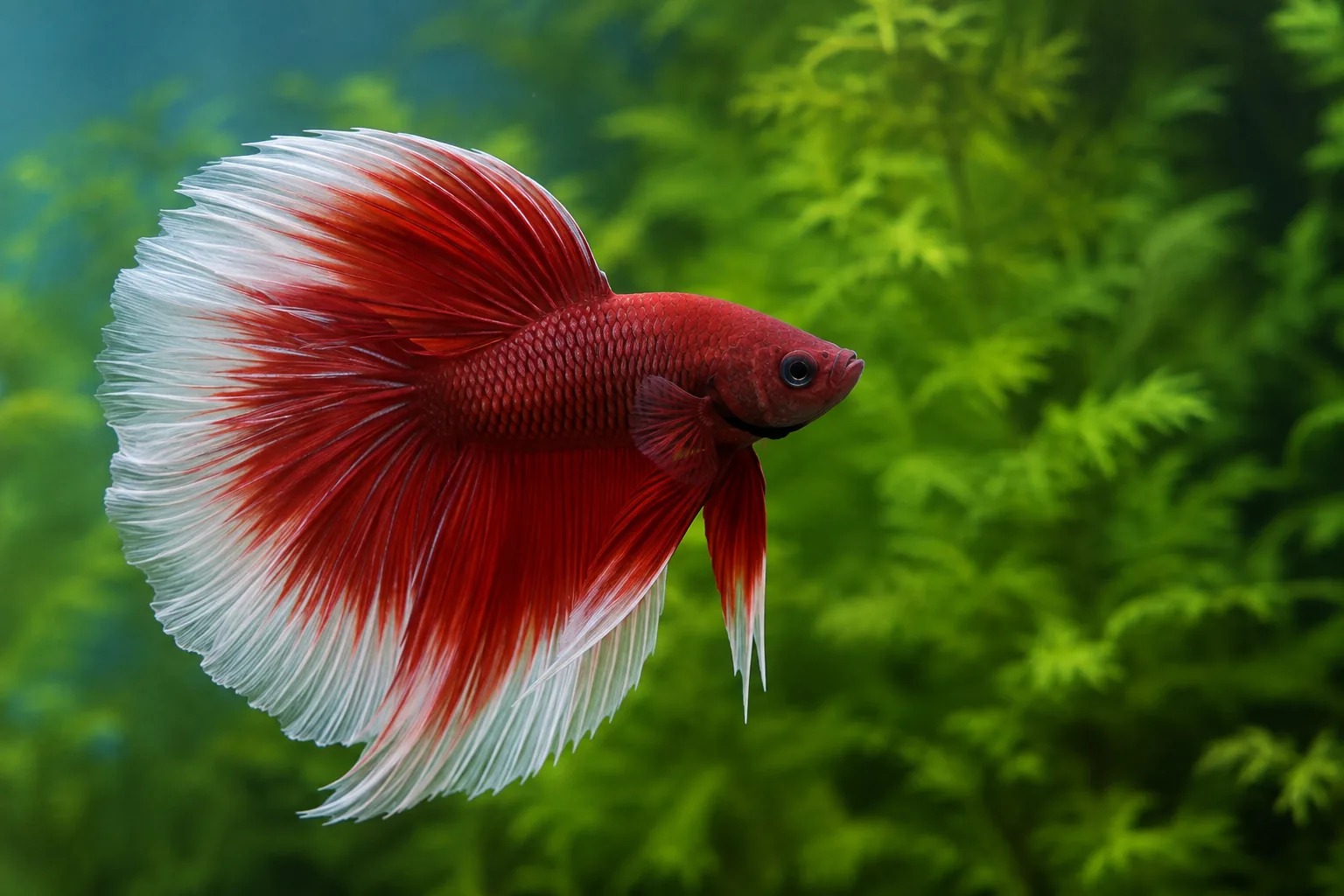 Betta fish
Long fins, individual temperament, and slower feeding make this a high-caution pairing with an active barb school.
 Cardinal tetra
Its warmer preferred conditions can leave little comfortable overlap for long-term mixed keeping.
 Ember tetra
Its much smaller body and quiet feeding style can be disadvantaged in a lively gold barb community.
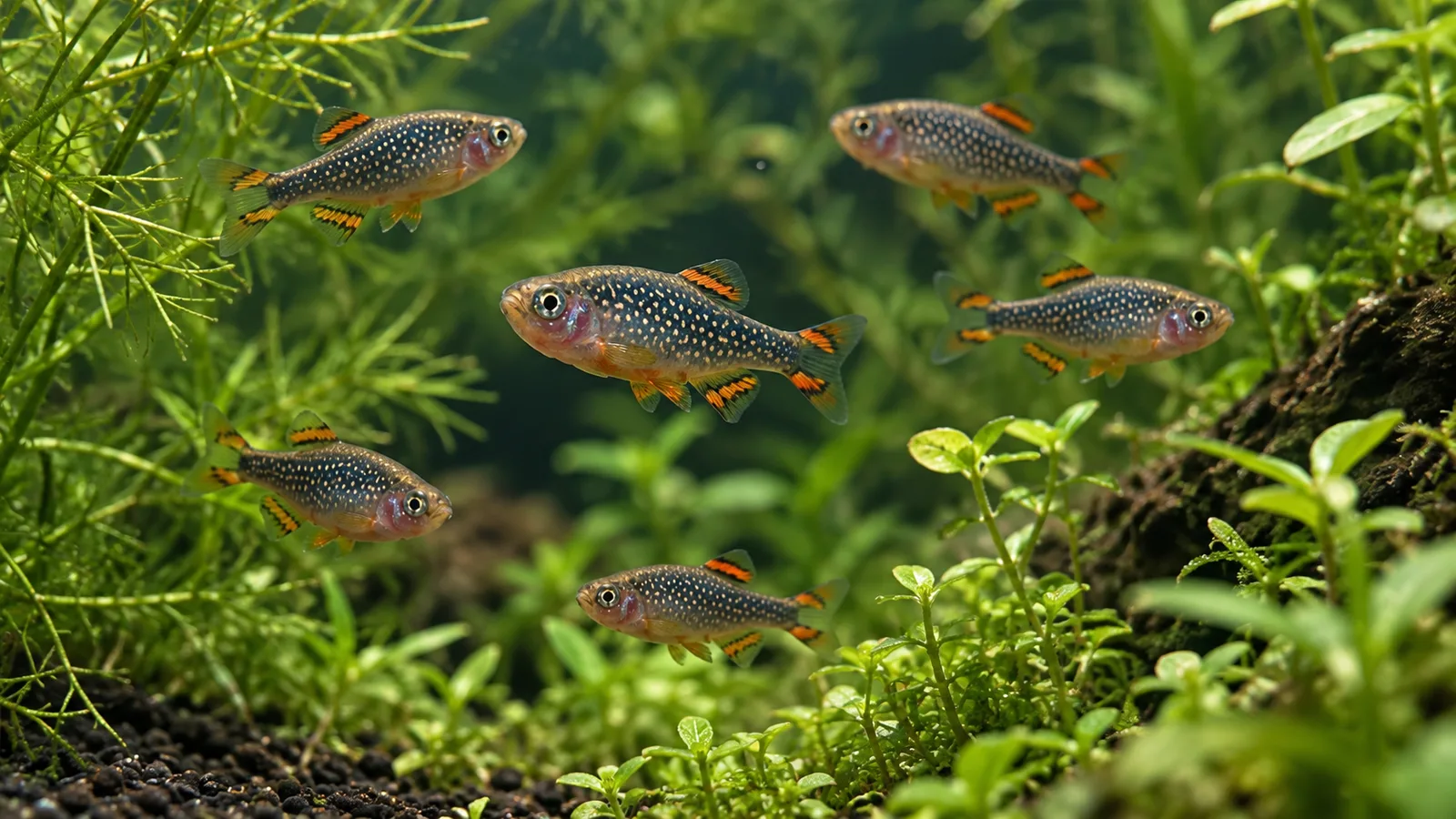 Celestial pearl danio
Its small size, shy behaviour, and cover use call for a calmer stocking plan.
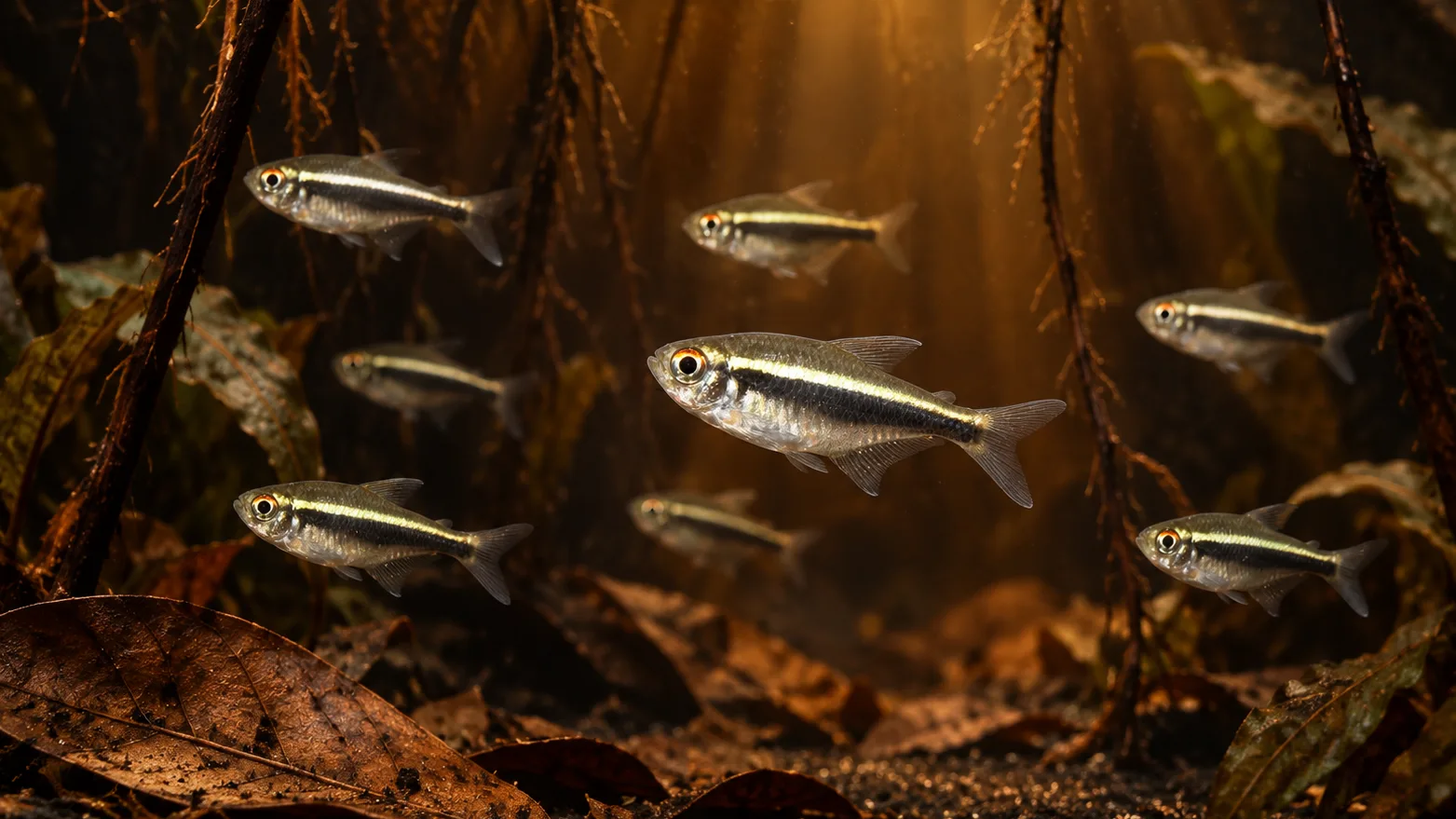 Black neon tetra
Similar schooling space does not erase the need to compare temperature, pace, and the full size of both groups.
A glowlight tetra community normally runs warmer than the center of the gold barb range, while a bucktooth tetra is excluded by its scale-feeding behaviour rather than water chemistry alone. These contrasts show why compatibility is a chain of conditions, not a peaceful or aggressive label.
Introduce new fish only after quarantine and a fresh capacity check. If the display has no spare footprint, oxygen margin, or feeding access, a theoretically compatible species is still the wrong addition.
When does chasing or colour loss need action?
Mature gold barbs may show stronger colour and perform short parallel displays. A normal encounter ends, both fish return to the group, and neither loses access to food, cover, or open water.
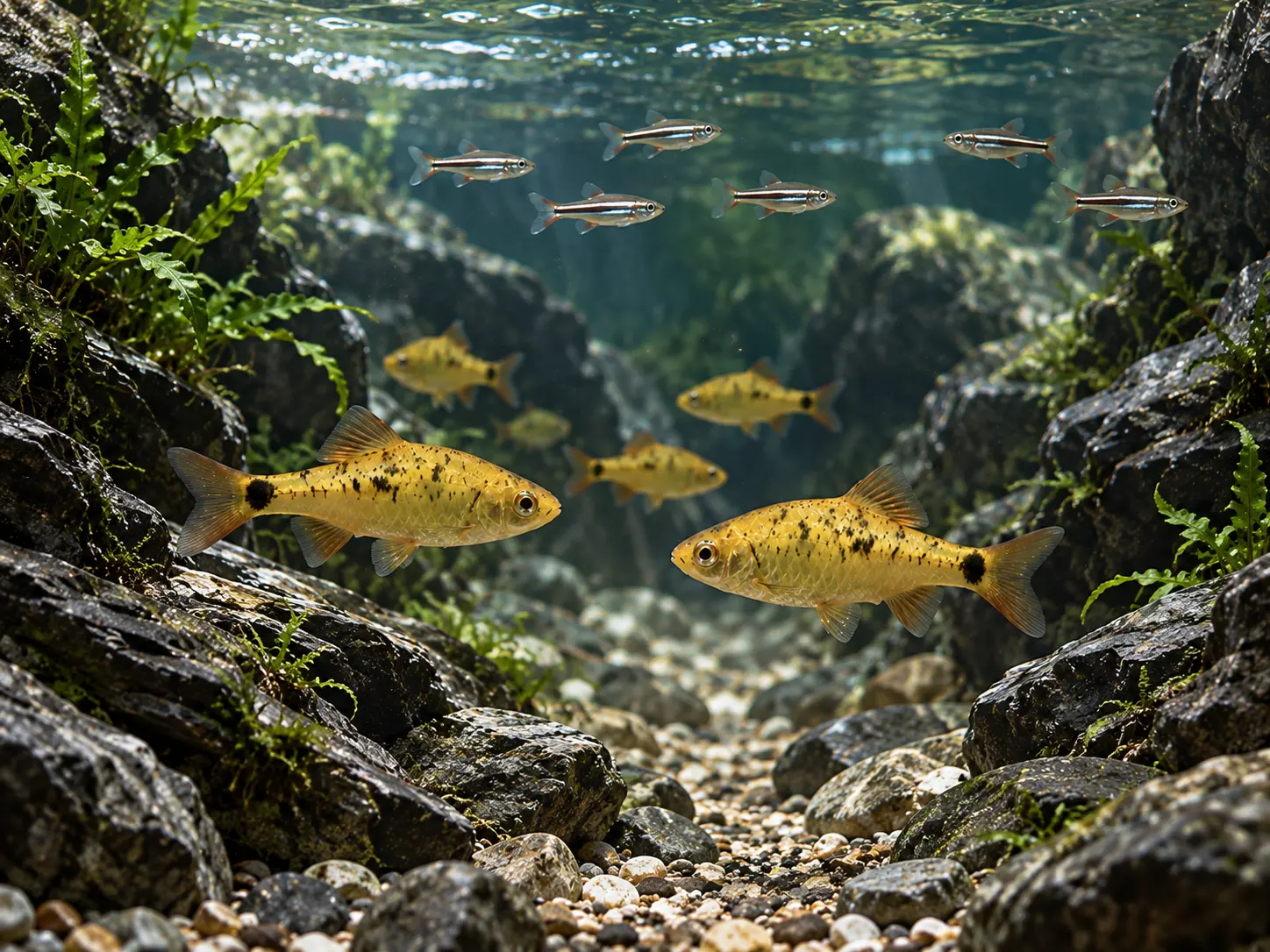
Colour can look softer after lights first come on, during transport, or after a brief disturbance. Persistent paling becomes meaningful when it appears with hiding, clamped fins, rapid breathing, poor appetite, abnormal posture, or repeated exclusion.
Check the shared aquarium before changing several things
- Temperature and oxygen Verify the thermometer, surface movement, filter return, and any recent hot weather or power loss.
- Ammonia and nitrite Test after new stocking, filter cleaning, overfeeding, a dead fish, or reduced filter flow.
- Recent maintenance Compare replacement-water temperature, conditioner use, source-water chemistry, and anything that contacted the bucket or hose.
- Social access Watch whether the same fish can leave a chase, join the group, and eat at both feeding areas.
- External contamination Review sprays, soap, metal, untreated water, medication, and equipment shared with another aquarium.
Several fish gasping, rolling, losing balance, or attempting to leave the water at once points first to a shared water or oxygen emergency. Increase safe surface movement, test toxic nitrogen, verify temperature, and use a temperature-matched conditioned water change when contaminated or toxic water is confirmed.
One fish with an open wound, severe swelling, continuing loss of balance, or prolonged breathing distress needs qualified assessment. Do not diagnose a disease from colour or a photograph, and do not combine medication, chemistry adjustment, complete filter cleaning, and a major rescape without a confirmed reason.
The most common care failures reinforce one another: a short tank concentrates encounters, a small group leaves fewer social choices, one feeding point rewards the boldest fish, and warm poorly aerated water reduces the margin for recovery. Correct the measured owner of the problem instead of changing every variable at once.
How long do gold barbs live?
Primary species records do not provide a dependable aquarium lifespan range. Common consumer estimates often describe several years, but they should not be treated as a measured guarantee for every strain, supplier, or starting age.
Plan for a multi-year commitment and for the fish to reach full adult size. An aquarium that works only while the school is young is not a complete housing plan.
Stable temperature, a mature filter, full social group, reliable feeding access, and low chronic stress support long-term care, but they cannot prove why one fish lived longer than another. Never dismiss weight loss, breathing changes, or social withdrawal as old age without checking the aquarium and the fish.
Are gold barbs endangered or restricted in trade?
FishBase lists B. semifasciolatus as Least Concern, with the assessment dated 20 September 2011, and shows CITES as Not Evaluated. Least Concern is a global category, not proof that every local population is secure or that every sale complies with local law.
The species has been moved beyond parts of its native range through the ornamental trade. USGS records introductions, and the US Fish and Wildlife Service risk screening notes that it is widely transported, so aquarium fish, eggs, plants, snails, and water must never be released outdoors.
A gold barb school is a good fit when you can house at least eight adults in a mature covered aquarium with a 90 × 30 cm or larger footprint, stable water within the species' range, open swimming room, retreat cover, and food access for every fish. In a community, the final decision belongs to the complete adult groups and the space, oxygen, and maintenance capacity they share.