
How Long Does Aquarium Cycling Take, and What Changes It?
An unseeded freshwater aquarium usually takes four to eight weeks to cycle, while a filter seeded with mature media from a healthy tank can finish far sooner. The tank is ready only on the day its filter clears a measured ammonia dose to zero ammonia and zero nitrite, whatever the calendar says.
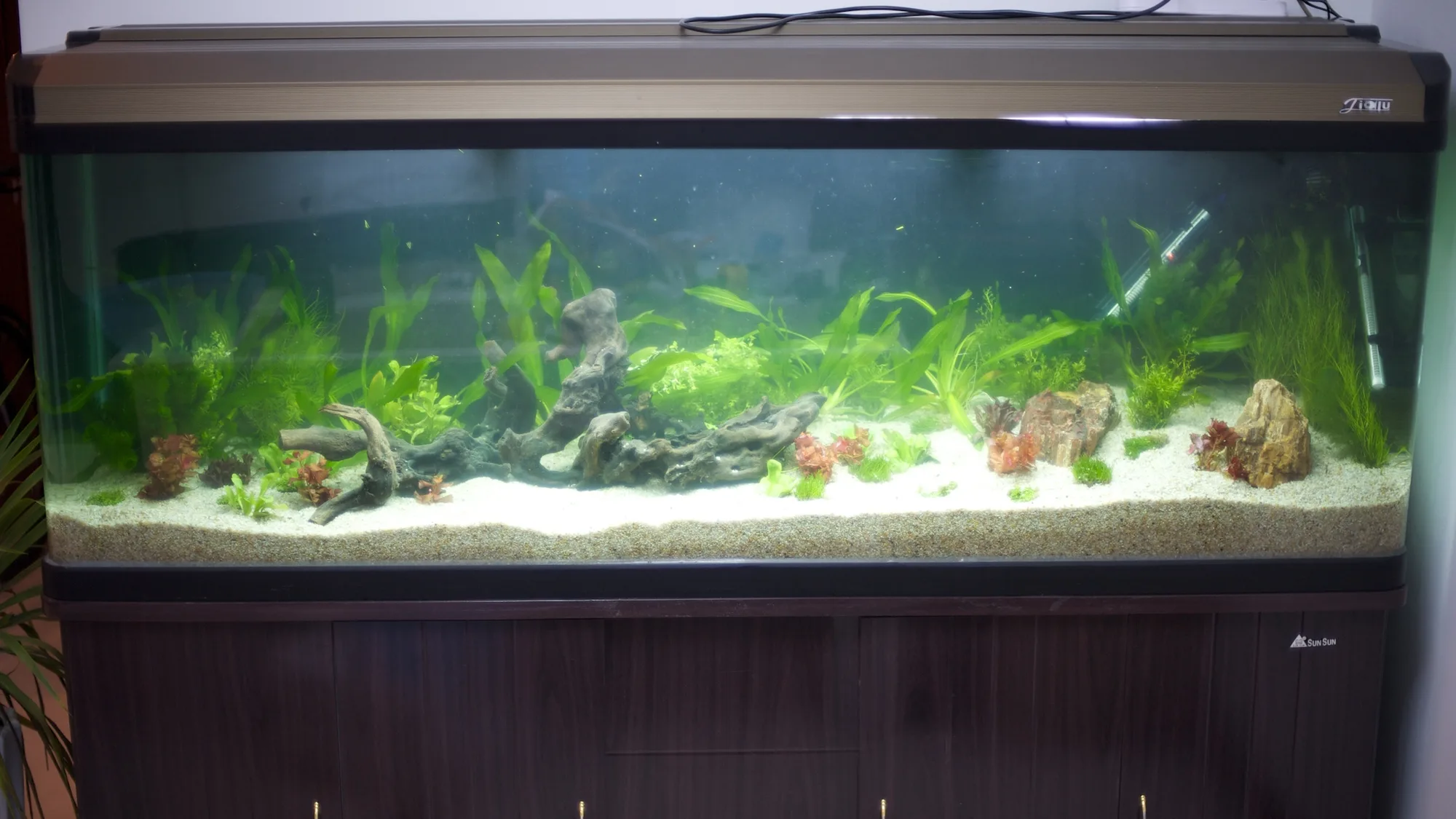
Lead photograph: Kevin McGill, CC BY-SA 2.0, via Wikimedia Commons.
How long does a new aquarium take to cycle?
An unseeded freshwater aquarium usually needs four to eight weeks before its filter can handle the waste of its first fish. A cool room, very soft water or untreated tap water can stretch that further.
The first decision that moves your date is whether the filter starts with mature media from a healthy tank or with clean media, because seeded filters skip most of the wait.
Published figures disagree because each one describes a different system, so they are set out separately here rather than averaged into one number.
| Source | Time given | System and conditions |
|---|---|---|
| Merck Veterinary Manual | Up to 8 weeks; new tank problems usually appear within the first 6 weeks | Tropical freshwater home aquarium, unseeded biofilter |
| SRAC Publication 452 | At least 1 month to activate; nitrite rises about 2 weeks in; 3 to 4 weeks to restart a failed filter | Warm-water aquaculture recirculating systems |
| UF/IFAS 4-H marine project book | Up to 3 to 4 weeks | Home marine aquarium |
| SRAC Publication 4502 | No fixed figure; a start-up trial at 28 °C (82 °F) finished quickly | Aquaculture biofilter dosed to 3 to 5 mg/L total ammonia with added alkalinity |
| Bower and Turner, 1981 | Conditioning cut substantially or removed | New seawater systems seeded with wet filter material from established seawater tanks |
Read together, those sources support planning for four to eight weeks in a freshwater tank started on clean media, closer to eight when the water is cool or soft, and a far shorter wait when mature media goes into the filter.
The calendar still never decides when fish go in. Readiness is a measured result: the filter clears a known ammonia dose, which is the final stage of the aquarium nitrogen cycle at work.
What happens week by week during a cycle?
Day one is the first day the filter runs with an ammonia source in the water. Filling, planting and decorating add little or no ammonia unless a nutrient-rich soil or decaying plant matter is releasing it, so a tank that sits for two weeks without a source has barely started.
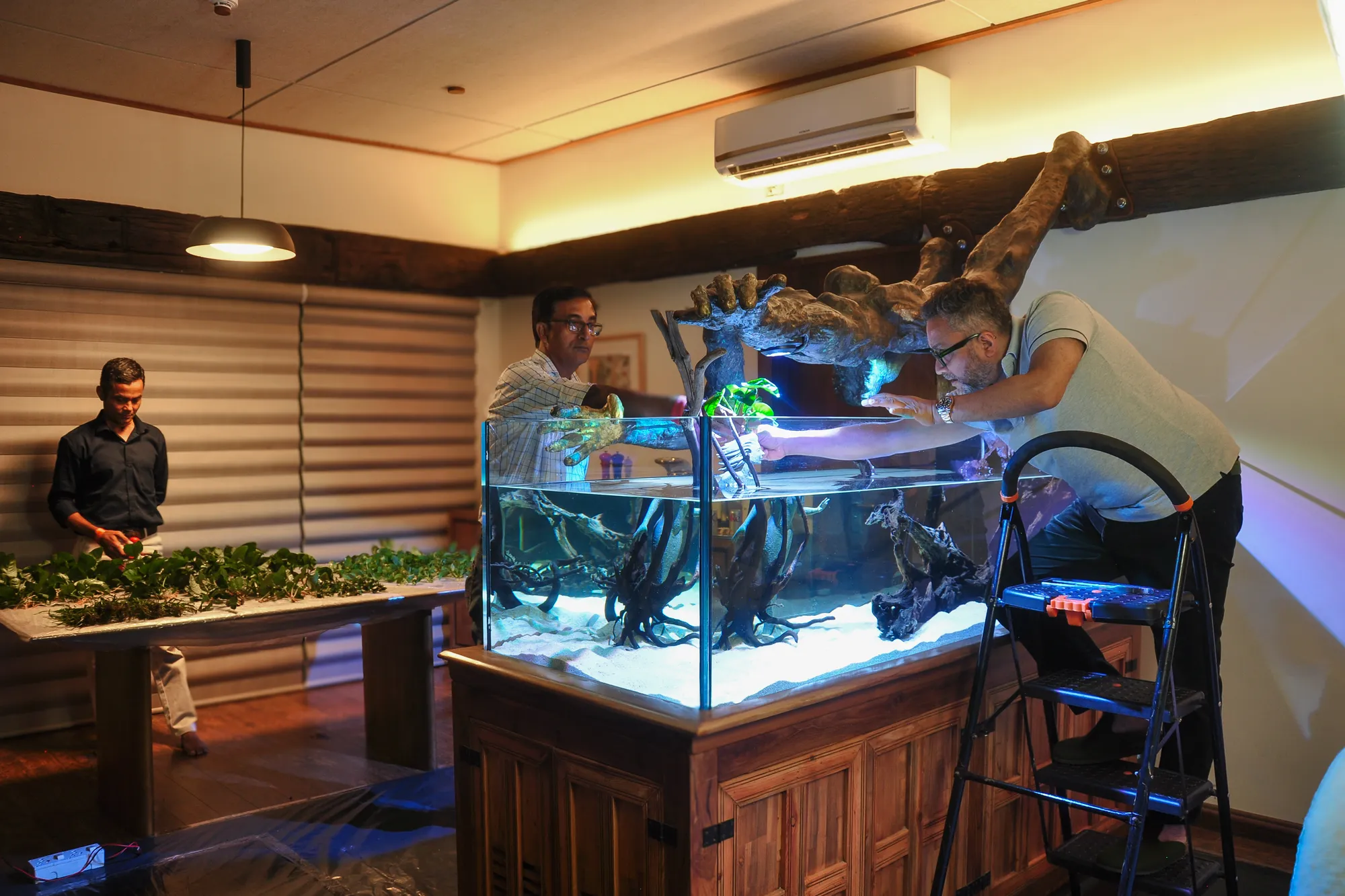
The stages overlap, and seeded media can compress one into a few days or hide it completely. The rough week ranges describe an unseeded tank at tropical temperature.
Before any ammonia
No cycling time accrues. The heater, filter and dechlorinated water run so temperature and flow are steady when ammonia arrives.
Ammonia stage, about weeks 1 to 2
Total ammonia rises and holds, then starts to fall as ammonia oxidizers multiply. Nitrite is low or absent at first.
Nitrite stage, about weeks 2 to 5
Nitrite climbs about two weeks into activation. Ammonia now clears quickly while nitrite peaks, and this is usually the longest wait.
Finish, about weeks 4 to 8
Nitrite falls and levels off at zero while nitrate builds. The filter is ready once a measured dose clears to zero ammonia and zero nitrite.
The nitrite stage runs longest because nitrite oxidizers cannot build up until the first group has produced nitrite for them. SRAC's start-up guide describes the top of the nitrite curve as the moment those bacteria finally consume more nitrite than is being made.
Can you speed up aquarium cycling?
Mature media from a healthy tank is the only shortcut with strong evidence behind it. Warmth, enough alkalinity and a sensible ammonia dose mostly prevent the cycle from running slower than it has to.
Wet filter material from established seawater tanks cut the conditioning period of new systems substantially or removed it in Bower and Turner's trials, and a larger portion worked better than a smaller one.
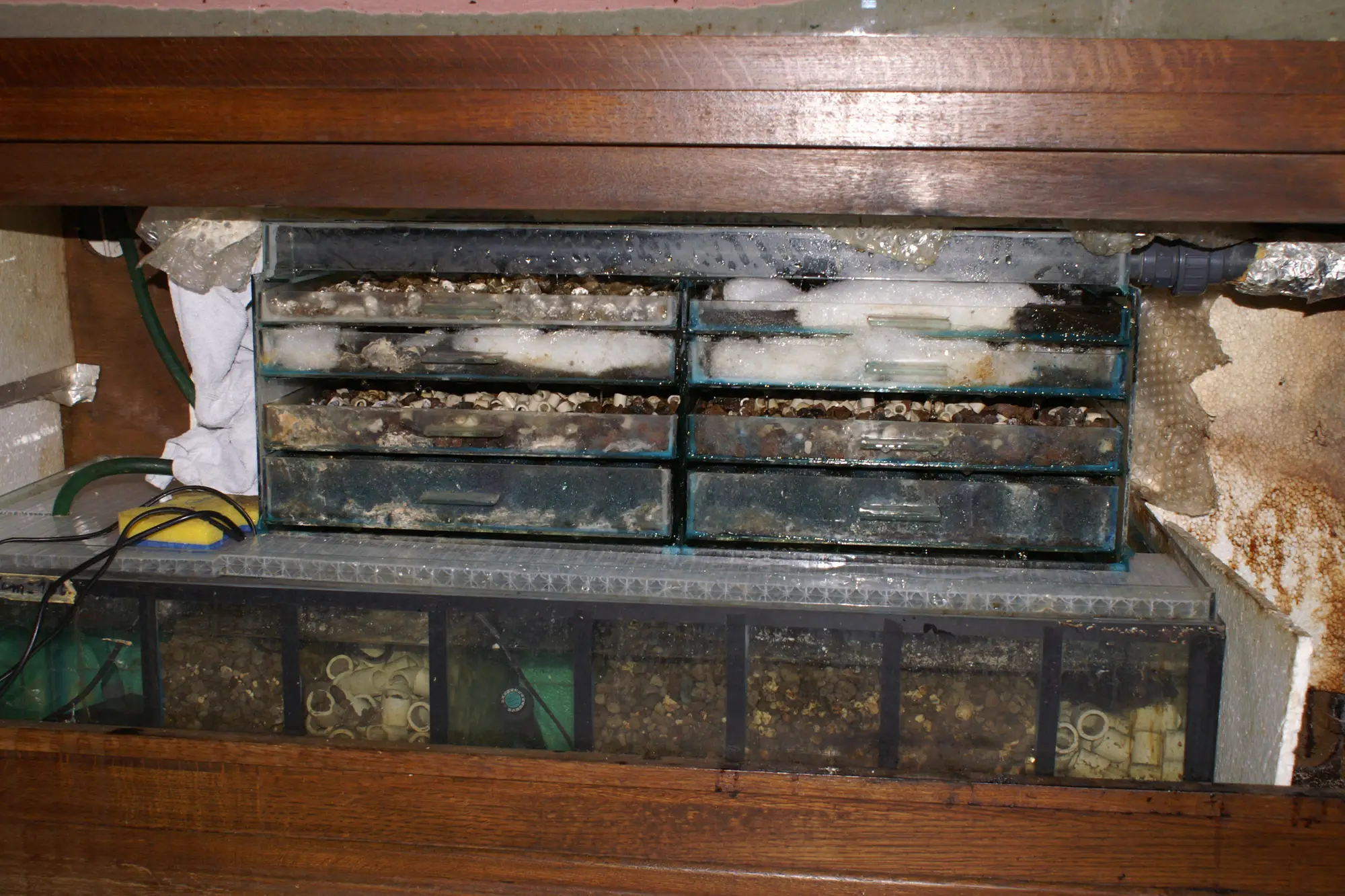
SRAC's biofilter guide also names moved biomedia as the most effective way to introduce nitrifiers. The cost is biosecurity: media can carry parasites, snails and pathogens as easily as bacteria, so seeding a new aquarium filter is safest from a tank with no recent illness or losses.
| Decision factor | Shortens it | Stretches it |
|---|---|---|
| Starting bacteria | Wet, mature media from a healthy tank | Clean media and no seed; smooth new media colonizes slowly |
| Temperature | Warm water inside the future livestock's range | Cool water, which slows every stage |
| Alkalinity and pH | Enough KH to hold pH steady near neutral | Soft water where pH drifts down as nitrification uses up alkalinity |
| Ammonia dose | A measured dose within the range published sources use | Repeated large doses that leave free ammonia high enough to stall nitrite oxidizers |
| Tap water | Chlorine and chloramine neutralized every time | Untreated top-offs or water changes |
| Flow and oxygen | A filter that runs without breaks | Power cuts, clogged sponges or a filter switched off |
| Salinity | Seed taken from a system at the same salinity | Freshwater media placed in a marine tank |
SRAC's start-up trial at 28 °C (82 °F) finished quickly, and the same guide limits deliberate warming to 2 to 3 °C above the temperature the system will run at. The limit exists because a filter grown much warmer can suffer a bacterial die-off when the water is cooled back down.
In a home tank the planned animals' temperature range sets the ceiling, and bringing the water back down afterwards goes no faster than about 1 °C per day.
Nitrification consumes alkalinity, so soft water can slide in pH until the process slows. SRAC treats a pH of about 6.8 as the lower healthy limit for nitrifying bacteria in its systems, and raising carbonate hardness gradually, within what the planned animals need, keeps aquarium pH from sliding that far.
Does bottled bacteria shorten the wait?
The evidence is thin and depends on the product. In a controlled trial of five quick-start products in 10-gallon (38 litre) freshwater tanks given one 1 mg/L ammonia dose, only one product lowered total ammonia significantly more than an untreated tank over 14 days.
Older seawater trials found commercial additives did nothing to speed nitrification, while SRAC reports that cultured bacteria can shorten start-up and that its authors found them essential for marine systems. A product can help one tank and do little in another, so bottled bacteria earn trust only through the ammonia and nitrite readings that follow.
Fast-growing plants take up ammonia too. They lower the readings, which protects fish, but lower readings from plants do not prove that the filter has grown.
Why does a marine tank cycle on a different schedule?
Marine systems need nitrifiers adapted to salt, so where the seed comes from matters more than it does in fresh water.
Bower and Turner found that media from an established freshwater system gave no speed-up in new seawater tanks. SRAC's authors report that cultured bacteria were essential for them above 15 ppt salinity, although nitrifiers adapted to almost any salinity exist in nature.
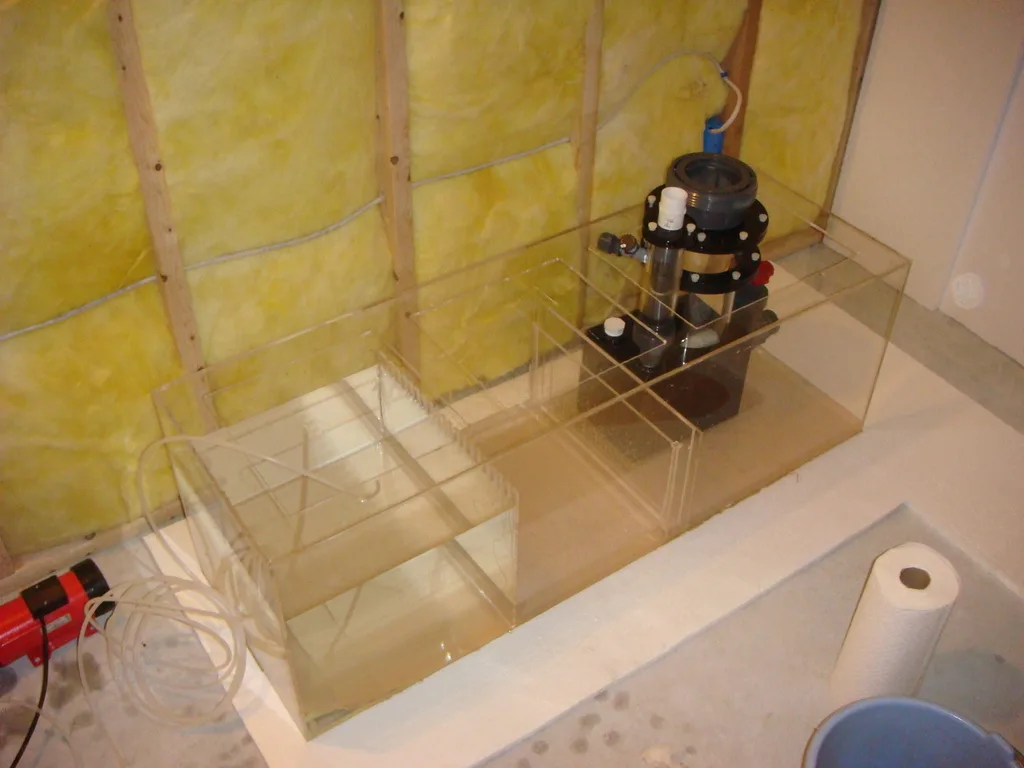
The UF/IFAS 4-H marine project book allows up to three to four weeks for a marine cycle, shorter than the Merck freshwater ceiling. Those figures come from different systems and authors, and no controlled comparison shows that either water type cycles faster.
A new saltwater aquarium built around fish follows the ammonia and nitrite finish described next, while a reef tank cycle adds coral and invertebrate sensitivities that change when animals can go in.
How do you know the cycle has finished?
The cycle has finished when the filter clears a measured ammonia dose to zero ammonia and zero nitrite within a fixed interval, and repeats that result the next day.
Many keepers use 24 hours as that interval. No institutional source sets the number, so the useful rule is to choose one interval and keep it, because a result that changes with sampling time cannot be compared from day to day.
Nitrate does not prove the finish. Plants, water changes and test limits can all keep it low, so a zero nitrate reading in a planted tank does not mean the cycle failed.
- Dose the same measured amount of ammonia used during the cycle, or an amount matched to the fish you plan to add.
- Read ammonia and nitrite at the end of your fixed interval, using the same kit, sample point and time of day.
- Confirm both read zero on at least two consecutive days before counting the cycle as finished.
- Check that pH and KH have not slid since the cycle began.
- Bring the temperature back to the future livestock's range if it was raised, then retest.
- Change enough water to bring nitrate down before the first animals arrive.
- Stock below the final load and keep testing through the first weeks of feeding.
A zero reading is only as fine as the kit that produced it. Colour cards with coarse steps cannot show small residues, which is one reason liquid test kits and test strips give different confidence at the finish.
The first stocking still adds waste that the filter has not handled before. A final water change lowers the nitrate built up during cycling, and a small first group gives the bacteria time to grow with the load.
Why is my aquarium cycle stuck?
A cycle that shows no progress for a week or more usually has a cause in the water or the equipment. Working through the likely causes in order finds it faster than adding more ammonia or another product.
The most common stall sits at the nitrite stage, after ammonia has started to fall.
Overdosing is one reason. In wastewater studies, free ammonia inhibited nitrite oxidizers at roughly 0.1 to 1.0 mg/L, far below the 10 to 150 mg/L that inhibited ammonia oxidizers, and the free fraction rises with pH and temperature.
Check these before adding anything
- Ammonia dose Total ammonia well above the 1 to 5 mg/L range that Merck and SRAC use points to an overdose. Let it fall before dosing again.
- pH and KH A pH that has dropped since the start, especially below about 6.8, or KH near zero slows both conversions.
- Tap water A top-off or water change without dechlorinator can set growth back.
- Temperature A failed heater or a cold room slows every stage.
- Flow and oxygen A stopped filter, a clogged sponge or water bypassing the media starves the biofilm.
- Media handling Media rinsed under the tap, replaced or allowed to dry loses its colonies.
- Test method Expired reagents or a missed reading time can make a working cycle look stuck.
The EPA notes that chlorine and monochloramine can prevent the growth of the bacteria an aquarium relies on. That is why every water change during cycling goes through a dechlorinator, including the small top-offs that are easy to forget, and why a supply treated with chloramine needs a product that handles it.
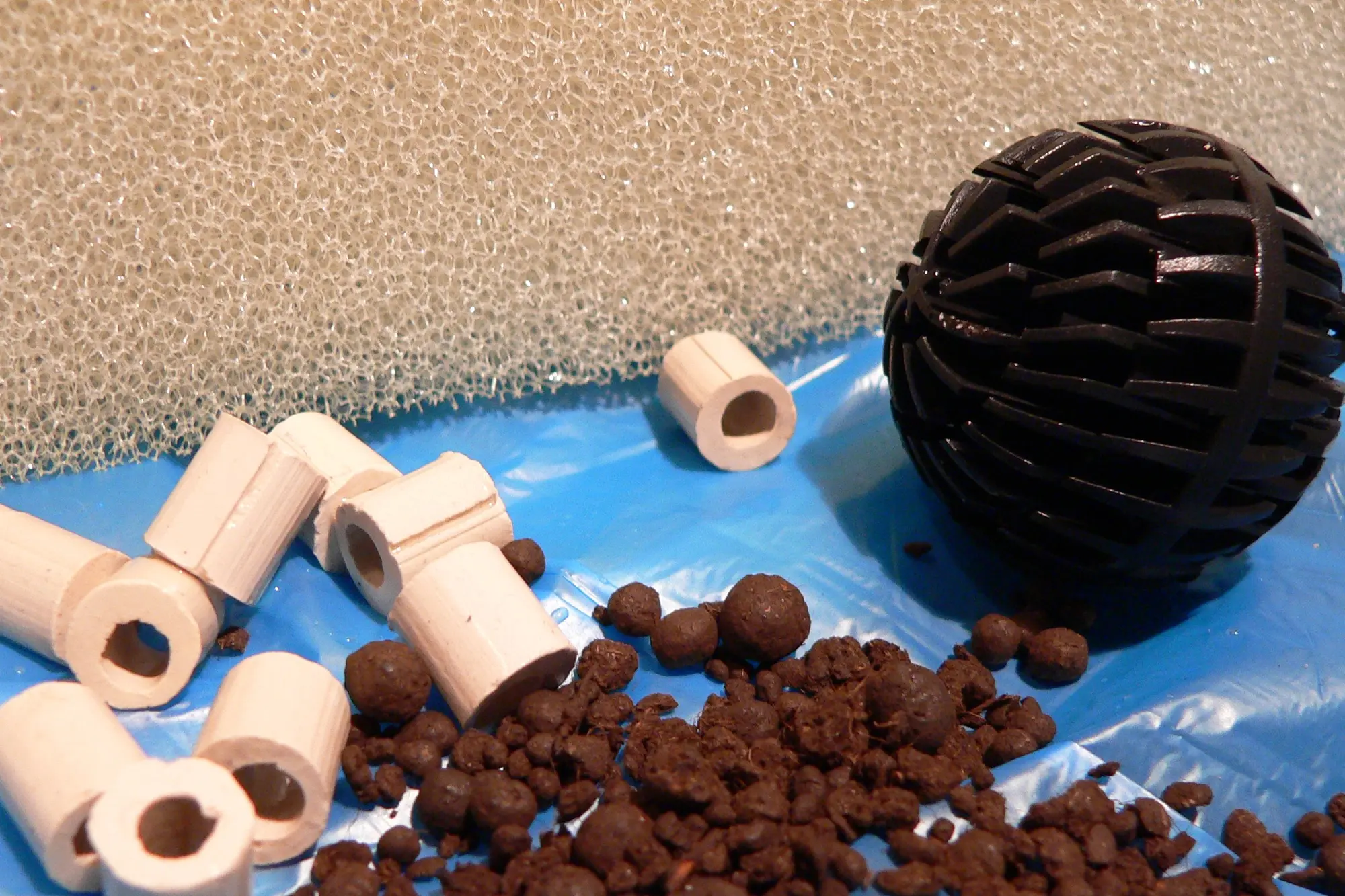
SRAC's authors describe new media with a slick, shiny surface resisting the first bacterial attachment, with later cycles starting more quickly once a first growth exists.
A tank where ammonia will not drop has a different set of likely causes from one where ammonia clears but nitrite stays high. Recording which of the two is happening narrows the search before anything is changed.
Is fishless or fish-in cycling faster?
Fishless cycling lets the keeper establish filtration without exposing fish to ammonia and nitrite. That welfare advantage holds even when the filter takes longer than expected to develop.
Fish-in cycling runs on the waste the fish produce. Protecting them means changing water whenever ammonia or nitrite climbs, and each change also removes the ammonia the bacteria were growing on, so the filter grows only to match a small, cautiously fed load.
SRAC's aquaculture guidance calls starting with animals in the system slow and stressful, and records that many fish can die during biofilter activation when feeding outruns the filter. Merck notes that adding fish slowly over several months can still produce high ammonia or nitrite if it is not done carefully.
The references cited here do not establish a fixed time advantage for either method in home aquariums. Repeated ammonia and nitrite measurements provide a better readiness test than a promised finish date.
| Decision factor | Fishless | Fish-in |
|---|---|---|
| Typical timing | Often four to eight weeks unseeded, less with mature media | Often similar or longer; the cited evidence does not establish a fixed home-aquarium advantage |
| Ammonia source | Measured doses within the 1 to 5 mg/L range sources use | Fish waste, limited by how much the fish are fed |
| Animal exposure | None | Fish breathe ammonia and nitrite until the filter catches up |
| Testing | Every day or two, to track progress | Daily, because readings decide water changes |
| Water changes | Only if a dose overshoots or pH falls | Whenever ammonia or nitrite reads above zero |
| Capacity at the end | Matched to the dose, which can be sized to the planned stock | Matched to the few fish present; each new group can bring a new rise |
| Main risk | Overdosing stalls the nitrite stage | Stress, illness and fish losses |
Dose size also shapes which microbes grow. In a survey of home freshwater biofilters, ammonia-oxidizing archaea dominated most tanks and their share fell as ammonium concentration rose, which suggests a heavily dosed tank and a lightly stocked one build somewhat different communities.
A measured ammonia source is easier to control than rotting fish food, because food releases ammonia at a rate nobody can measure in advance and adds decaying solids to the filter.
What if fish are already in an uncycled tank?
Fish added before the filter is ready need their water managed every day until the cycle finishes. SRAC warns that feeding a system whose filter is not working can push ammonia or nitrite to stressful levels within hours.
The replacement water needs to match the tank in temperature and pH, because a large change in either can stress fish that are already coping with ammonia.
The daily routine ends when ammonia and nitrite read zero on consecutive days with normal feeding. That is also the point at which the tank has finished cycling for the fish it holds, and no further.
Surface movement matters because warm water holds less dissolved oxygen than cool water, and fish under ammonia stress need every bit of it.
Fish that keep gasping after the water tests clean, lose balance, develop red or bleeding gills or begin to die need an aquatic veterinarian. Those signs can have causes a nitrogen test cannot measure, so new tank syndrome is only the likely explanation while ammonia or nitrite is actually present.
What can undo a finished cycle?
A cycled aquarium filter keeps its capacity only while it is fed, oxygenated and left intact. A few ordinary events can put the tank back into a shorter version of the cycle.
- Filter off for hours
- Biofilm without oxygen loses activity; ammonia and nitrite need testing for several days after restarting
- Media rinsed under the tap
- Chlorinated water damages colonies; media is cleaned in water removed from the tank
- Chemical treatments
- SRAC lists disease treatments among causes of biofilter failure, with 3 to 4 weeks to reactivate
- Weeks with no ammonia
- Capacity falls slowly while a cycled tank waits empty; SRAC keeps idle biofilters dosed
- Stocking too fast
- Bacteria grow only as the load rises, so a large group added at once can outrun them
OATA links overstocking and stocking too quickly directly to new tank syndrome, and advises cleaning filter media in water taken out during a water change.
The rise that follows is usually called a mini cycle. It is handled the same way as the first one: test, protect any animals with water changes, and let both readings return to zero before adding more load.