
What Is an Acan Coral, and Where Should It Sit in a Reef?
Micromussa lordhowensis
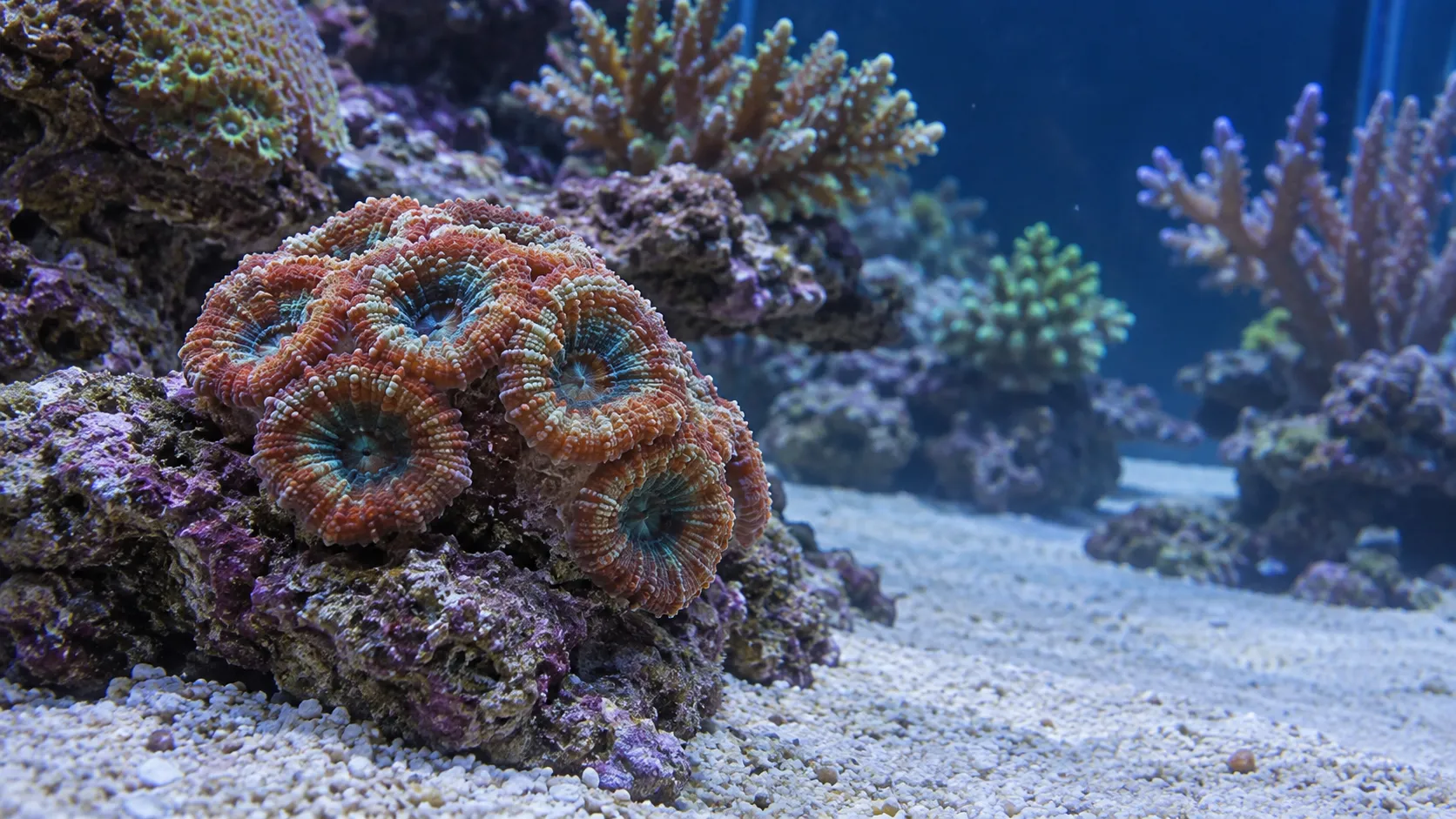
Acan coral usually means the fleshy LPS coral now accepted as Micromussa lordhowensis, though the trade name is used loosely. A healthy colony needs a stable mature reef, adjustable low-to-moderate light and flow, feeding without excess waste, and enough space to avoid contact with neighbours.
At a glance

- Family
- Lobophylliidae
- Native range
- Indo-Pacific shallow reef environments documented under the current and former scientific names
- Conservation status
- Do not infer a current species assessment from a trade name; verify the accepted species and current authority separately
What is an acan coral?
In aquarium trade language, acan coral often refers to the fleshy large-polyp stony coral now accepted as Micromussa lordhowensis. The World Register of Marine Species lists that name as accepted and records Acanthastrea lordhowensis as an older synonym.
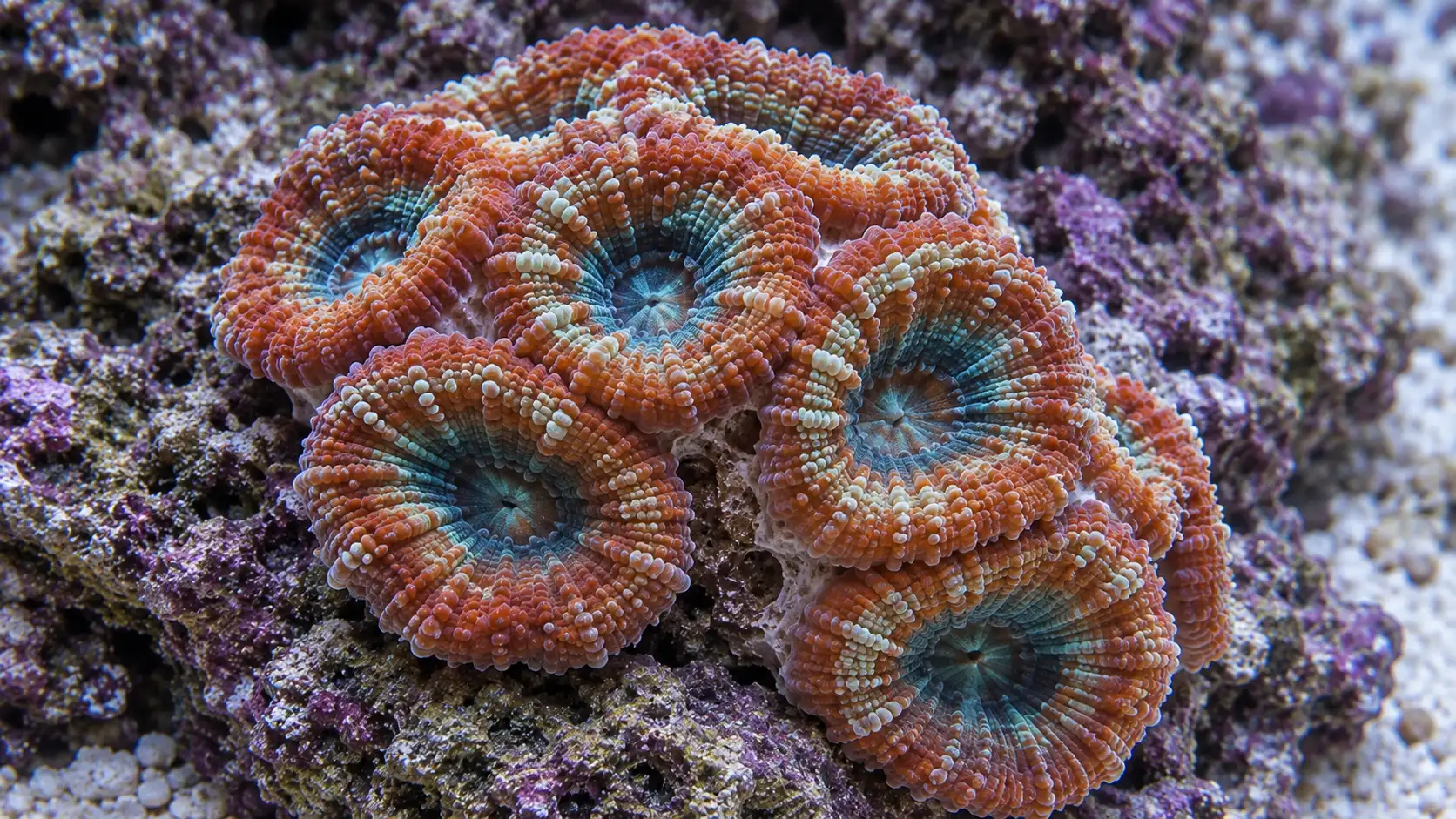
The word acan is also applied to other corals, so it is a shopping category rather than a complete taxonomic label. Ask for the scientific name, source and whether the colony is captive propagated before using species-specific advice.
- Current accepted name
- Micromussa lordhowensis
- Older common scientific name
- Acanthastrea lordhowensis
- Coral type
- Zooxanthellate large-polyp stony coral
- Primary husbandry issue
- Stable reef chemistry with suitable light, flow and spacing
- Trade boundary
- Stony corals are regulated in international trade; retain legal origin records
How can you inspect an acan before buying?
When you inspect a coral, look for tissue that covers the visible skeleton, polyps that respond over the seller's normal light cycle, and a colony free of obvious recession, jelly-like material or fresh damage. Ask to see it under a neutral white channel because intense blue light can hide tissue condition and distort colour.
Use the Corals of the World factsheet to understand skeletal and colony form, while recognizing its warning that similar species can be confused. A shop photograph or colour name cannot prove lineage.
- The seller provides a scientific label and source history.
- Tissue extends across the colony without a widening strip of bare white skeleton.
- No neighbouring coral is touching or stinging the specimen in the sales tank.
- Polyps show a repeatable response rather than remaining collapsed through the whole light cycle.
- The mounting base has no obvious nuisance growth that cannot be inspected.
- Your quarantine or observation plan is ready before purchase.
Do not buy a damaged colony solely because the colour is rare or the price is reduced. Recovery may be possible, but the decision requires a stable system, isolation capacity and a clear point for seeking experienced coral-health help.
Where should an acan coral sit in the reef?
OATA's large-polyp stony coral guide places this group in low to moderate light and low to moderate flow. That is a starting context, not a universal PAR number or pump percentage.
You can start the coral in a lower, sheltered position and change one variable at a time. Flow should carry fresh water past the colony and lift debris without folding tissue sharply against the skeleton or preventing the polyps from expanding.
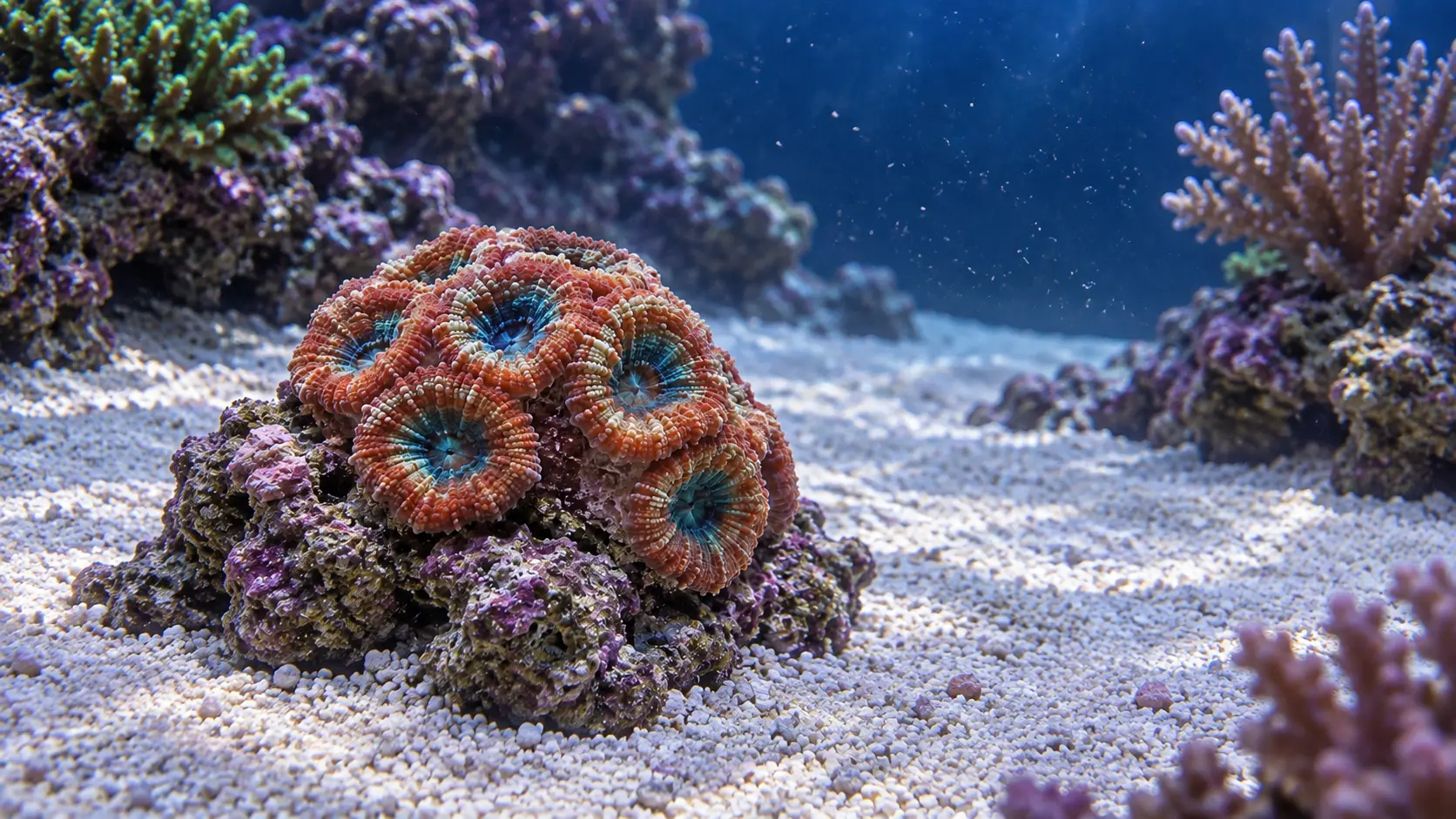
Move the coral only after comparing several days of expansion, colour and tissue condition, unless the present position is causing obvious injury.
Which water conditions form a defensible baseline?
OATA gives group-level LPS aquarium ranges of 24 to 26 C, specific gravity 1.023 to 1.026, pH 8.1 to 8.3, alkalinity 8 to 12 dKH, calcium 380 to 450 mg/L, magnesium 1,250 to 1,350 mg/L and phosphate no higher than 0.05 mg/L. It also lists ammonia and nitrite at zero and nitrate at no more than 20 mg/L.
OATA large-polyp stony coral context
- Temperature24 to 26 CSeparate aquarium thermometer.
- Specific gravity1.023 to 1.026Calibrated refractometer or equivalent salinity instrument.
- Alkalinity8 to 12 dKHMarine alkalinity titration test.
- Calcium380 to 450 mg/LMarine calcium titration test.
- Magnesium1250 to 1350 mg/LMarine magnesium titration test.
Every range above applies to LPS coral husbandry group in a reef aquarium system. Source: OATA LPS care sheet, checked 2026-09-16.
These numbers describe a group context and do not justify chasing a midpoint. Any correction to acan coral water parameters needs a verified measurement and a controlled rate.
Test at consistent times with methods that match the expected range, record the result and look for trends. A stable value near one supported edge is often safer than repeated additions that make alkalinity, salinity or temperature swing.
Does an acan coral need feeding?
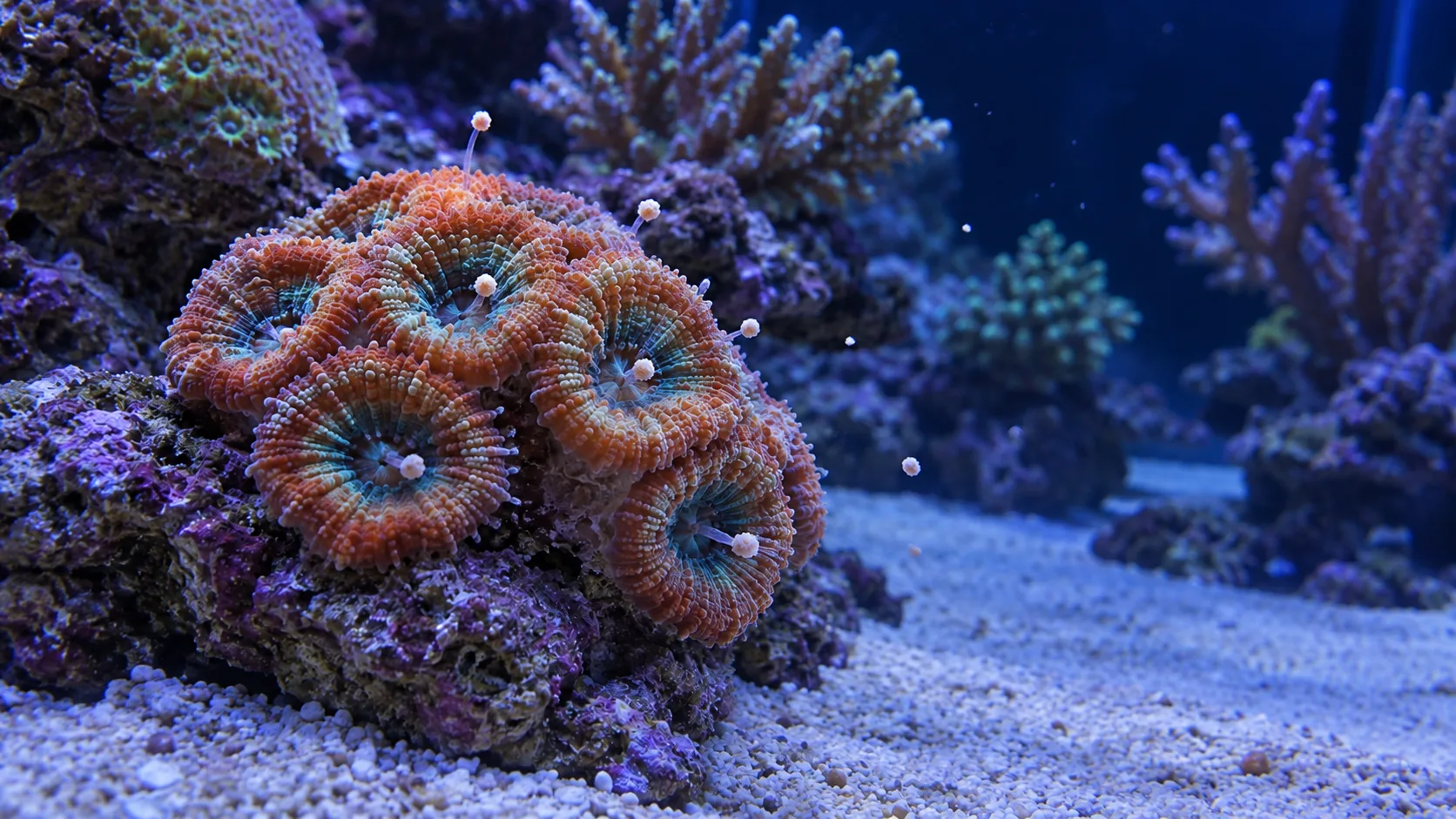
The coral contains photosynthetic symbionts, but OATA also recommends suitable coral foods for LPS corals. Feeding can support tissue and growth, yet excess food can decay in the colony or raise the nutrient load of the whole aquarium.
You can offer a small, appropriately sized marine food when feeding responses are visible and circulation can be reduced safely for a short period. Protect the coral from fish and shrimp that tear food away, then restore normal flow and remove leftovers.
- Observe whether polyps are expanded and responsive before adding food.
- Place a small portion onto receptive tissue without pressing or abrading it.
- Keep tank mates from repeatedly picking at the same polyp.
- Restore normal circulation after the coral has handled the food.
- Remove uneaten material and review nutrients before increasing frequency.
Do not treat poor expansion as proof of hunger until light, flow, salinity, temperature, alkalinity and animal contact have been checked.
How much space does an acan need from other corals?
Leave a clear buffer that accounts for full nighttime expansion, flow direction and the reach of neighbouring species. Corals that appear separated during the day can contact one another after lights dim or after months of growth.
| Spacing factor | What to observe | Decision |
|---|---|---|
| Daytime expansion | Fleshy tissue overhangs the skeleton | Measure from expanded tissue, not the frag plug |
| Night response | Tentacles or tissue extend farther after dark | Increase the buffer when contact is possible |
| Neighbour behavior | Sweeper structures, mucus or rapid growth approach | Move one coral before repeated contact |
| Flow direction | Tissue bends toward a neighbour | Change placement or circulation without blasting either colony |
| Growth route | New polyps close the original gap | Reassess spacing during routine photography and maintenance |
Fish described as reef safe may still nip fleshy tissue, and crabs or shrimp may injure polyps while taking food.
What do expansion and colour changes tell you?
Expansion is useful because it shows how the coral responds over time, but one closed period does not identify the cause. Corals may retract during handling, feeding, light changes, flow changes, contact or normal daily cycles.
Compare the colony at the same time each day and photograph it under consistent white-balanced light. A trend of shrinking tissue, exposed skeleton, mucus, discolouration or failure to respond deserves a system check and isolation from aggressive neighbours.
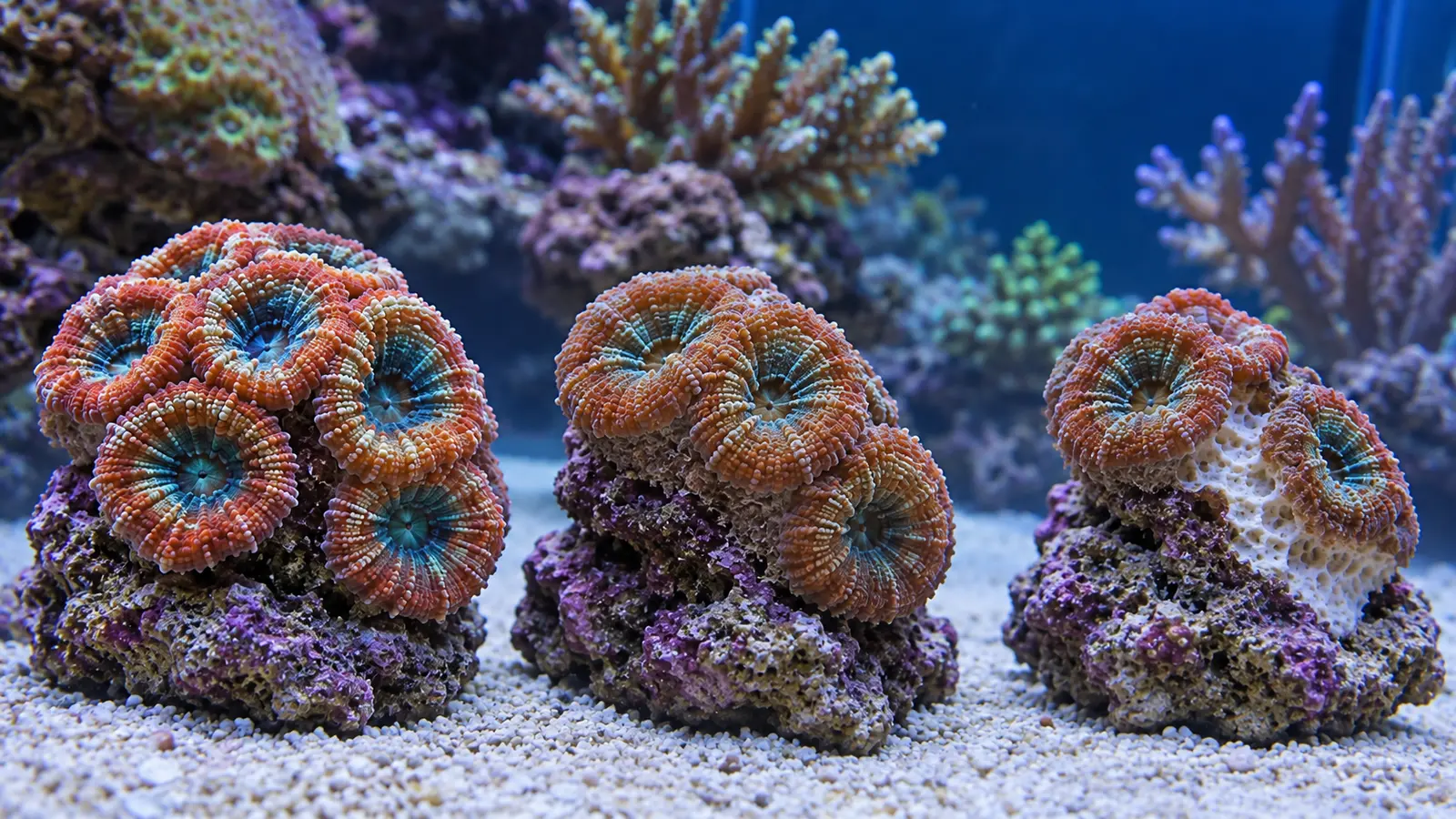
Colour alone is especially unreliable under changing LED channels. Check measured light, chemistry trends and tissue coverage before assuming that a brighter or duller photograph represents growth or disease.
What should you check when tissue recedes?
If tissue recedes, you should first confirm temperature, salinity, alkalinity, pH, ammonia and circulation with working instruments. Then review recent dosing, light changes, pump changes, animal contact, detritus accumulation and the condition of other corals.
Rule out the water first
- Retest any surprising result and compare it with a reference or second method when possible.
- Inspect the colony under neutral light for physical damage, pests and the direction of tissue loss.
- Check nighttime contact with neighbouring corals and daytime picking by fish or invertebrates.
- Review every recent additive, medication and maintenance change.
- Separate the coral when contact or a spreading problem threatens other animals.
- Seek an experienced coral-health professional when recession progresses or several colonies are affected.
Do not dip, cut or medicate from a photograph alone. Those actions can destroy remaining healthy tissue or expose the aquarium to a treatment that does not address the cause.
A rapidly worsening colony is a reason to escalate, not to try several remedies at once.
Use the dedicated coral bleaching guide when tissue remains but pigmentation is being lost. If alkalinity correction is genuinely required, the reef alkalinity calculator can support the arithmetic only after the result, water volume and product instructions have been verified.
Can you propagate an acan coral at home?
Propagation requires cutting living stony skeleton while protecting tissue, controlling contamination and caring for the wound. It is not a routine step for a newly acquired or declining colony.
Before propagating acan coral, wait for sustained growth and stable conditions, use appropriate eye and respiratory protection around powered cutting, and avoid creating fragments when no recovery system is available.
What is the legal and conservation context?
Stony corals in the order Scleractinia are regulated under CITES Appendix II for international trade. A legal sale should have traceable origin and the paperwork required by the exporting, importing and local jurisdictions.
Prefer a healthy captive-propagated specimen from a seller who can state its origin. Do not collect wild coral, move live rock across borders, or assume that a shop receipt replaces permits where permits are required.
Is an acan coral right for your reef?
An acan suits a mature reef where salinity, temperature and alkalinity are measured and stable, low-to-moderate light and flow can be adjusted, and the colony can remain separated from aggressive neighbours. It also suits a keeper willing to inspect tissue under neutral light and feed without polluting the system.
Choose a different coral plan if the reef has unstable alkalinity, no quarantine capacity, constant coral contact or fish that already pick fleshy LPS tissue.
When the choice is between a fleshy stony coral and a colonial soft coral, use the acan coral versus zoanthids comparison instead of assuming their placement, chemistry and contact risks are interchangeable.