
Acrylic Aquariums: When Are They Better Than Glass?
Acrylic aquariums are attractive when low weight, impact resistance, optical clarity or a custom curved shape matters enough to justify careful cleaning and a manufacturer-designed support system. Glass remains the simpler choice when scratch resistance, standard sizes and lower purchase cost matter more.

What is an acrylic aquarium?
An acrylic aquarium uses bonded polymethyl methacrylate panels rather than silicone-joined glass panes.
The material can be machined and formed into large windows, curved fronts and unusual footprints that are difficult to produce in ordinary glass.
Panel material does not tell you build quality. Sheet grade, thickness, span, bonding, cutouts, bracing and stand contact work together, so a generic thickness chart cannot approve a specific aquarium.
Is acrylic clearer and lighter than glass?
Clear acrylic transmits a high proportion of visible light and has less of the green edge tint common in standard glass.
ACRYLITE reports that acrylic is roughly half the weight of glass at the same size and thickness, which can make transport and installation easier.
That comparison is not a complete tank-weight calculation because acrylic and glass designs may use different thicknesses and bracing. Water, rock, substrate and the stand still dominate the installed load.
Is acrylic stronger than glass?
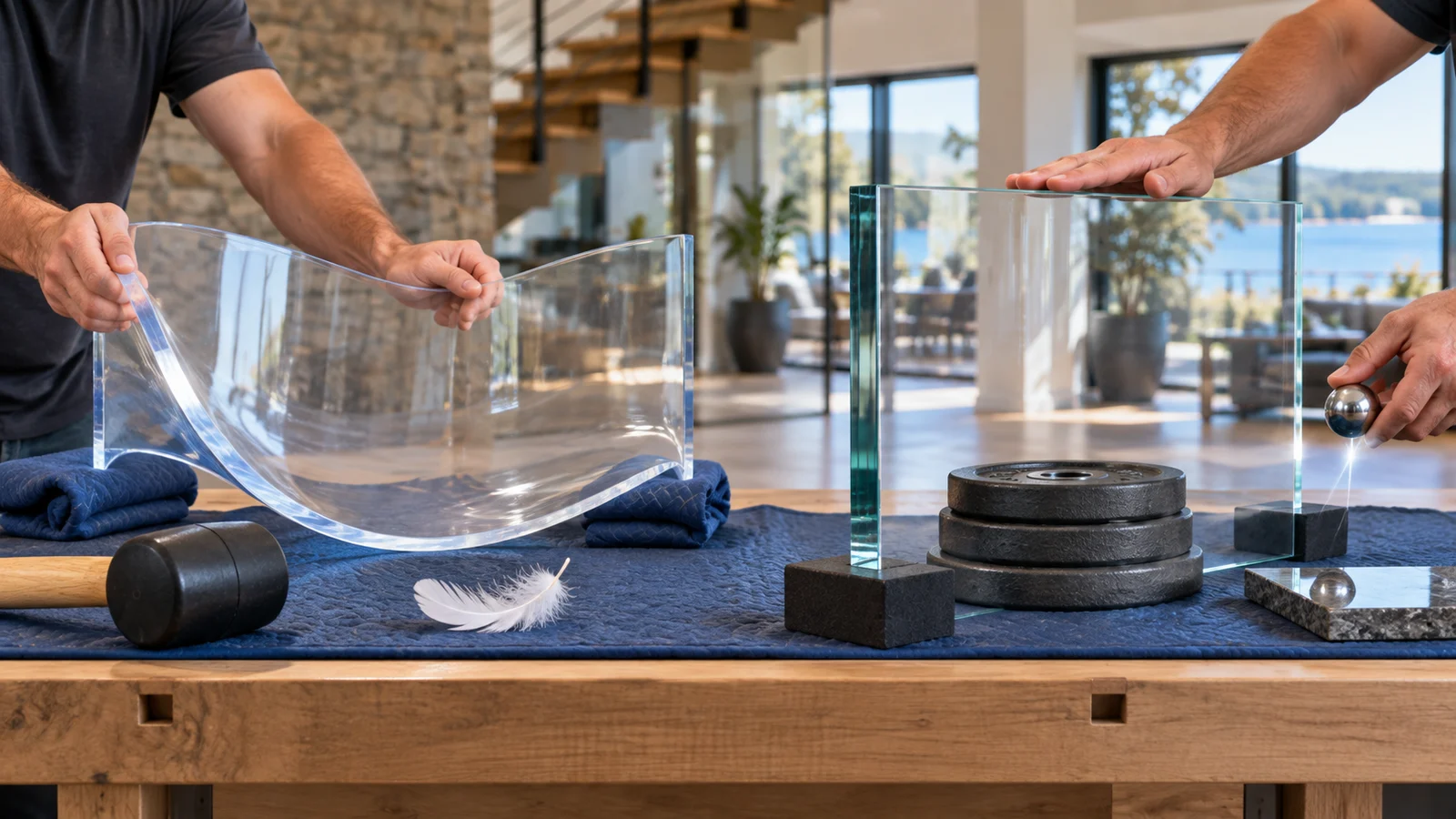
Acrylic has much higher impact resistance, but stronger does not mean stiffer.
It is less stiff than glass, so a long water-filled panel can deflect more and needs dimensions and bracing chosen by the fabricator.
Do not translate impact resistance into permission to use a thin panel or poor stand. The PLEXIGLAS technical data distinguish tensile and flexural properties, which is why tank geometry and support remain engineering decisions.
How should an acrylic aquarium be supported?
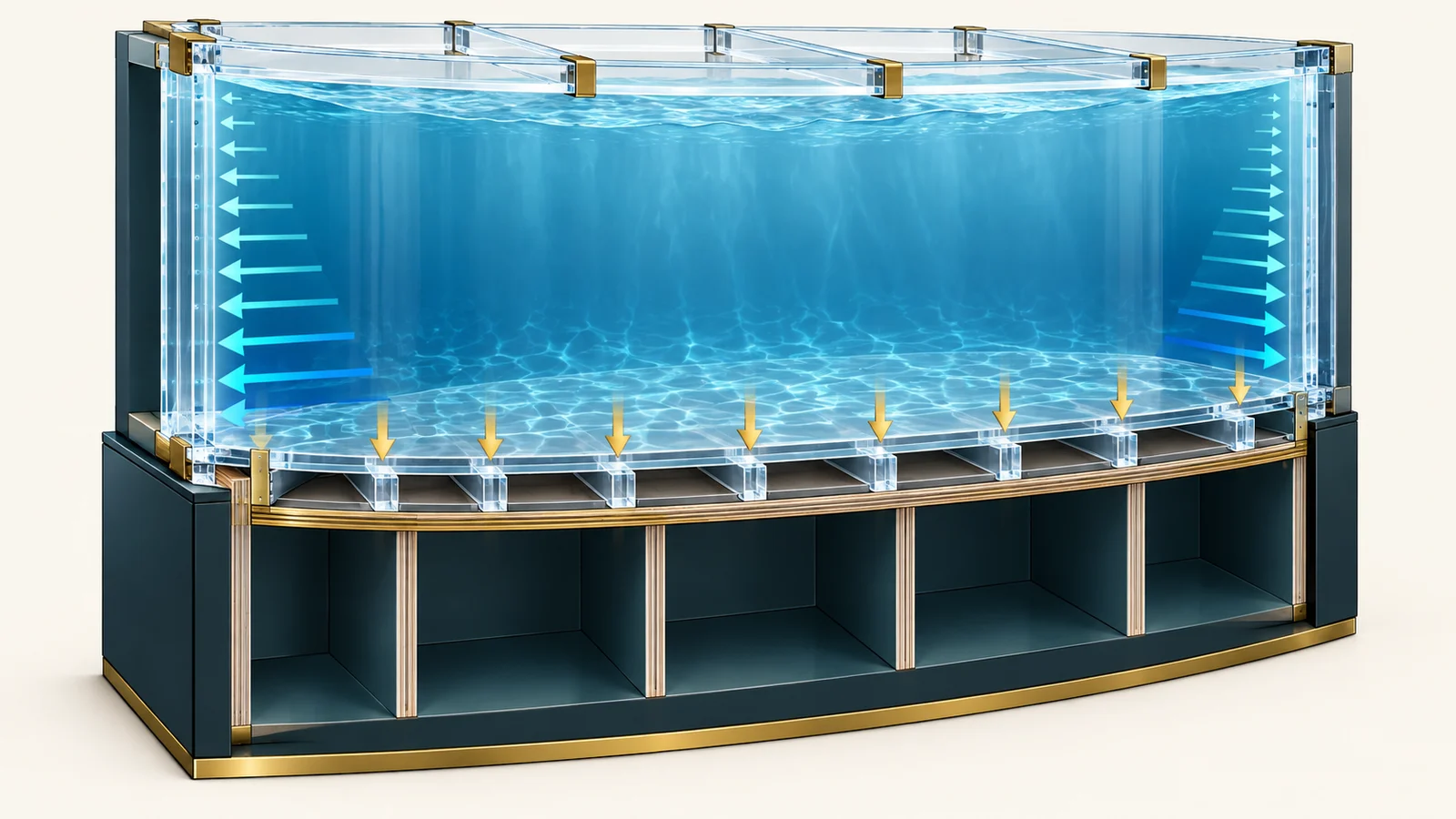
You should use the full, flat support surface and padding specified by the manufacturer.
Confirm that the stand is level, rigid and capable of carrying the complete filled system without twisting.
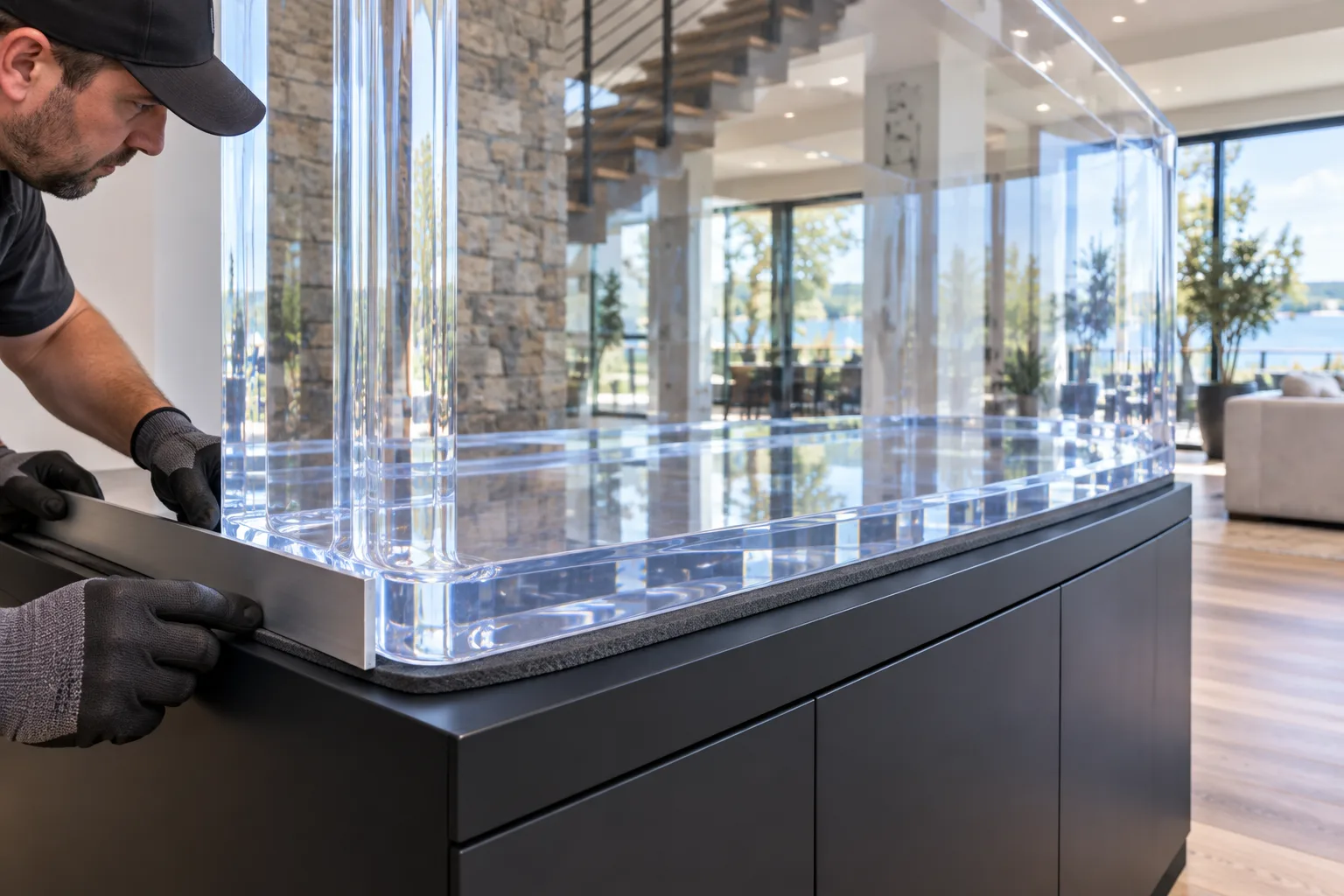
You should keep plumbing openings, top braces and access cutouts exactly as designed. Drilling, enlarging a hole or removing a brace changes stress paths and can invalidate the original safety margin.
Do acrylic aquariums scratch easily?
Yes, the surface scratches more readily than glass, especially when a cleaning pad carries trapped grit such as sand, shell fragments or mineral particles. Keep separate acrylic-safe tools, rinse them before use and lift debris away before wiping near the substrate.
You should never use household glass cleaner, an unapproved solvent, a razor blade or a dry abrasive pad. Follow the fabricator's cleaning and polishing instructions because a chemical that clouds or crazes the surface can cause permanent damage.
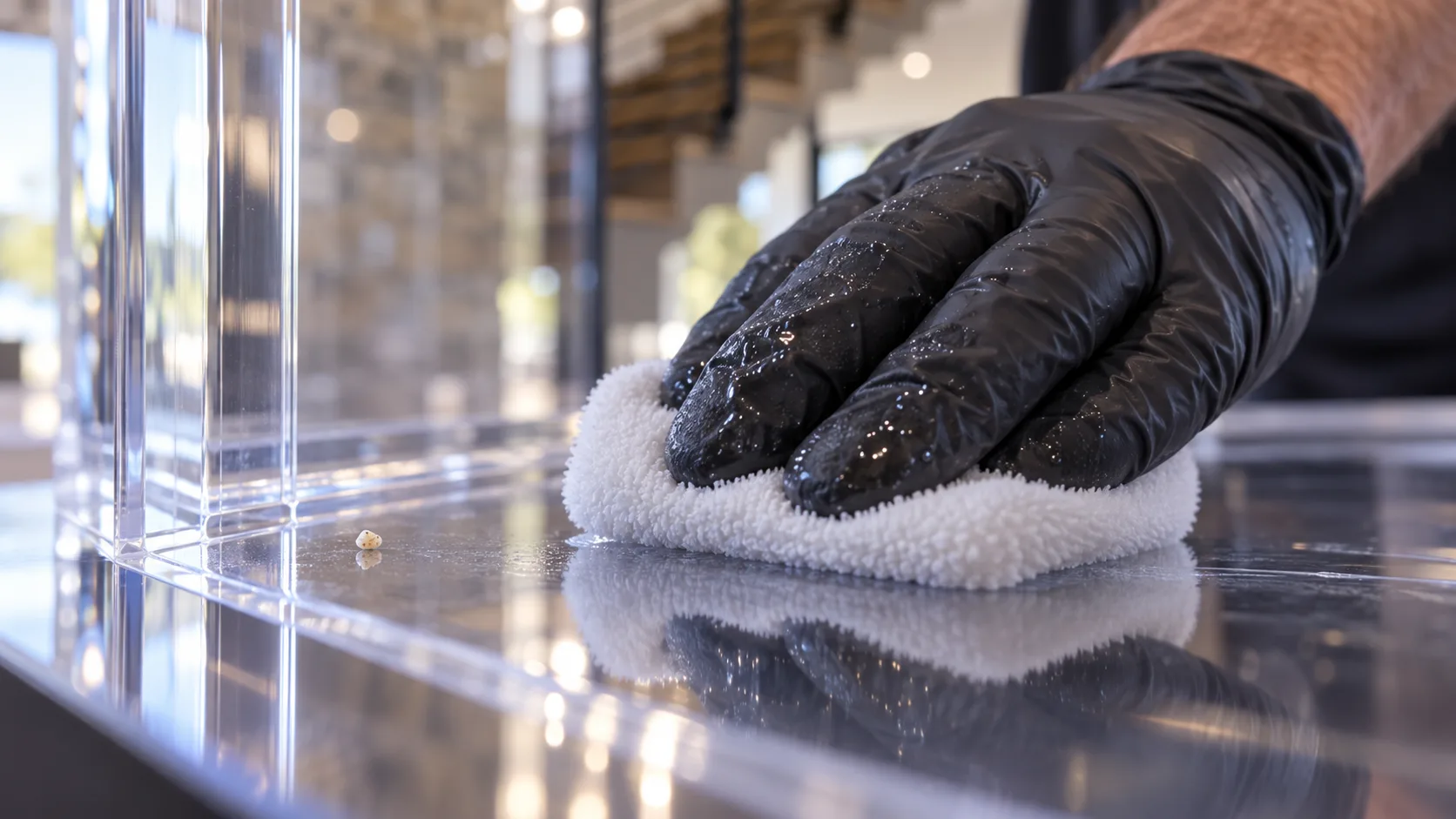
- Use a pad explicitly approved for acrylic.
- Remove magnetic cleaner halves before grit can remain trapped between uses.
- Work away from the substrate edge until loose grains are removed.
- Rinse tools and inspect both faces before every pass.
- Test any polish on an inconspicuous area and follow the maker's process.
- Keep exterior chemicals away from seams and openings.
Can scratches be repaired?
Light surface marks may be polished with an approved system, and some interior scratches can be treated while empty or by specialists. Deep gouges, crazing near a seam and cracks are structural concerns, not cosmetic projects.
You should ask the aquarium fabricator before sanding or polishing near a bond. Removing material changes the surface and an aggressive repair can distort the view more than the original mark.
Does acrylic bow over time?
Some visible deflection may be part of a designed acrylic panel, because the material is less stiff than glass. A new increase, seam change, whitening, crack, detached brace or stand movement is not something to normalize from a general article.
Keep people clear of a tank with a changing crack, leaking seam or moving stand, and contact the fabricator urgently. Isolate electrical power from a safe, dry location if water threatens electrical equipment; do not touch wet plugs or stand in water to reach them.
Do not clamp a filled panel or add an improvised brace. Follow qualified instructions for safely unloading the tank and supporting livestock, without delaying measures needed to protect people.
When is acrylic the better choice?
It is often compelling for very large installations, difficult access routes, curved fronts, custom shapes and places where impact resistance matters.
The lighter empty shell can reduce handling difficulty, though professional moving equipment may still be necessary.
You should choose glass aquariums when you value a hard-to-scratch viewing surface, standard replacement options and familiar silicone construction. Compare total ownership, including stand, delivery, cleaning tools, polishing and access, rather than panel price alone.
What should you inspect before buying?
You should ask who fabricated the aquarium, what sheet material was used, which stand surface is required and whether modifications are allowed. Inspect seams under neutral light for bubbles, whitening, gaps, tool damage or repaired areas, and obtain written installation and cleaning instructions.
For a used tank, learn its age, storage history and previous plumbing changes. The aquarium leak test, moving an aquarium and aquarium mats guides cover the surrounding installation decisions.
How do seams and openings affect the decision?
Acrylic panels are commonly solvent bonded, creating a joint that depends on preparation, fit and workmanship. Openings for overflows, returns and access reduce continuous material, so their position, corner radius and distance from an edge belong to the original design.
Inspect bonds with light passing across them, not only from the front.
Small appearance variations are not automatically failures, but growing bubbles, whitening, crazing, separation or moisture deserve prompt assessment by the fabricator.
Do not hang heavy plumbing from a panel without the specified support. Pipe leverage can load a bulkhead and surrounding opening even when the aquarium wall itself appears thick.
How does acrylic change viewing and photography?
The material can provide excellent clarity and curved viewing surfaces, but curves also magnify or distort animals depending on angle.
Flat panels are easier for measurement photography, while a curved face can create reflections and apparent body-shape changes.
Clean both surfaces before judging haze. Fine scratches scatter side light, and mineral deposits near the waterline can make sound material look cloudy; identify which surface owns the mark before polishing.
| Appearance | First check | Response |
|---|---|---|
| Fine straight line | Trapped grit path on one surface | Use approved cosmetic process |
| White branching lines | Crazing or chemical exposure | Stop chemicals and contact fabricator |
| Bubbles changing along bond | Seam condition | Photograph and seek qualified assessment |
| Uniform haze | Deposit, abrasion or incompatible cleaner | Identify surface and follow maker guidance |
| Panel deflection | Compare with baseline and stand level | Contact maker if new or increasing |
What does delivery require?
You should measure doors, turns, stairs, lift capacity and the final approach before ordering.
Acrylic reduces empty shell weight but a large aquarium remains awkward, easily scratched and capable of concentrating load through a poorly placed dolly or lifting strap.
Leave protective film in place as instructed and protect edges without taping adhesive to a finished viewing surface. Arrange trained handlers and lifting equipment suitable for the actual tank and access route.
Allow the empty aquarium to reach room conditions and inspect it on the final tank setup support before plumbing. Do not use filling water to force a twisted tank down onto an uneven stand.
How should a used acrylic aquarium be assessed?
Ask for original drawings, fabricator details, age, previous water depth, stand arrangement and every modification. Long dry storage, heat, unsupported storage positions and cleaning chemicals can matter even when the panel looks clear in a seller photograph.
- Confirm dimensions and panel thickness against original documentation.
- Inspect every seam, brace, cutout and repaired area under neutral light.
- Check whether the base remained fully supported during storage.
- Look for crazing around drilled openings and stressed corners.
- Verify the stand and pad requirements before transport.
- Price professional polishing only after structural condition is accepted.
- Walk away when history or a concerning seam cannot be explained.
Fill-test only in a location that can safely contain the entire volume and follow the manufacturer or fabricator procedure. A successful short test cannot certify an unknown modified structure, but it can reveal plumbing leaks and gross movement before livestock is involved.
How do heat and household chemicals affect acrylic?
Acrylic expands and contracts more with temperature than glass, so installation clearances and plumbing must follow the fabricator's design.
Concentrated heat from a lamp, heater fault or nearby radiator can create local stress even when room temperature seems acceptable.
Incompatible cleaners, solvents and adhesives can haze or craze acrylic. Use only the aquarium maker's approved cleaning method, keeping any permitted exterior cleaner on a cloth away from open water.
A sheet manufacturer's chemical-resistance guidance does not establish that a cleaner is safe for fish or for an occupied aquarium. Do not use sheet-disinfection recipes inside a stocked tank.
Keep hot equipment and metal clamps from touching a panel. If a spill occurs, follow the sheet or aquarium manufacturer's cleaning advice instead of trying several chemicals in succession.
How should plumbing be planned for an acrylic tank?
Use factory openings whenever possible and support filter and return pipes independently so their weight does not twist a bulkhead.
Flexible sections can reduce transmitted pump vibration, but every fitting still needs access for inspection and replacement.
Never drill a filled aquarium. For a new hole, obtain the fabricator's approval for position, diameter, corner distance and tool method; a clean-looking cut in the wrong stress zone remains unsafe.
Run a power-off test after plumbing is complete and mark the highest sump water level. The aquarium material does not prevent an overflow caused by back-siphon, blocked drain or incorrectly sized return compartment.
What is the realistic ownership cost?
Include delivery labor, a purpose-built stand, compatible cleaning tools, possible professional polishing and the inconvenience of protecting the panel during every hardscape change. A cheaper used shell can cost more when its history is unknown or its scratches require extensive correction.
Acrylic can still be the best long-term value when it makes a large custom installation feasible and repairable. The decision is strongest when its specific advantages solve a real constraint, not when "premium" is treated as a material property.
Sources
ACRYLITE acrylic property comparison PLEXIGLAS GS technical information
Read next
Review aquarium lids and aquarium cabinets when planning access, support and the complete installation.